

 30Apr
30Apr
CBD oil strength is written three different ways, and all three describe the same thing. A percentage is concentration, where 1% equals 10mg of CBD per millilitre. The big mg number on the front of the box is usually the total in the whole bottle, not the strength. To compare two oils fairly, convert both to mg per ml, then work out mg per drop.
Why two bottles both labelled 1500mg can be completely different
A 10ml bottle holding 1500mg of CBD is 15% oil. A 30ml bottle holding that same 1500mg is a 5% oil, three times weaker in every drop. The front label reads the same on both. The only thing separating them is the volume, usually printed in much smaller type.
This is the most common reason someone decides a CBD oil did nothing: totals compared instead of concentration.
The three numbers that actually matter
Total mg is how much CBD is in the whole bottle. It tells you how long the bottle lasts, not how strong it is.
Volume in ml is the bottle size, usually 10ml or 30ml.
mg per ml is total mg divided by volume. That is strength, and it is the only figure worth comparing across brands.
Percentage to mg: the one formula you need
A millilitre of hemp oil weighs roughly a gram, so the conversion is clean:
1% = 10mg per ml
Multiply the percentage by 10 to get mg per ml. Divide mg per ml by 10 to get back to the percentage.
| Strength | mg per ml | Total in 10ml | Total in 30ml |
| 3% | 30mg | 300mg | 900mg |
| 5% | 50mg | 500mg | 1,500mg |
| 10% | 100mg | 1,000mg | 3,000mg |
| 15% | 150mg | 1,500mg | 4,500mg |
| 20% | 200mg | 2,000mg | 6,000mg |
| 30% | 300mg | 3,000mg | 9,000mg |
If a label only gives you the total and the bottle size, divide one by the other. A 900mg, 30ml bottle is 30mg/ml, which is a 3% oil.
Turning mg per ml into mg per drop
A standard glass dropper releases roughly 30 drops per millilitre, so:
mg per drop = mg per ml divided by 30
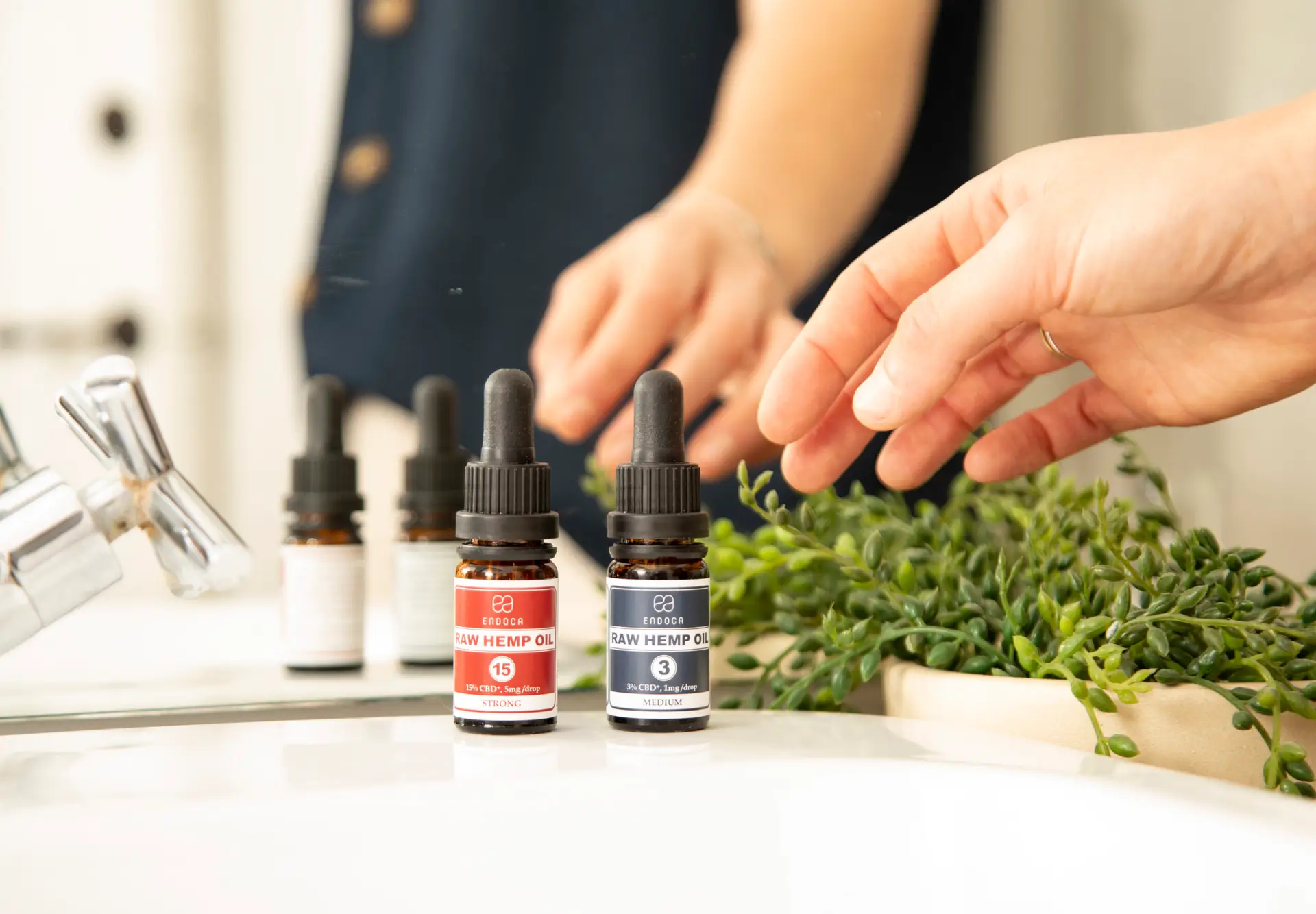
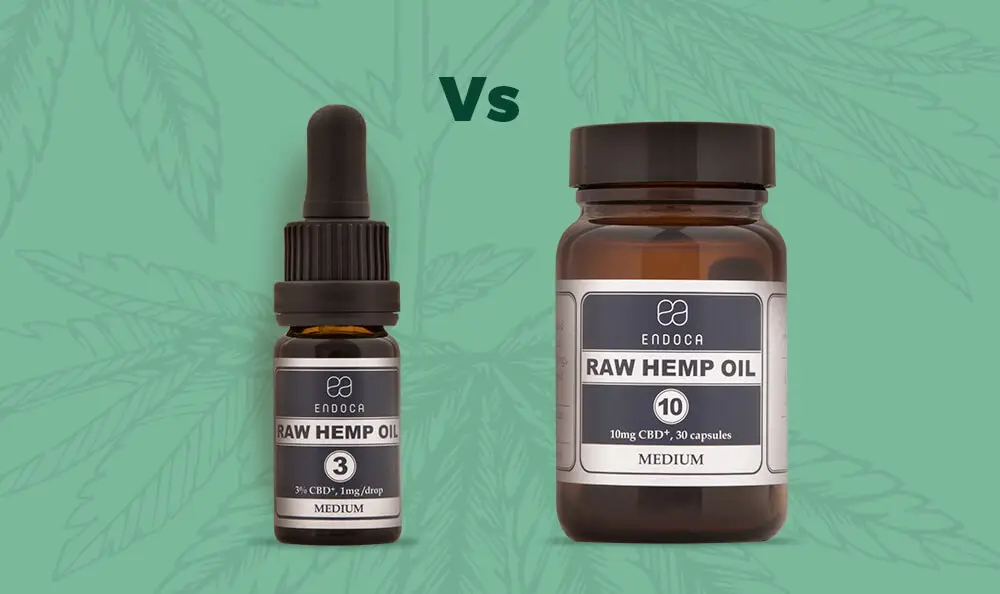
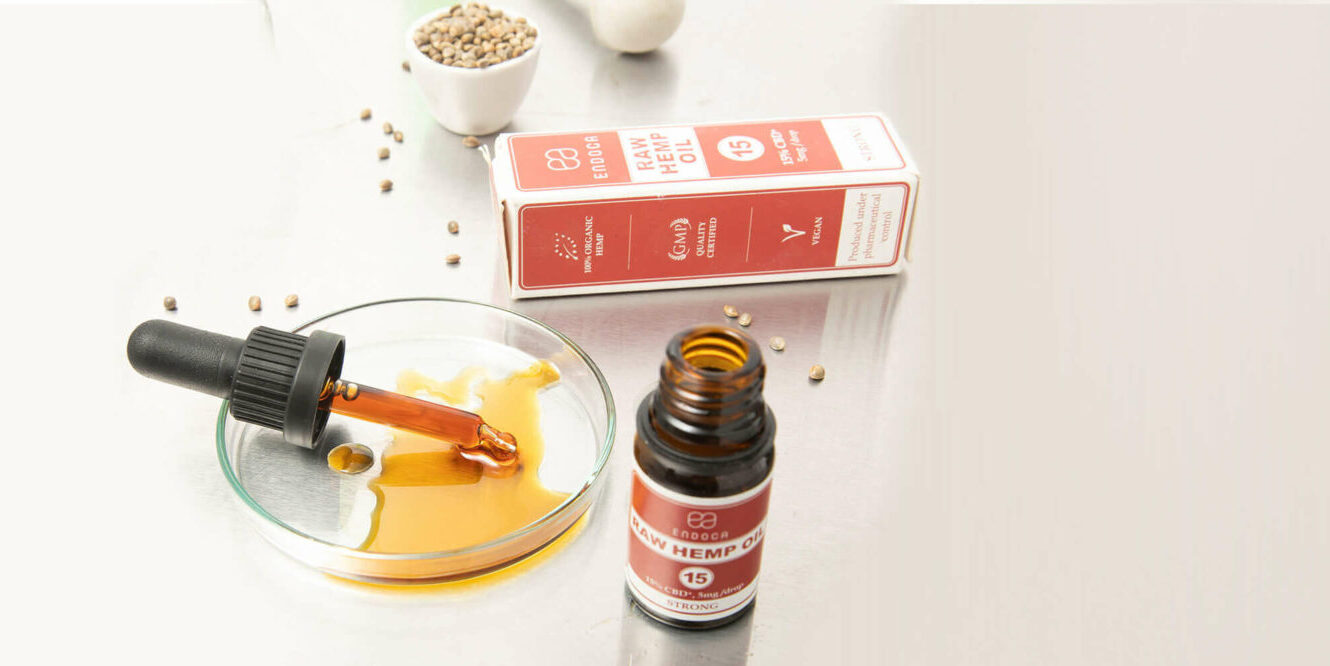
Endoca’s 3% CBD Oil is 30mg/ml, which comes out at 1mg per drop. The 15% CBD Oil is 150mg/ml, or 5mg per drop. Identical dropper, identical drop, five times the CBD in it.
That per-drop figure is the number worth writing on the box, because nobody serves themselves in millilitres. They count drops.
Choose your serving first, then the strength
Work backwards. Decide roughly how many mg you want in a day, then pick the concentration that gets you there in a sensible number of drops.
| Daily serving | Sensible strength | Drops needed |
| 5 to 10mg | 3% (30mg/ml) | 5 to 10 |
| 15 to 25mg | 15% (150mg/ml) | 3 to 5 |
| 50mg and above | Concentrated extract | Measured by weight |
If you are counting out 20 drops of a 3% oil every morning, you have bought the wrong strength and you are paying more per mg for the privilege. If one drop of a 30% extract overshoots what you wanted, that is the same mistake in reverse. New to CBD? Start at the low end, hold it for a week, then adjust. Compare every CBD oil strength we make if you are not sure where to begin.
How long a bottle actually lasts
Once you know mg per drop, bottle life is arithmetic. Divide the total mg by your daily serving.
A 10ml bottle of 15% oil holds 1,500mg. At 15mg a day that is 100 days. The same 10ml at 3% holds 300mg, which at 15mg a day is 20 days, and you would be counting out 15 drops every morning to get there.
That gap is why strength and value are the same conversation. It is common to buy the low strength bottle twice before working out that one stronger bottle would have lasted five times as long for less money.
Cost per mg, the comparison the shelf price hides
Divide the price by the total mg in the bottle. A 300mg bottle and a 1,500mg bottle at four times the price are not what they look like: the bigger one is usually cheaper per mg, sometimes by a third.
Run that sum before you compare brands. It is also the quickest way to spot a product priced like CBD oil that is mostly carrier oil.
Label tricks worth knowing about
Per serving instead of per bottle. Some labels lead with the mg in one serving, which looks generous next to a competitor quoting the whole bottle. Check which of the two numbers you are actually reading.
Hemp extract 5000mg. Total extract weight is not cannabinoid content. The CBD figure should be stated on its own, and if it is not, assume the large number is doing marketing work.
Servings per bottle. A brand can make a bottle look long-lasting by defining a serving as a single drop. Convert everything to mg before you compare.
What strength does not tell you
Two oils at 15% can still be very different products. Concentration says nothing about whether the extract is full spectrum or isolate, whether CBDa has been preserved, or how the oil was extracted. It also says nothing about accuracy. Endoca publishes a batch certificate of analysis because a percentage is only trustworthy once someone outside the company has verified it.
Frequently asked questions
How many mg of CBD are in one drop?
Divide mg per ml by 30. A 30mg/ml oil gives about 1mg per drop, and a 150mg/ml oil gives about 5mg per drop.
Is 1000mg CBD oil strong?
That depends on the bottle size. 1,000mg in 10ml is a strong 10% oil. The same 1,000mg in 100ml is a weak 1% oil.
What does 5% CBD oil mean?
It means 5% of the liquid by weight is CBD, which works out at 50mg of CBD per millilitre, or about 1.7mg per drop.
Should a beginner start with 3% or 15%?
Most people new to CBD start on 3%, because 1mg per drop makes small adjustments easy. Move up to 15% once your serving needs more than about 10 drops.
What is the difference between mg and % on CBD oil?
ercentage is concentration and mg is quantity. A 15% oil is 150mg/ml whatever size bottle you buy, while the total mg changes with the volume.
How do I convert mg to ml?
Divide the mg you want by the oil’s mg per ml. 15mg from a 150mg/ml oil is 0.1ml, about 3 drops.