



 30Apr

A CBD capsule is hemp extract, usually suspended in a carrier oil, sealed inside a softgel or a two-piece cellulose shell and swallowed whole. Each capsule holds a fixed amount of CBD, so you get the same figure every time without measuring anything, and there is no hemp taste. If you already take supplements, capsules slot into that routine without adding a habit, and they travel without leaking.
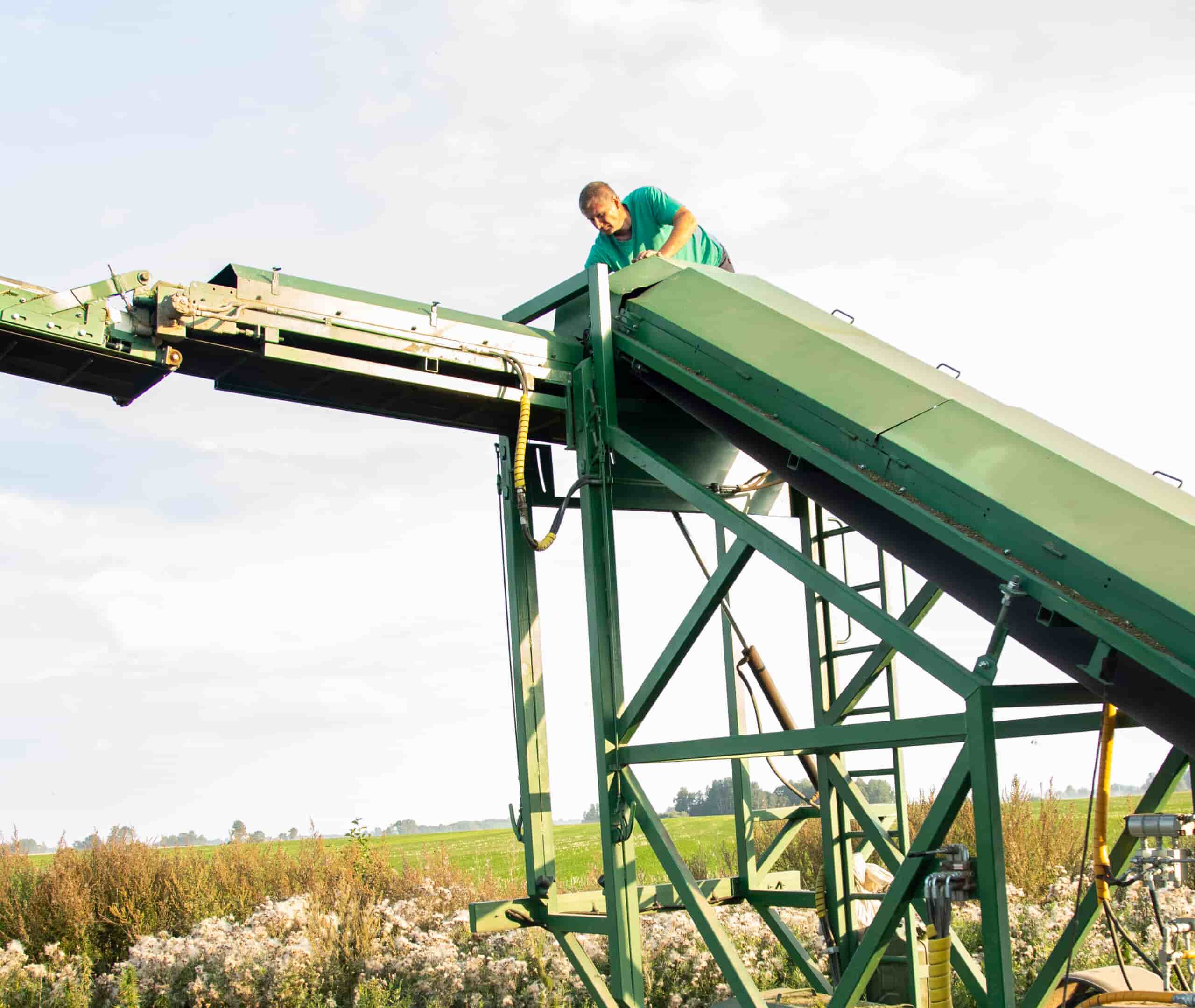
What is in the capsule matters more than the format. At Endoca the extract comes from hemp grown on our own organic farms and is separated using supercritical CO2 rather than chemical solvents. Every batch is screened by an independent laboratory for cannabinoid content, more than 200 pesticides, heavy metals and mycotoxins using HPLC and NMR, and the certificates are published on our lab testing page.
Endoca’s UK capsule strengths and what the mg figure means
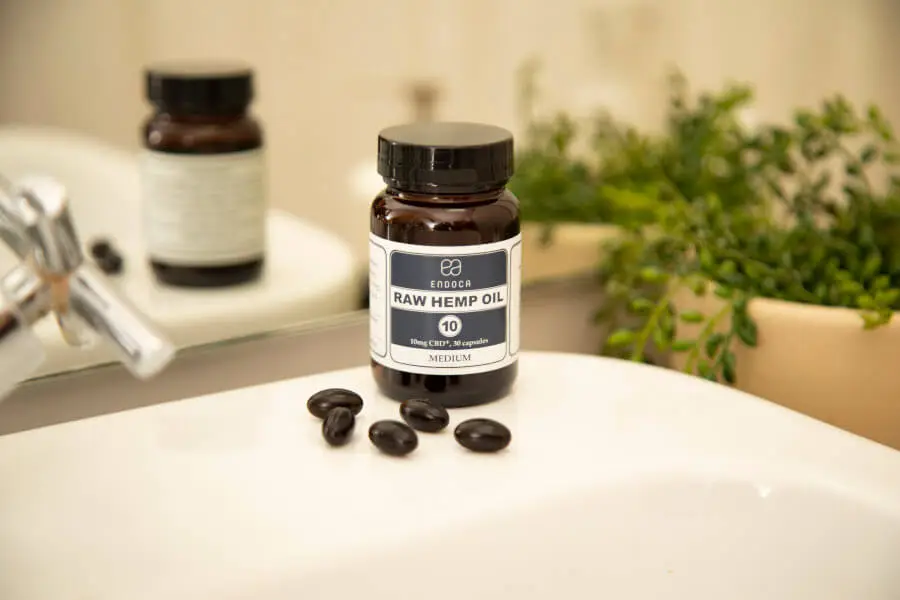
Endoca capsules are sold by milligrams of cannabinoids per capsule rather than per container, which makes comparison straightforward. The UK range runs at three points.
- 10mg per capsule. The lowest strength, available in both a raw and a gently heated version, in containers of 30 and 120 capsules. A 30-capsule container therefore holds 300mg of CBD in total.
- 50mg per capsule. A heated, decarboxylated capsule for people already taking CBD daily who know a 10mg step is smaller than they want to work in.
- 200mg per capsule. A raw, high-potency capsule. This is the one people mean by a high dose capsule, and it is generally chosen by people who have worked up to a large daily figure rather than started there.
Two numbers appear on a capsule label and they answer different questions. The per-capsule figure is the strength: it is what you take, and it cannot drift. The per-container figure is the total you have bought. A 120-capsule pot of the 10mg version holds 1,200mg, which is not a stronger capsule, only more of them.
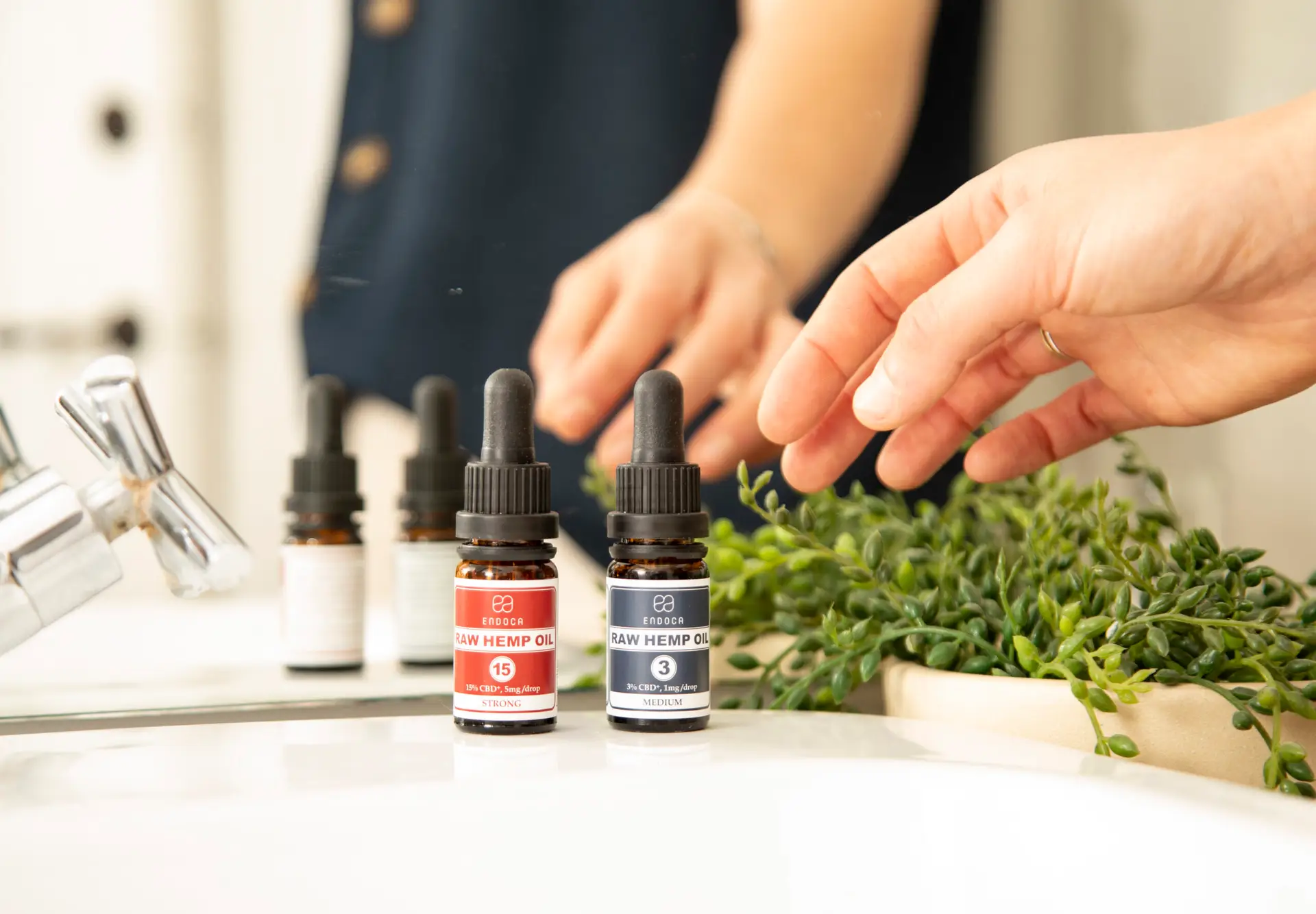
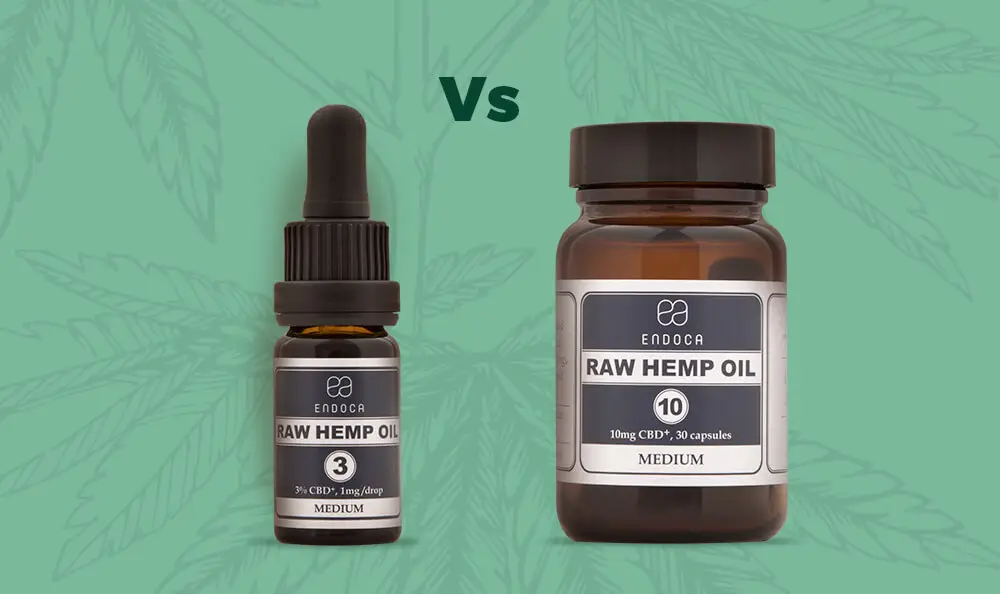
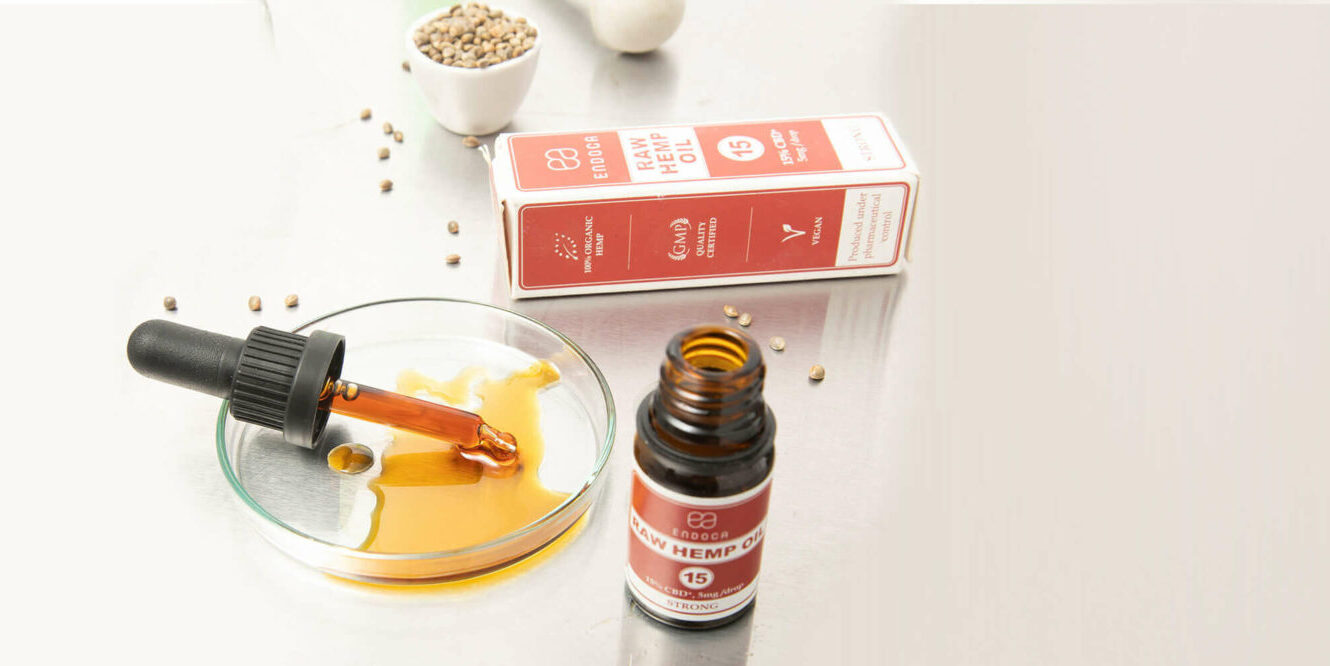
That distinction is worth holding on to when you compare capsules with oil, because oil labels work the other way round. UK oil labels lead with a percentage, where 1% means 10mg of CBD per millilitre, and the large milligram number on the box is the bottle total. One 10mg capsule is roughly seven to ten drops of a 3% oil, or roughly one and a half to two drops of a 15% oil, depending on your dropper. The CBD oil strength guide sets out the full conversion, and you can see the current capsule line-up in the Endoca CBD capsules range.
How CBD interacts with the body
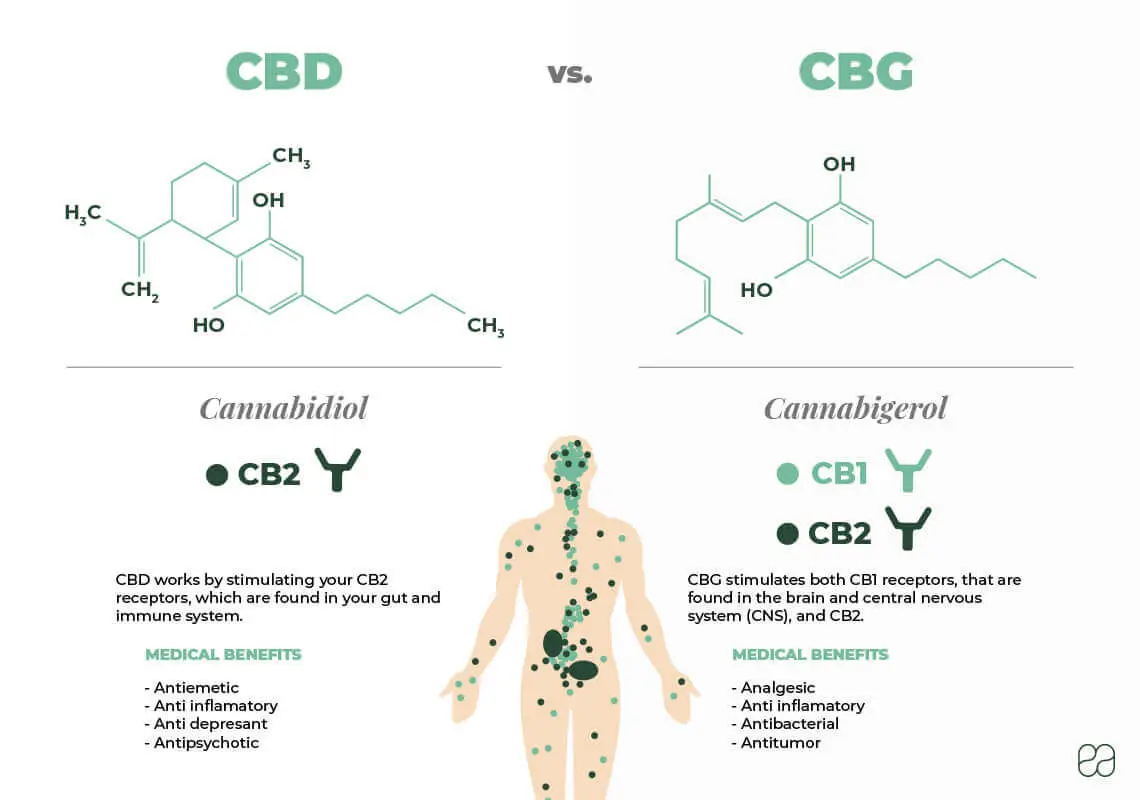
Cannabidiol (CBD) is a plant cannabinoid, one of more than a hundred found in the cannabis plant. It works through the endocannabinoid system, a network of receptors, signalling molecules and enzymes spread through the brain, nervous system, immune tissue and most major organs, which research describes as involved in homeostasis, the body’s process of keeping itself in balance. The system is often compared to a dimmer switch rather than an on and off switch, because its role is to turn activity up or down when something drifts. The body makes its own cannabinoids to do that work, and cannabinoids from plants interact with the same system.
Two receptors do most of the receiving: CB1, concentrated in the brain and central nervous system, and CB2, mainly in immune tissue and the periphery. CBD has a low binding affinity for both. Rather than locking onto them the way THC locks onto CB1, it appears to act indirectly, including by slowing the breakdown of the body’s own endocannabinoids.
CBD capsules vs CBD oil: absorption and onset
The choice between capsules and drops is mostly a trade-off between speed and convenience. Sublingual drops absorb partly through the tissue under the tongue and reach the bloodstream sooner. Capsules go through the stomach and the liver first, which is slower but spreads delivery out.
| CBD capsules | CBD oil drops | |
|---|---|---|
| Onset time | Roughly 45 minutes to 2 hours | Roughly 15 to 45 minutes |
| Duration | Longer, commonly 6 to 8 hours | Shorter, commonly 4 to 6 hours |
| Precision | Fixed mg per capsule, printed on the pot | Adjustable drop by drop, but you have to count |
| UK strengths | 10mg, 50mg and 200mg per capsule | 3% (30mg/ml) to 30% (300mg/ml) |
| Taste | None | Distinctly earthy and bitter, especially raw oils |
| Bioavailability | Oral route only, so more is lost to the liver | Part absorbs sublingually and skips the first pass |
| Best for | A steady daily figure, travel, discretion | Fine-tuning your figure, faster onset |
Capsules suit anyone who wants the same amount every day without thinking about it. Drops suit anyone still working out what that amount is. Plenty of people use both, with capsules as the daily baseline and CBD oil when they want something faster, and our dedicated comparison of CBD oil versus capsules works through the decision in more detail.
How long CBD capsules take to work
Expect somewhere between 45 minutes and two hours. A capsule has to dissolve, empty into the small intestine and be absorbed before anything reaches the bloodstream, and everything absorbed from the gut travels to the liver before it circulates.
That liver stage is called first-pass metabolism, and it is why capsules behave differently from drops. Enzymes there break down a substantial share of the cannabidiol before it circulates, and a systematic review of human pharmacokinetic studies put oral bioavailability of CBD at around 6 per cent (Frontiers in Pharmacology, 2018). The trade-off runs the other way too: because a capsule releases gradually through digestion rather than in a peak, the curve is flatter and longer. Taking one with a meal containing fat slows it further but may increase how much is absorbed.
How to take CBD capsules
Swallow the capsule whole with water, with or without food. There is no recommended amount of CBD, so the only honest description is the pattern most people follow: one capsule, once or twice a day, held unchanged for a week or two, then moved one step at a time rather than doubled. Follow the guidance on the label, note the daily total in milligrams, and pick either with food or without and stay with it.
Speak to your GP or pharmacist before starting if you take prescription medication or have an existing condition, because cannabidiol is metabolised by the same family of liver enzymes as a number of common medicines, particularly anything carrying a grapefruit warning.
Raw versus heated CBD capsules
Endoca makes both, and the difference is heat. In a living hemp plant, most of the cannabidiol exists as CBDa, cannabidiolic acid, which carries an extra carboxyl group. Apply heat and that group is released as carbon dioxide, converting CBDa into CBD. The process is called decarboxylation.
RAW capsules are made from unheated extract, so they contain CBDa alongside CBD and keep the profile closer to the plant as it grew. Heated capsules have been decarboxylated, so the CBDa has been converted and the CBD figure on the label is higher. Neither is superior: raw is the whole-plant option, heated is the more concentrated CBD option most people picture. Research on CBDa in humans is still limited, so claims about it deserve the same caution as claims about CBD.
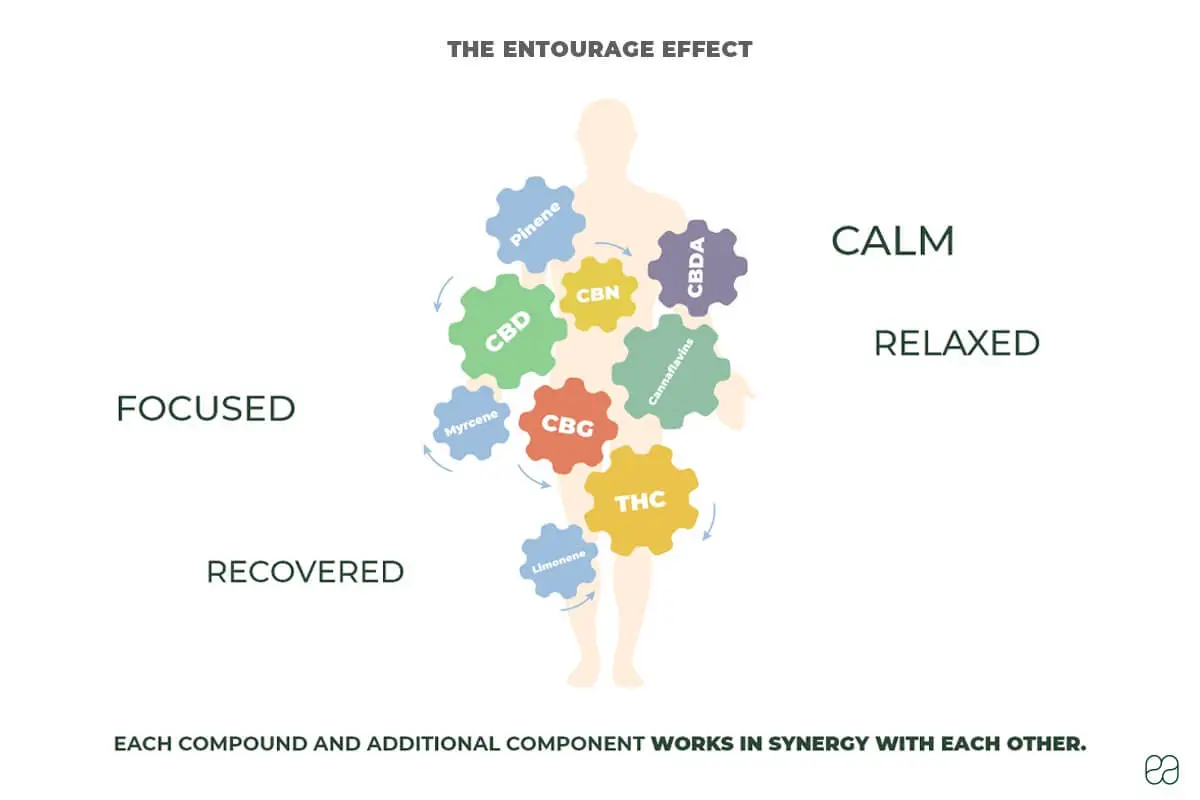
Formulation is the other half of the decision. Full-spectrum means the cannabinoids naturally present in hemp are still there, along with terpenes, flavonoids and plant waxes, including a trace of THC. Broad-spectrum keeps a wide range such as CBG and CBN but has the THC removed. Isolate is CBD at around 99 per cent purity. The three are compared in full spectrum versus broad spectrum versus isolate.
Do CBD capsules make you high?
No. Unlike THC, which binds directly to CB1 receptors, CBD has a low binding affinity and does not activate them in the same way, so it does not produce the euphoric effects associated with a high.
Cannabidiol is found in both hemp and high-THC cannabis, which is where the confusion comes from. Hemp is the non-intoxicating version of the plant, classified by its very low THC content, and it is the usual source for that reason. UK rules cap controlled substances at a very low level per container, so a compliant capsule contains only a trace. Individual descriptions vary a great deal and some people notice very little, but it is not intoxicating.
What the evidence currently shows
CBD is bought for a wide range of reasons, but the published evidence for specific outcomes remains limited, and much of what circulates is anecdotal. No over-the-counter CBD product is licensed as a medicine, and brands are required to market them accordingly.
The one licensed exception is Epidyolex, a prescription cannabidiol medicine authorised in the UK through the MHRA for rare forms of childhood epilepsy, including Dravet syndrome and Lennox-Gastaut syndrome. That is a prescription medicine with a defined indication and a controlled formulation, and it is not comparable to a food supplement. Nothing about its licence extends to Endoca products.
The rule that governs a capsule sold here is different. In the UK, ingestible CBD is regulated as a novel food, so a product must appear on the Food Standards Agency public list to be sold legally in England and Wales. That is a check you can make yourself before buying from anyone.
Frequently asked questions about CBD capsules
How much CBD is in a 10mg capsule?
Exactly 10mg of CBD per capsule, which is the figure printed on the pot. A 30-capsule container holds 300mg in total and a 120-capsule container 1,200mg. The per-capsule number is the strength; the container number is only how much you have bought.
Are CBD capsules better than CBD oil?
Neither is better outright. Capsules give an exact figure, no taste and easy portability, while drops act faster and let you fine-tune the amount. If you want a fixed daily routine, choose capsules. If you are still working out what suits you, start with oil.
How many CBD capsules should I take a day?
There is no recommended number. Most people take one, once or twice daily, and hold that steady for a week or two before adjusting. Because strengths run from 10mg to 200mg per capsule, the milligram total matters far more than the number of capsules. Follow the label.
Are CBD capsules legal in the UK?
Ingestible CBD is regulated in the UK as a novel food, so a capsule sold legally in England and Wales should appear on the Food Standards Agency public list. UK rules also cap controlled substances at a very low level per container, which is why compliant products contain only a trace of THC.
Can you take CBD capsules on an empty stomach?
Yes, and many people prefer to. Taking them with a meal containing some fat slows onset but may increase how much is absorbed, since cannabinoids are fat-soluble. Either approach is fine. Pick one and stay consistent so you can judge the product fairly.
Are CBD capsules the same as CBD pills or softgels?
In everyday use, yes. A softgel is a sealed one-piece gelatin or plant-based shell holding a liquid extract, which is what most CBD capsules are. CBD pills is a looser term for the same format. Compare the milligrams per capsule rather than the wording.
Endoca information about CBD is not a substitute for medical advice, and is not intended to treat, cure or diagnose any disease, condition or disorder. Speak to your GP or pharmacist before starting if you take prescription medication. If you are ready to start, decide between a raw and a heated capsule, pick a per-capsule strength you can stay consistent with, and check the batch report before you buy: compare both across the Endoca CBD capsules range.