




No products in the cart.

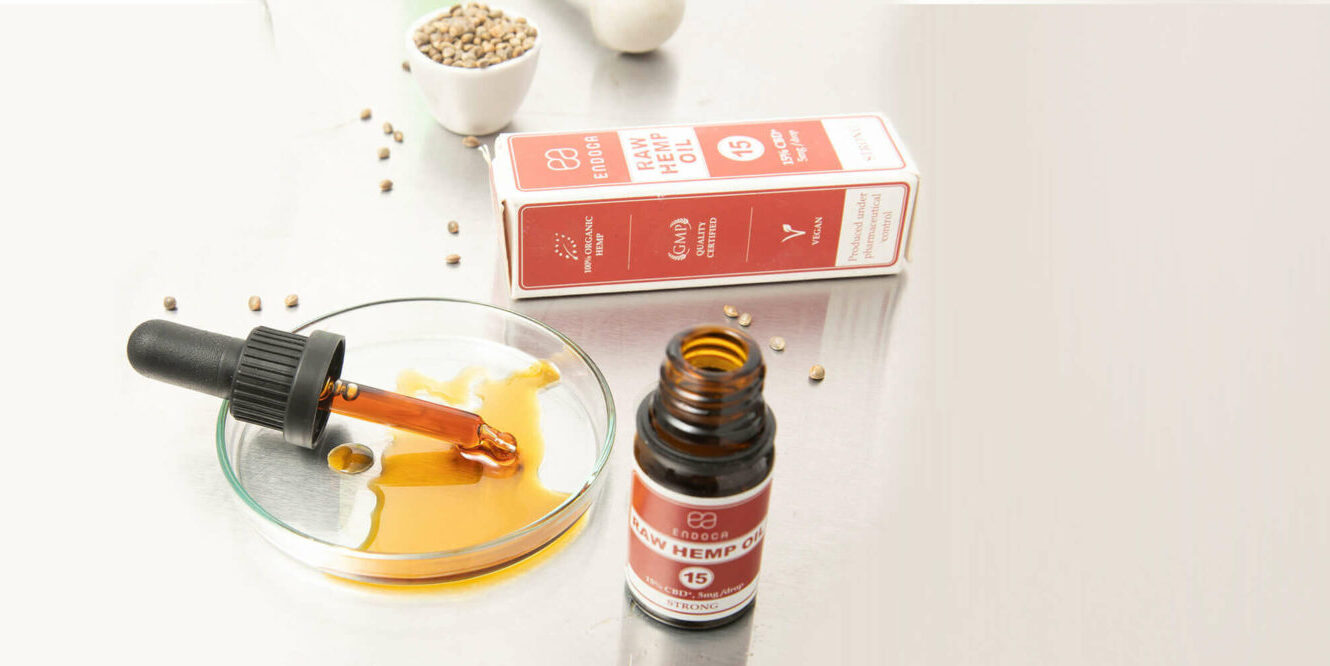
Full spectrum CBD oil is a whole plant hemp extract that keeps everything the plant produced rather than isolating one compound: CBD, minor cannabinoids such as CBG, CBC and CBN, terpenes, flavonoids and up to 0.3% THC. This guide explains what is actually in the bottle, how full spectrum differs from broad spectrum and isolate, and when each one makes sense.
What is full spectrum CBD oil?
Full spectrum CBD oil is extracted from hemp and contains the plant’s other naturally occurring compounds alongside CBD. Nothing is stripped out after extraction, which is why it is often called a whole plant oil.
That is the whole distinction. An isolate is refined until only the CBD molecule remains. A full spectrum extract is deliberately left intact, so what you are taking is closer to the chemical profile of the plant it came from than to a single purified compound.
The trade-off is that trace THC comes along with everything else. In a hemp extract that is a very small amount, capped at 0.3% by dry weight under US federal law, but it is not zero, and it is the main practical reason someone might choose a different type.
What’s actually in a full spectrum extract
Hemp produces well over a hundred cannabinoids, and a full spectrum oil carries the ones present in that crop through into the finished product.
Cannabinoids
- CBD (cannabidiol), the most abundant cannabinoid in hemp and the one the product is named after.
- CBDa (cannabidiolic acid), the raw acidic form of CBD that exists in the living plant before heat converts it. It survives only in extracts that are never heated, which is what Endoca’s RAW oils and pastes are built around.
- CBG, CBC and CBN, present in much smaller quantities and each with its own distinct activity.
- THC, in trace amounts of no more than 0.3%.
Terpenes and flavonoids
Terpenes are the aromatic compounds that give hemp its smell, and they are the reason a genuine full spectrum oil tastes and smells like a plant rather than like nothing. Flavonoids are a second family of plant compounds found throughout fruits, vegetables and herbs. Both are lost in heavily refined products and both are retained in a whole plant extract.
Nutrients carried through from the plant
Hemp is a food crop as well as a source of cannabinoids, and a whole plant extract carries some of that nutritional profile with it. Endoca’s full spectrum oils reference omega-3 and omega-6 fatty acids, vitamin D and vitamin E, plus vitamins A, C and the B group, around twenty amino acids and plant proteins. The quantities are small in a serving of oil, so this is context rather than a reason to treat CBD oil as a nutritional supplement.
How much of this survives depends entirely on extraction. Endoca uses supercritical CO2, which works at low temperatures and without solvent residues, so the delicate compounds are still there in the finished oil. You can read more about how the extraction process works.
Full spectrum vs broad spectrum vs isolate
These three terms describe how much of the original plant is left in the product. Everything else follows from that.
| Full spectrum | Broad spectrum | CBD isolate | |
|---|---|---|---|
| What it contains | CBD plus all other cannabinoids, terpenes and flavonoids from the plant | CBD plus other cannabinoids and terpenes, with the THC removed | CBD only, refined to around 99.9% purity |
| THC content | Trace, up to 0.3% | Removed to non-detectable levels | None |
| Entourage effect | Complete plant profile | Partial, minus THC | None, single compound only |
| Taste and smell | Distinctly earthy and herbal | Milder | Neutral, essentially tasteless |
| Drug test risk | Highest of the three | Low but not guaranteed zero | Lowest |
| Best suited to | People who want the whole plant and are not drug tested | People who want the extra compounds but need to avoid THC | People who need precise dosing, zero THC, or a neutral taste |
None of the three is better in the abstract. They answer different requirements, and the right answer depends on whether you are tested at work, how sensitive you are to taste, and whether you want the additional compounds at all. Our guide to CBD isolate covers the far end of that spectrum in detail.
The entourage effect explained
The entourage effect is the idea that cannabis compounds behave differently together than they do alone, and that the plant’s minor components influence what the major ones do.
The term was coined in 1998 by Shimon Ben-Shabat and colleagues, who were studying how compounds in cannabis interact with each other rather than treating each one as an isolated molecule. It has been an active area of research ever since.
A 2015 animal study compared a full spectrum hemp extract with purified CBD and found the two did not behave identically across a range of doses. The researchers attributed the difference to the other compounds present in the whole plant extract. It was a study in animals rather than people, so it does not tell us how the same comparison would play out in humans, and the entourage effect as a whole remains a plausible and much-discussed hypothesis rather than a settled fact. Our article on what the entourage effect is goes through the evidence in more detail.
Does full spectrum CBD contain THC?
Yes, in trace amounts. Federal law defines hemp as cannabis containing no more than 0.3% THC by dry weight, and a compliant full spectrum oil sits at or below that threshold.
To put 0.3% in perspective, marijuana bred for recreational use commonly tests at twenty percent THC or higher. The gap between the two is not a matter of degree.
At those trace levels, a full spectrum CBD oil will not make you high at a normal serving. There is also some evidence that CBD moderates how THC is experienced, which is part of why a whole plant hemp extract feels nothing like cannabis despite technically containing the same compound.
Every batch we produce is tested by an independent laboratory, and the certificate of analysis states the exact cannabinoid content, including THC, for that specific batch. Those results are published on our lab testing page.
Will full spectrum CBD show up on a drug test?
It can. This is the single most important practical thing to understand about full spectrum products.
Standard workplace drug screens do not look for CBD. They look for THC metabolites, which is what your body produces as it breaks THC down. Because THC is fat soluble and can be stored in fat tissue, small daily amounts can build up over time rather than clearing straight away.
That means the risk profile runs like this:
- Full spectrum carries the highest risk, particularly with a large daily serving taken consistently over weeks.
- Broad spectrum carries a much lower risk, since the THC has been removed, though “non-detectable” always depends on how sensitive the test is.
- Isolate carries the lowest risk of the three, because there is no THC in the product to metabolize.
No company can guarantee you a negative result, because the outcome depends on the product, the dose, the frequency, your own metabolism and the test itself. If you are subject to workplace testing, choose broad spectrum or isolate and check your employer’s policy before you start.

How to choose a full spectrum CBD oil
The CBD market is loosely regulated, and independent testing has repeatedly turned up products containing less CBD than the label claims, more THC than the label claims, or residues that should never have made it to market. A few checks separate a genuine whole plant extract from a poor one.
1. Read the batch-specific lab report
A brand should publish a third-party certificate of analysis tied to the batch number on your bottle, not a generic sample from two years ago. It should show the full cannabinoid profile, so you can confirm the product really is full spectrum and see the THC figure for yourself, along with screening for contaminants.
2. Check what the contaminant screening covers
Hemp draws heavy metals up out of the soil efficiently, which makes soil quality and testing genuinely important. Endoca screens every batch for more than 200 pesticides as well as heavy metals and mycotoxins, using HPLC and NMR analysis, and manufactures under GMP conditions.
3. Look at who controls the supply chain
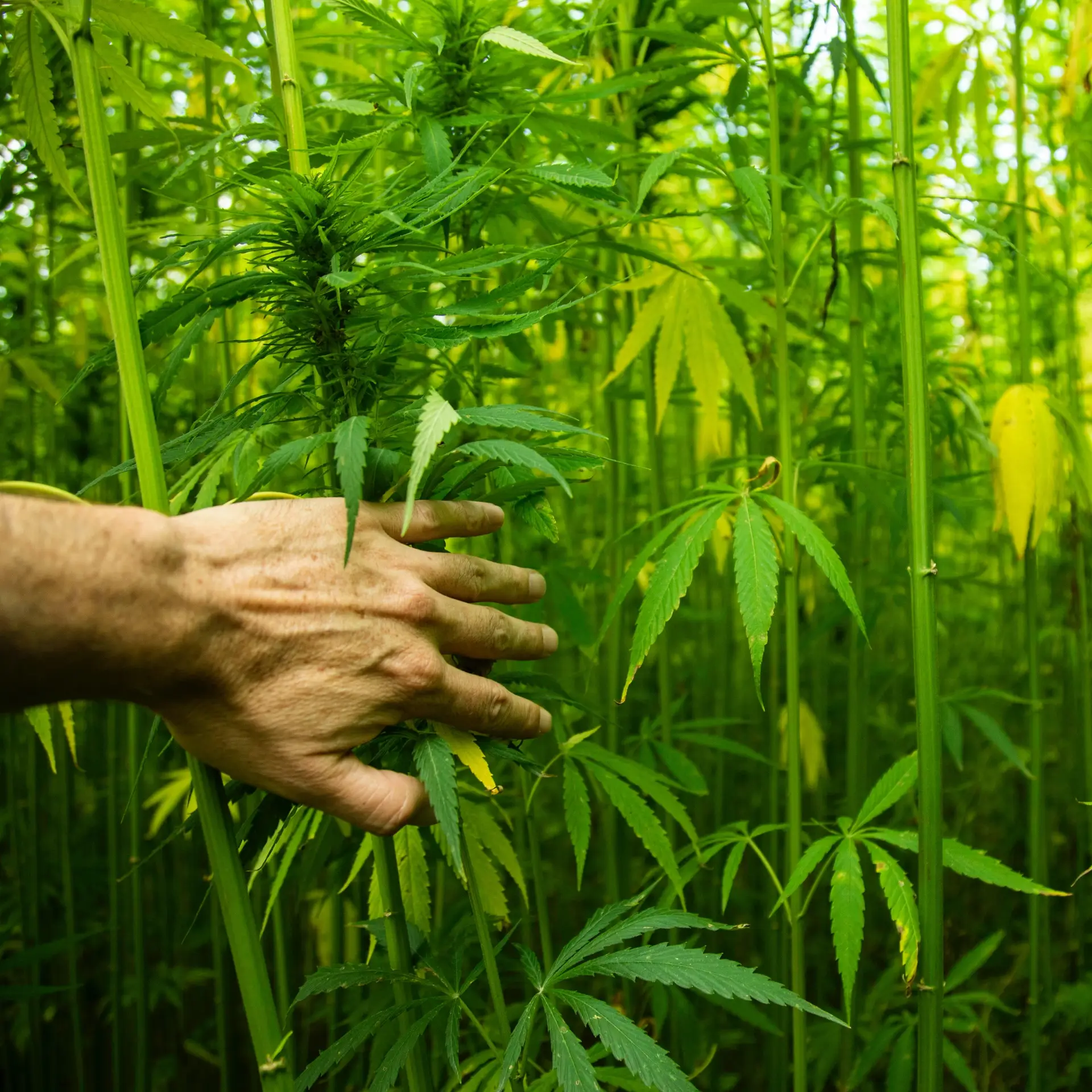
Endoca grows its own hemp, runs its own supercritical CO2 extraction and manufactures its own finished products, so the oil in the bottle can be traced back to a specific crop rather than to bulk material bought on the open market.
4. Pick a strength you can adjust
Endoca oils range from 3% to 15% CBD, which is roughly 300mg to 1500mg per bottle. Most people new to CBD start at the lower end, stay there for a couple of weeks and adjust from there rather than starting strong. If you prefer a more concentrated whole plant product, our CBD extracts and pastes are the same material in a thicker form.
Frequently asked questions about full spectrum CBD oil
What does full spectrum CBD oil mean?
It means the extract contains the full range of compounds from the hemp plant rather than CBD alone. That includes minor cannabinoids such as CBG, CBC and CBN, terpenes, flavonoids and trace THC of no more than 0.3%. It is often described as a whole plant extract.
Is full spectrum CBD better than broad spectrum?
Not automatically. Full spectrum retains the complete plant profile including trace THC, while broad spectrum keeps the other compounds but removes the THC. If you are drug tested or want to avoid THC entirely, broad spectrum or isolate is the more sensible choice.
Does full spectrum CBD oil get you high?
No. The THC content is capped at 0.3%, which is far too little to produce intoxication at a normal serving. For comparison, cannabis grown for recreational use commonly contains twenty percent THC or more. Some people feel more relaxed after taking CBD, but that is not the same as being high.
How long does full spectrum CBD oil take to work?
Taken under the tongue and held there for around 60 seconds, most people notice something within 15 to 45 minutes. Swallowed straight down it takes longer, usually one to two hours, because it has to pass through digestion first. Effects are subtle rather than dramatic.
Can I take full spectrum CBD oil every day?
Many people do, and consistency tends to matter more than a single large serving. Start low, stay at one serving for a couple of weeks before changing it, and speak to your doctor first if you take prescription medication, since CBD can affect how some drugs are processed.
If a whole plant extract is what you are after, the practical next step is choosing a strength rather than a spectrum. Start at the lower end, give it two weeks, and adjust from there. Browse our full spectrum CBD oils, each one grown, extracted and lab tested in house.


Comments are closed