




No products in the cart.

CBD drops are doses of CBD oil measured out with a dropper and placed under the tongue, where you hold them for 60 to 90 seconds before swallowing. Holding them there lets part of the CBD absorb through the tissue under your tongue instead of passing through the digestive system first. This guide is for anyone who has a bottle in front of them and wants to use it properly: what CBD drops are, how to take them, how much, how long they take to work, and how to store them.
What are CBD drops?
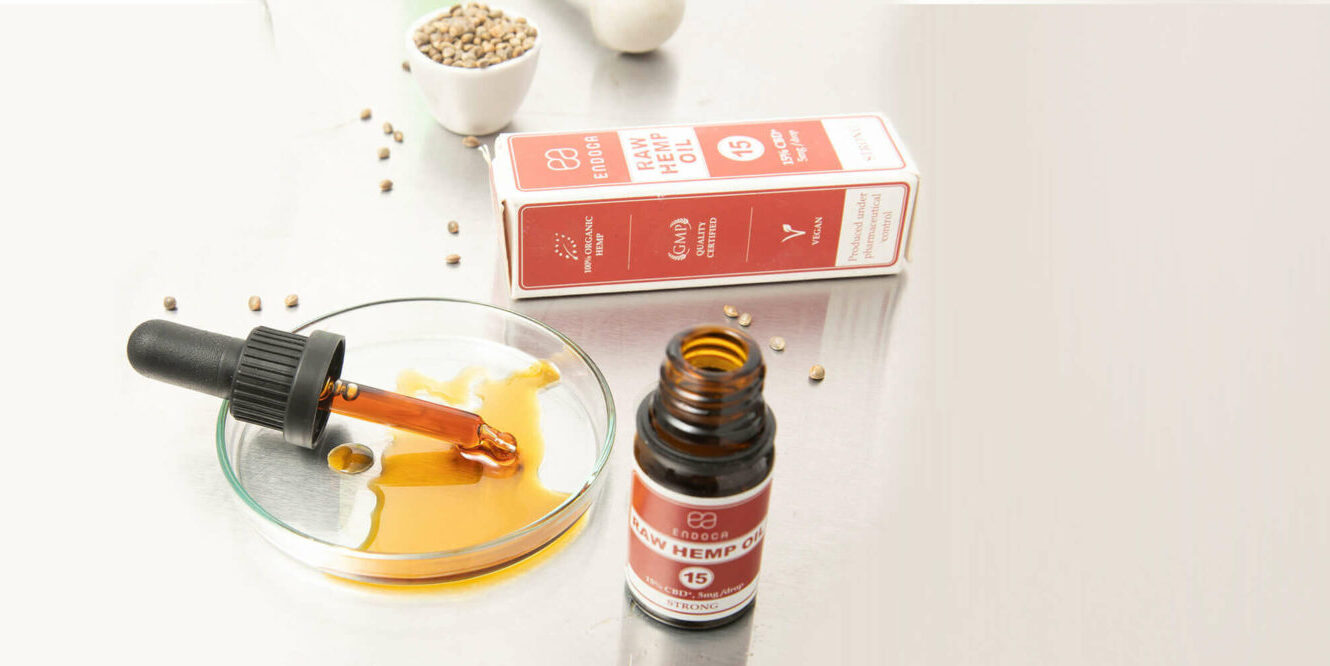
CBD drops are a liquid CBD product taken with a glass pipette. The bottle contains hemp extract suspended in a carrier oil, usually hemp seed oil, olive oil or MCT oil, and the dropper is how you measure a serving. The term describes the format and the way you take it, not a different compound.
The extract itself is where products differ. At Endoca the hemp is grown organically on our own farms and the cannabinoids are pulled out with supercritical CO2 rather than solvents, which keeps terpenes, flavonoids and minor cannabinoids intact. Every batch is then tested by an independent laboratory for cannabinoid content, pesticides, heavy metals and mycotoxins, and the results are published on our lab testing page.
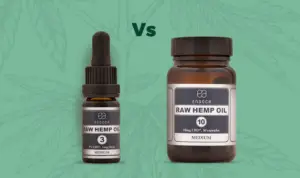
You will also see two versions of the same oil on the shelf. Raw drops are unheated, so they contain CBDa, the acidic form the plant actually produces, alongside CBD. Decarboxylated drops have been gently heated, which converts the CBDa into CBD and gives a higher CBD figure on the label. Raw is closer to the plant, decarboxylated is more concentrated in CBD itself.
Strengths and what the number on the label means
The milligram figure on the front of a bottle is almost always the total CBD in the whole bottle, not the amount in one drop. A 10 ml bottle holds roughly 200 to 250 drops, so a 1,500 mg bottle works out at about 6 to 7 mg of CBD per drop. Check the label for the per-drop or per-milliliter figure before you take anything, because strengths across the CBD oil range vary by more than tenfold.

CBD drops vs CBD tincture vs CBD oil
In the United States these three terms are used interchangeably, and in practice they usually describe the same bottle. Strictly speaking a tincture is a botanical extract made with alcohol, and most products sold as CBD tinctures are not that at all. They are hemp extract in a carrier oil, labeled with a word the supplement industry inherited from herbal medicine.
| Term | What it strictly means | What it usually means on a US label |
|---|---|---|
| CBD oil | Hemp extract suspended in a carrier oil | The liquid itself, in any bottle size or strength |
| CBD tincture | An alcohol-based botanical extract | Almost always the same oil-based product, under an older name |
| CBD drops | The serving delivered by the pipette | The same liquid, described by how you take it |
A genuine alcohol tincture does exist, but it is rare. If a label says tincture, look at the ingredients list. If the carrier is hemp seed oil, olive oil or MCT, you are holding CBD oil regardless of the word on the front.
How to take CBD drops sublingually
Sublingual means under the tongue. It is the most common way to take CBD drops and the easiest one to get right, because you can start with a single drop and increase from there. Here is the method step by step.
- Shake the bottle. Cannabinoids and carrier oil separate a little in storage, especially with thicker raw extracts.
- Check the strength. Work out roughly how many milligrams one drop contains so you know what you are taking.
- Draw up your serving. Squeeze the bulb, release, and count the drops out rather than guessing by eye.
- Place the drops under your tongue. Lift the tongue and let the oil pool in the floor of the mouth. Do not let the pipette touch your mouth, which keeps the bottle clean.
- Hold for 60 to 90 seconds. Resist swallowing straight away. Some people find it easier to sit still and breathe through the nose during this part.
- Swallow the rest. Whatever has not absorbed goes down and is processed like any other oral supplement.
- Wait a few minutes before eating or drinking. A mouthful of coffee immediately afterwards washes away oil that is still absorbing.
Why the 60 to 90 seconds matters
The floor of the mouth is lined with thin tissue and a dense bed of capillaries. Compounds that cross it enter the bloodstream directly, which means they skip the first pass through the liver that every swallowed substance goes through. That first pass matters, because liver enzymes break down a large share of CBD before it ever reaches circulation. A systematic review of human pharmacokinetic data put oral bioavailability of cannabidiol at roughly 6 percent (Frontiers in Pharmacology, 2018), which is one reason the sublingual route is worth the wait.
Holding the oil longer than 90 seconds does not appear to add much, and sixty seconds done consistently beats three minutes attempted once. If you want a wider comparison of the methods available, our guide on how to use CBD oil covers sublingual, topical and oral routes side by side.

How much to take and when
Start low. A common approach is a small serving, in the range of a few milligrams, taken once or twice a day and kept the same for a week or two before you change anything. Consistency is what makes the picture clear. Some people find that how CBD drops sit with them on day one is different from day sixty, so give any given serving enough time to tell you something.
If you feel you are not getting anywhere, adjust. Add a drop or take one away until you find what suits you. There is no universal number, because the amount that works varies with body weight, metabolism and the strength of the oil in front of you. Write down what you take and when. It is a dull habit and a useful one.
Timing is a matter of fit rather than rules. Some people take drops in the morning alongside other supplements, some split the serving across the day, some keep it for the evening. If you already have a supplement routine, adding CBD drops to it is the easiest way to remember them. Taking them on an empty stomach is a common preference, although a meal containing some fat may help the swallowed portion absorb.
One thing is not optional. If you take prescription medication, speak to your doctor before starting CBD drops, because cannabidiol can interact with the liver enzymes that process a number of common drugs.
How long CBD drops take to work
Taken sublingually, most people notice something within about 15 to 45 minutes. The portion you swallow arrives later, typically over the following one to two hours, so a single serving tends to come on in two stages rather than all at once. Effects from a sublingual serving commonly last somewhere in the region of four to six hours.
Several things move those numbers: how much you took, whether the bottle is raw or decarboxylated, whether you have eaten, and your own metabolism. Swallowed formats behave differently again. CBD capsules take longer to come on because everything in them goes through the digestive tract, and our comparison of CBD oil versus capsules sets out the trade-off between speed and convenience.
Taking CBD drops before bed
CBD drops fit easily into a nightly routine. Many people take them half an hour to an hour before bed as part of winding down after the day, which gives the sublingual portion time to absorb before the lights go off. Others prefer capsules in the evening, or massage a CBD cream into the skin as part of the same routine.
Treat it as one element of the routine rather than the whole of it. Regular hours, less screen time and a dark room do more than any supplement. Our page on CBD and sleep goes into what people report and what the research does and does not show.
How to store CBD drops
Heat, light and air are what degrade cannabinoids. Storage is mostly about keeping all three away from the bottle.
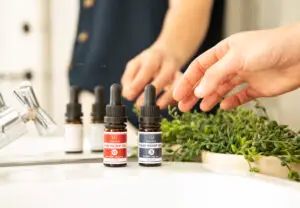
- Keep the bottle in a cool, dark cupboard, away from windowsills, stoves and radiators.
- Store it upright with the cap screwed on properly so the oil is not sitting against the pipette seal.
- Do not let the dropper touch your mouth, which keeps saliva and bacteria out of the bottle.
- A refrigerator is not necessary. Cold oil turns thick and slow to draw, and condensation inside the bottle is not helpful.
- Check the batch date and use the bottle within the period stated on the label.
Cloudiness or slight thickening in a cool cupboard is normal and clears when the oil warms in your hand. A sharp, rancid smell means the oil is past its useful life.
Frequently asked questions about CBD drops
How many CBD drops should I take?
There is no standard number, because the milligrams in each drop depend on the strength of the bottle. Most people begin with one or two drops, keep that steady for a week or two, then adjust up or down. Work in milligrams rather than drops so you can compare bottles accurately.
Can I swallow CBD drops instead of holding them under my tongue?
You can, and nothing goes wrong if you do. Swallowing sends everything through the digestive system and the liver, so onset is slower and less of the CBD reaches your bloodstream. If you plan to swallow your serving anyway, a capsule is a tidier and better measured way to do the same thing.
Do CBD drops taste of anything?
Full-spectrum and raw oils taste strongly of hemp: earthy, slightly bitter, a little grassy. That flavor comes from the terpenes and plant compounds left in by CO2 extraction. Most people get used to it within a week. If you do not, capsules and gummies avoid the taste entirely.
Will CBD drops make me high?
No. CBD is not intoxicating, and hemp-derived drops contain only trace THC, at or below 0.3 percent by law in the United States. Some people describe feeling calmer or more settled, but there is none of the altered perception associated with THC.
Can I take CBD drops with medication?
Ask your doctor or pharmacist first. Cannabidiol is processed by the same family of liver enzymes as many prescription medicines, so it can change how quickly those drugs are cleared. This matters most with medicines that carry a grapefruit warning on the packaging.
Endoca information on CBD is not a substitute for medical advice, and is not intended to treat, cure or diagnose any disease, condition or disorder. If you are choosing your first bottle, start by deciding between a raw and a decarboxylated extract, then pick a strength that lets you take a small number of drops rather than half a pipette. You can compare both types and every strength across the Endoca CBD oil collection, with the lab report for each batch published alongside it.


Comments are closed