





No products in the cart.

CBD capsules are pre-measured doses of hemp extract in a swallowable softgel or shell, so every capsule contains the same amount of cannabinoids. Because they are digested rather than absorbed under the tongue, they take longer to come on than drops and tend to last longer once they do. This guide covers what CBD capsules do in the body, how they compare with CBD oil, how to choose a strength, and the difference between raw and heated capsules.
What are CBD capsules?
A CBD capsule is hemp extract, usually suspended in a carrier oil, sealed inside a softgel or a two-piece shell and swallowed whole. The appeal is precision and simplicity. Each capsule holds a fixed amount of CBD, so you are getting the same serving every time without measuring anything, and there is no hemp taste to get used to.
If you already take supplements regularly, capsules slot into that routine without adding a new habit. They travel well, they do not leak, and nobody has to watch you use a pipette.
What is actually in the capsule matters more than the format. At Endoca the extract comes from hemp grown on our own organic farms and is separated using supercritical CO2 rather than chemical solvents. Every batch is screened by an independent laboratory for cannabinoid content, more than 200 pesticides, heavy metals and mycotoxins, and the certificates are published on our lab testing page.
What CBD capsules do in the body

You may have heard of CBD, but what exactly does it do? Understanding how it interacts with your body helps explain how it all works. Cannabidiol (CBD) is a plant cannabinoid found in the cannabis plant. One of the main things CBD capsules do is interact with neurotransmitters, the chemical messengers that carry signals between the cells in your body. Working through the endocannabinoid system, CBD influences cell receptors involved in homeostasis, the body’s process of keeping itself in balance.
The endocannabinoid system is one of the lesser-known body systems, but it is involved in regulating some of the most important functions, including sleep, immunity, mood and pain response. Cannabinoids are produced naturally by the body, and are also found in plants, where they are called phytocannabinoids. When plant cannabinoids such as those in CBD capsules are introduced, they interact with this same system.
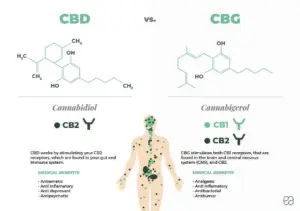
There are two main receptors in the body that receive messages from cannabinoids: CB1 and CB2. CBD has a low binding affinity for both. Rather than locking onto them the way THC locks onto CB1, it appears to act indirectly, including by slowing the breakdown of the body’s own endocannabinoids.
The system is often compared to a dimmer switch. It turns activity up or down when things drift out of balance. You will find it in most of your vital organs, in the brain, the central nervous system, and the reproductive and digestive systems, and it influences hormones and enzymes involved in sleep, mood and pain response.
CBD capsules vs CBD oil: absorption and onset
The choice between capsules and drops is mostly a trade-off between speed and convenience. Sublingual drops absorb partly through the tissue under the tongue and reach the bloodstream sooner. Capsules go through the stomach and the liver first, which is slower but spreads the effect out.
| CBD capsules | CBD oil drops | |
|---|---|---|
| Onset time | Roughly 45 minutes to 2 hours | Roughly 15 to 45 minutes |
| Duration | Longer, commonly 6 to 8 hours | Shorter, commonly 4 to 6 hours |
| Dose precision | Exact and fixed per capsule | Adjustable drop by drop, but you have to count |
| Taste | None | Distinctly earthy and bitter, especially raw oils |
| Bioavailability | Oral route only, so more is lost to the liver | Part absorbs sublingually and bypasses the first pass |
| Portability | Excellent, nothing to spill or measure | Good, though glass bottles and pipettes need care |
| Best for | A steady daily serving, travel, discretion | Fine-tuning your amount, faster onset |
Capsules suit anyone who wants the same amount every day without thinking about it. Drops suit anyone still working out what amount suits them. Plenty of people use both: capsules as the daily baseline, CBD oil when they want something faster. Our dedicated comparison of CBD oil vs capsules works through the decision in more detail.
How long CBD capsules take to work
Expect somewhere between 45 minutes and two hours. A capsule has to dissolve, empty into the small intestine and be absorbed before anything reaches your bloodstream, and everything absorbed from the gut travels to the liver before it circulates.
That liver stage is called first-pass metabolism, and it is the reason capsules behave differently from drops. Enzymes there break down a substantial share of the cannabidiol before it ever reaches general circulation. A systematic review of human pharmacokinetic studies put oral bioavailability of CBD at around 6 percent (Frontiers in Pharmacology, 2018). Sublingual drops sidestep part of that by absorbing directly through the tissue under the tongue.
The trade-off runs the other way too. Because a capsule releases gradually through digestion rather than arriving in a rush, the effect tends to be smoother and to last longer. Taking a capsule with a meal that contains fat slows things further but may increase how much is absorbed overall.
How to choose a CBD capsule strength
Endoca capsules are sold by milligrams of cannabinoids per capsule rather than per bottle, which makes comparison straightforward. The current range runs from 10 mg through 50 mg to 200 mg per capsule, plus a 20 mg CBDa softgel.
- 10 mg per capsule. A sensible starting point if you are new to CBD or moving over from low-strength drops.
- 50 mg per capsule. For people already taking CBD daily who know a small serving is not doing much for them.
- 200 mg per capsule. An extra-strong option, generally chosen by experienced users rather than beginners.
Start at the low end and stay there for a week or two before changing anything, then adjust one step at a time. Keep a note of what you take and when. If a capsule strength does not divide the way you want it to, drops give you finer control.
Formulation is the other half of the decision. Full-spectrum means the cannabinoids naturally present in hemp are still there, including a trace of THC at 0.2 to 0.3 percent, along with terpenes, flavonoids and plant waxes. Broad-spectrum keeps a wide range of cannabinoids such as CBG and CBN but has the THC removed, and some minor compounds are usually lost in that step. Isolate is CBD at around 99 percent purity, stripped of everything else. Full-spectrum products are associated with the entourage effect, the idea that hemp compounds work better together than alone.

Raw versus heated CBD capsules
Endoca makes both, and the difference comes down to heat. In a living hemp plant, most of the cannabidiol exists as CBDa, cannabidiolic acid, which carries an extra carboxyl group. Apply heat and that group is released as carbon dioxide, converting CBDa into CBD. The process is called decarboxylation.
RAW capsules are made from unheated extract, so they contain CBDa alongside CBD and keep the cannabinoid profile closer to the plant as it grew. Heated capsules have been decarboxylated, so the CBDa has been converted and the CBD figure on the label is higher. There is also a dedicated CBDa softgel for people who specifically want the acidic form.
Neither is superior. Raw is the whole-plant option, chosen by people who want CBDa in the mix; heated is the more concentrated CBD option most people picture when they think of a CBD capsule. Research on CBDa in humans is still limited, so it is worth treating claims about it with the same caution as claims about CBD.
Do CBD capsules make you high?
No. Unlike THC, which binds directly to CB1 receptors, CBD has a low binding affinity and does not activate them in the same way. Because CBD does not bind to those receptors, it does not produce the euphoric effects associated with a high.
Cannabidiol is found in both hemp and high-THC cannabis strains, which is where much of the confusion comes from. Hemp is the non-intoxicating version of the plant, classified by its very low THC content, as little as 0.2 to 0.3 percent. CBD is one of more than 80 cannabinoids found in the cannabis plant, and hemp is the usual source precisely because its THC levels are so low. It appears in oils, capsules, creams and more, depending on what you are after.
If you want the full picture on the two compounds, read our guide to CBD vs THC.
What CBD capsules feel like
Because CBD is not intoxicating, capsules feel very different from THC. Some people report calm, focus or a sense of relaxation, without any of the mind-altering effects associated with cannabis. Others notice very little. How it feels varies a good deal between individuals, and depends on your own endocannabinoid system and how it responds.
What the evidence currently supports
CBD is popular for a wide range of reasons, but the scientific evidence for specific outcomes remains limited, and much of what circulates is anecdotal. CBD is not approved by the Food and Drug Administration as a treatment for anything sold over the counter, and brands are required to market it accordingly.
The one exception is Epidiolex, a prescription cannabidiol medicine approved by the FDA for rare forms of childhood epilepsy, specifically Dravet syndrome and Lennox-Gastaut syndrome. That is a prescription medication with a defined indication, and it is not comparable to a supplement. Always do your own research before trying CBD products, and speak to your doctor if you take prescription medication or have an existing condition, since cannabidiol can interact with the liver enzymes that process a number of common drugs.
Frequently asked questions about CBD capsules
Are CBD capsules better than CBD oil?
Neither is better outright. Capsules give you an exact serving, no taste and easy portability, while drops act faster and let you fine-tune the amount. If you want a fixed daily routine, choose capsules. If you are still working out what suits you, start with oil.
How many CBD capsules should I take a day?
Most people take one, once or twice daily, and hold that steady for a week or two before adjusting. Because strengths range from 10 mg to 200 mg per capsule, the number of capsules matters far less than the milligrams. Follow the serving guidance on the label.
Can you take CBD capsules on an empty stomach?
Yes, and many people prefer to. Taking them with a meal containing some fat slows onset but may improve how much is absorbed, since cannabinoids are fat-soluble. Either approach is fine. Pick one and stay consistent so you can judge the effect fairly.
Will CBD capsules show up on a drug test?
Standard tests look for THC metabolites, not CBD. Full-spectrum capsules contain trace THC, and with regular use at higher servings that can accumulate enough to matter. If you are tested at work, broad-spectrum or isolate capsules are the lower-risk choice.
Are CBD capsules the same as CBD pills or softgels?
In everyday use, yes. Softgel refers to a sealed one-piece gelatin or plant-based shell holding a liquid extract, which is what most CBD capsules are. CBD pills is simply a looser term people use for the same format. Check the milligrams per capsule rather than the wording.
Endoca CBD information is not intended to treat, cure or diagnose any disease, condition or disorder. If you are ready to start, pick a strength you can stay consistent with and check the batch report before you buy: you can compare raw and heated options across the Endoca CBD capsules range.


Comments are closed