



No products in the cart.
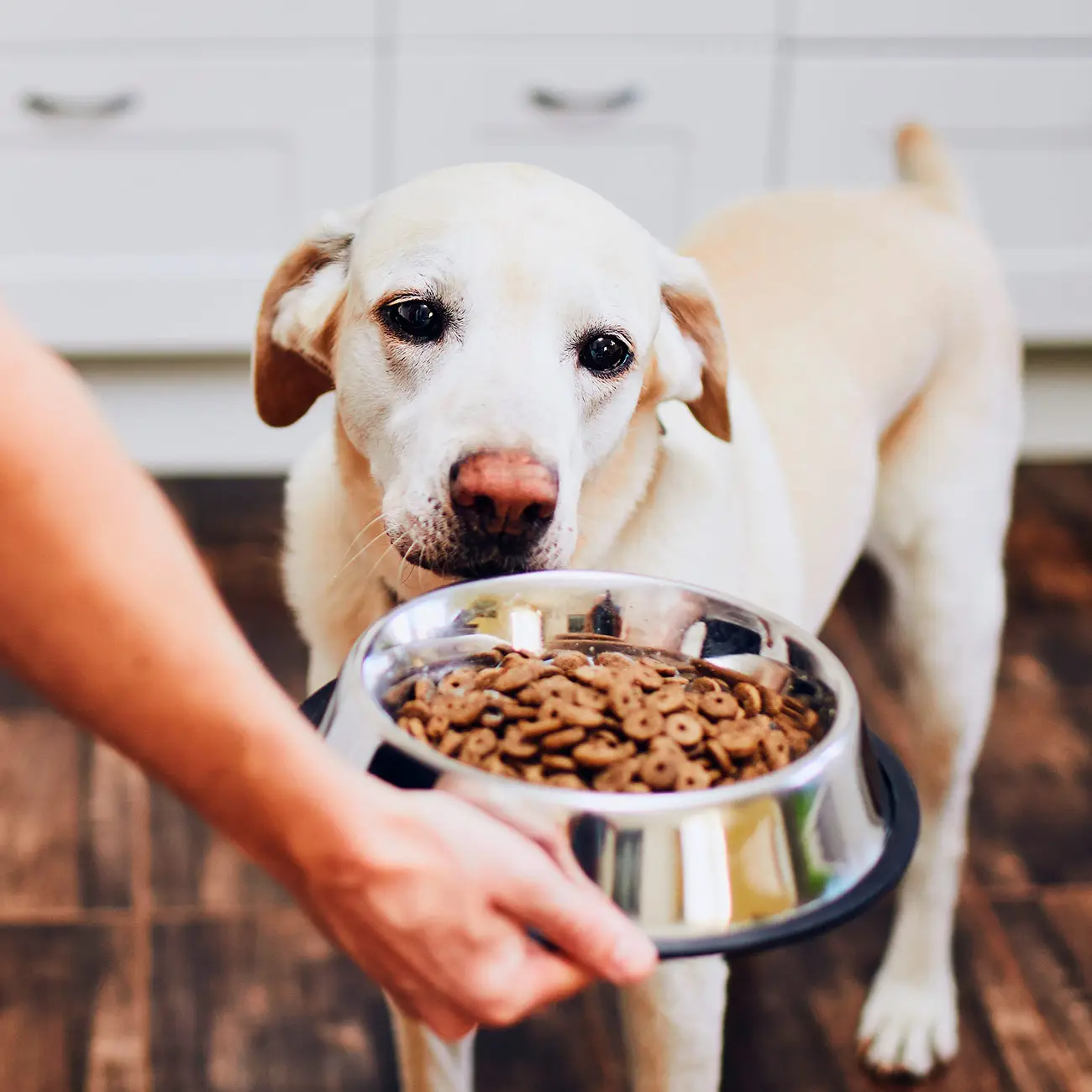
The turkey tail mushroom benefits for dogs that owners ask about most often are immune support, digestive balance and general vitality in older animals. The research behind those areas is real but early, and most of it has been carried out in people or in laboratories rather than in dogs.
This guide is for dog owners who want the honest version: what turkey tail actually is, what researchers are studying, whether it is considered safe, how much is typically given by body weight, and how it compares with other functional mushrooms. It is information, not veterinary advice.
What is turkey tail mushroom?
Turkey tail is a functional mushroom recognized for its fan shape and its bands of layered color, which is where the name comes from. It grows in overlapping shelves on dead hardwood and is one of the most common wood-decay fungi in the world.
It is rich in naturally occurring compounds including beta-glucans, other polysaccharides, and antioxidants. These compounds are widely studied for the way they interact with the immune system and the gut microbiome, two areas closely linked to overall health in both humans and animals.
It is not a culinary mushroom. It is tough and fibrous, so it is sold as a dried powder or, more usefully, as a concentrated extract.
What is coriolus versicolor?
Coriolus versicolor is turkey tail. It is the older scientific name for the same organism, and you will still see it printed on supplement labels, in research papers and on veterinary product packaging.
The currently accepted scientific name is Trametes versicolor. Mycologists reclassified the species out of the genus Coriolus, but the older name stuck in the supplement and research worlds, so both remain in active use. Versicolor means “of several colors”, which describes the banding on the cap. If a product lists any of these names, you are looking at the same species:
- Turkey tail (common English name)
- Trametes versicolor (current scientific name)
- Coriolus versicolor (older scientific name, still widely used)
- Yun zhi, kawaratake (traditional East Asian names)
This matters when you compare products. A label that says coriolus versicolor and a label that says turkey tail are describing the same raw material, so the real differences lie in the extraction method, the part of the fungus used and the testing behind it.
Why are people looking at turkey tail for dogs?
Interest in turkey tail for dogs is growing because of its possible role in supporting normal immune function and digestive balance. Dogs, like people, depend on a well-functioning immune system and a stable gut microbiome for long-term wellbeing.
Owners tend to start looking at functional mushrooms at particular moments: when a dog is getting older and slowing down, or when they are already building a broader wellness routine. The areas they focus on are:
- Daily immune system support
- Gut health and digestion
- General vitality and healthy aging
Potential turkey tail mushroom benefits for dogs
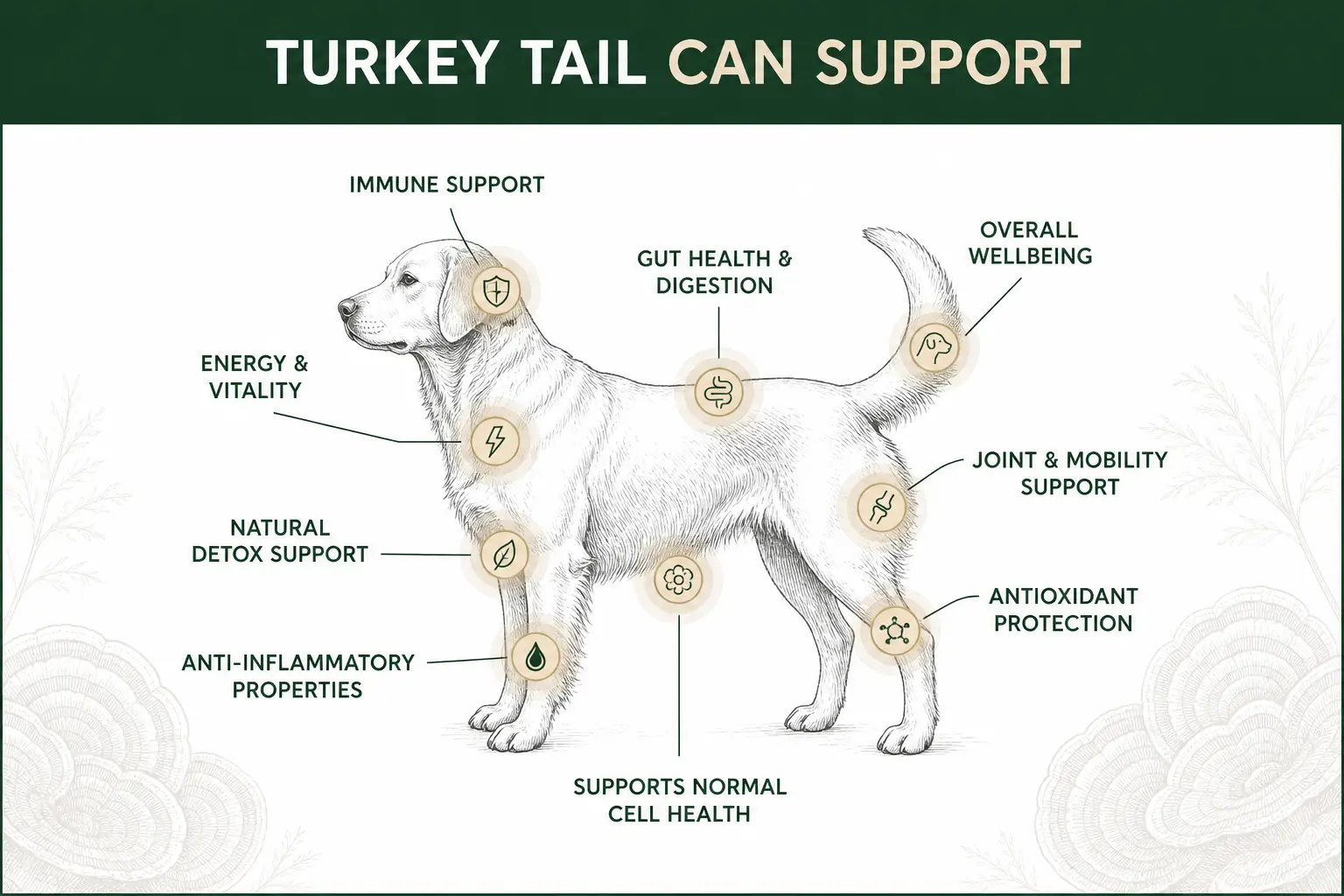
Research into turkey tail mushroom benefits for dogs is still developing. Studies in humans, in animals and in cell cultures point to several areas of interest, and it is worth being clear that “area of interest” is not the same as “proven effect”.
- Immune support: beta-glucans are studied for the way they interact with normal immune system activity.
- Gut health: the polysaccharides in turkey tail behave as prebiotic fibers, which is why researchers look at them in the context of a balanced microbiome.
- Antioxidant activity: turkey tail contains phenolic compounds that are studied for their role in protecting cells from oxidative stress.
- General wellbeing: most owners use it as one part of a long-term routine rather than a short intervention.
These findings are promising rather than settled, and they do not replace veterinary care.
What does the science say?
Most of the research attention sits on two specific polysaccharide preparations derived from the mushroom: PSK (polysaccharide-K) and PSP (polysaccharide peptide). PSK was developed in Japan and is regulated there as a prescription product rather than a supplement. PSP was developed later in China. Both are concentrated extracts, not the whole mushroom.
That distinction matters. When you read that turkey tail has been studied for decades, the study in question is usually of PSK or PSP at a defined concentration, not of ground mushroom powder in a pet supplement.
Canine research specifically is thin. One of the few examples is a small pilot study run at the University of Pennsylvania School of Veterinary Medicine and published in Evidence-Based Complementary and Alternative Medicine in 2012, which examined a Trametes versicolor preparation in a group of dogs. It involved a small number of animals, and its own authors described the findings as preliminary and in need of larger trials.
The honest summary: the compounds are genuinely studied, the body of work is largely human and laboratory based, the canine evidence is small and early, and nobody should present turkey tail as a proven intervention for any condition in dogs.
If you want to read the literature directly, the PubMed research database and the National Center for Biotechnology Information are the places to search.
Is turkey tail safe for dogs?
Turkey tail is generally considered well tolerated when used appropriately, but every dog is different. Size, age, diet, existing conditions and current medication all influence how any supplement is handled.
Speak to your veterinarian before giving turkey tail, or any supplement, to your dog. This matters most if your dog takes prescription medication, is pregnant or nursing, is scheduled for surgery, or is being treated for an existing condition. Supplements can interact with medicines, and your vet is the only person who knows your dog’s full picture.
Practical points:
- The most commonly reported effect is mild digestive upset, usually when a dog is started on too much too quickly.
- Start at the low end of a product’s range and increase gradually.
- Introduce one new supplement at a time, so anything you notice can be attributed to something.
- Stop and contact your vet if you see vomiting, persistent loose stool, lethargy or a change in appetite.
We are not veterinarians and this article is not veterinary advice.
How is turkey tail typically used?
Turkey tail is sold as an extract or a powder. Extracts are generally preferred because the beta-glucans sit inside tough chitin cell walls that dogs, like people, do not digest efficiently. Hot-water extraction breaks those walls down and makes the polysaccharides more available.
Powders and capsules are usually mixed into food, and liquid extracts can be added to a meal. Whichever format you choose, it is normally used as part of a daily routine rather than a short course, because the effects studied in the research are associated with consistent intake. Our guide to mushroom coffee versus mushroom supplements explains the powder-versus-extract difference in more depth.
Turkey tail dosage for dogs by weight
There is no established veterinary dose for turkey tail. The table below shows the kind of daily ranges that commonly appear on turkey tail products formulated for dogs, as a reference point for a conversation with your vet.
These are general guidance ranges only. Actual amounts vary widely depending on whether the product is a whole mushroom powder or a concentrated extract, and on the beta-glucan content of that extract. Follow the instructions on your specific product and your veterinarian’s guidance, not this table alone.
| Dog weight | Typical daily range seen on labels | Notes |
|---|---|---|
| Under 10 lb (under 4.5 kg) | 100 to 250 mg | Small breeds are the most sensitive to being started too high. Begin at the bottom of the range. |
| 10 to 25 lb (4.5 to 11 kg) | 250 to 500 mg | Often easiest to split across two meals. |
| 25 to 50 lb (11 to 23 kg) | 500 to 750 mg | Splitting the daily amount across meals tends to be gentler on digestion. |
| 50 to 75 lb (23 to 34 kg) | 750 mg to 1,000 mg | Increase gradually over one to two weeks rather than all at once. |
| Over 75 lb (over 34 kg) | 1,000 to 1,500 mg | Large breeds still benefit from a slow introduction. |
Extract strength changes these numbers more than body weight does. A product that states its beta-glucan content lets you compare like with like. One that says only “mushroom blend” does not.
Turkey tail vs other mushrooms for dogs
Turkey tail is one of several functional mushrooms that come up in pet wellness. They are not interchangeable, and each is researched for different reasons.
| Mushroom | Scientific name | Main compounds studied | Why owners look at it |
|---|---|---|---|
| Turkey tail | Trametes versicolor (coriolus versicolor) | PSK, PSP, beta-glucans | Immune and gut microbiome support |
| Reishi | Ganoderma lucidum | Triterpenes, beta-glucans | Calm and general wellbeing routines |
| Lion’s mane | Hericium erinaceus | Hericenones, erinacines | Nervous system and cognitive research interest |
| Cordyceps | Cordyceps militaris | Cordycepin, adenosine | Stamina and energy in active or older dogs |
Turkey tail has the deepest research base of the four on immune and microbiome questions, largely because PSK and PSP have been studied for so long. For the cognitive side of functional mushrooms, our guide to lion’s mane benefits and the research behind them covers that ground.
Choosing a high-quality mushroom extract
Not all mushroom supplements are made the same way, and the gap between the best and worst products is wide. When you compare turkey tail products, look for:
- A named species and a named part. The label should say Trametes versicolor or coriolus versicolor, and it should say whether the fruiting body, the mycelium or both were used.
- Standardized extracts. A stated beta-glucan percentage tells you far more than a total milligram weight.
- Clear ingredient lists. Proprietary blends hide how much of anything you are actually getting.
- Third-party testing. Mushrooms are efficient accumulators, so screening for heavy metals, pesticides and mycotoxins is not optional.
- No unnecessary fillers. Grain starch left over from mycelium grown on grain can make up a large share of a cheap powder.
This is where manufacturing matters more than marketing. Endoca runs its own extraction and its own quality program, screening raw material for over 200 pesticides as well as heavy metals and mycotoxins using HPLC and NMR analysis. You can read how that works on our quality control page and see the results on our lab testing page.
If you are exploring extracts, you can see an example of a turkey tail product here: Turkey Tail Mushroom Extract. For your own routine rather than your dog’s, Endoca also makes functional mushroom gummies.
Final thoughts
Turkey tail for dogs sits in an interesting but early part of natural wellness. The compounds are real, the research on PSK and PSP is decades deep, and the specific evidence in dogs is still small.
Treat it the way you would treat any addition to your dog’s routine: choose a product that tells you exactly what is in it, start low, watch your dog, and involve your vet from the beginning. A supplement is one part of a broader approach to wellbeing, not a standalone solution.
Frequently asked questions about turkey tail for dogs
Is turkey tail mushroom good for dogs?
Turkey tail is generally considered well tolerated in dogs and is widely used as a daily wellness supplement. The research behind it is genuine but preliminary, and much of it was carried out in humans or laboratories rather than in dogs. Ask your veterinarian whether it suits your individual dog before starting.
What is the difference between turkey tail and coriolus versicolor?
There is no difference. Coriolus versicolor is an older scientific name for the same mushroom now formally classified as Trametes versicolor, and turkey tail is its common English name. All three appear on labels and in research papers, so a product using any of them contains the same species.
How long does turkey tail take to work in dogs?
Functional mushrooms are not fast-acting, and turkey tail is normally used as a long-term daily supplement rather than a short course. Owners who report changes usually describe them over several weeks of consistent use. Individual responses vary with age, diet, weight and general health, so consistency matters more than dose.
Can dogs eat turkey tail mushrooms found outdoors?
No. Do not let your dog eat wild mushrooms of any kind. Several species that look similar to turkey tail grow in the same habitats, some wild mushrooms are seriously toxic to dogs, and identification is difficult even for experienced foragers. Use a tested commercial product instead.
Can turkey tail be given alongside my dog’s medication?
Only with veterinary approval. Supplements can interact with prescription medicines, and your vet is the only person with the full picture of your dog’s treatment. Bring the actual product label to the appointment so your vet can see the species, the extract type and the amount per serving.
If you are considering turkey tail for your dog, the useful next step is to note down your dog’s weight and current medications, then ask your vet whether a functional mushroom fits their routine. While you are looking at natural options for pets, you can also browse Endoca’s CBD products for pets and read how they are tested.



Comments are closed