






No products in the cart.

People take CBD for sleep because it appears to act on the systems that govern winding down rather than sedating you directly. CBD is not a sleeping pill and it is not a treatment for insomnia. Research so far is small, short and mixed, which is worth knowing before you buy anything.
This guide is for anyone who is curious about CBD and sleep and wants a straight answer instead of a sales pitch. It covers how sleep is structured, what CBD does in the body, what the studies actually found, how CBD compares to CBN, and the habits that tend to matter more than any supplement you can take.
How the sleep cycle works
Sleep is not one flat state. Over a night you move through repeating cycles of roughly 90 minutes, each made up of non-REM and REM stages. Understanding the shape of a night makes it much easier to work out what is actually going wrong for you.
- Non-REM stage 1. The short transition between being awake and being asleep. Muscles relax, brain activity slows, and you can be woken very easily.
- Non-REM stage 2. Light sleep. Heart rate and body temperature drop. This is where most of the night is spent.
- Non-REM stage 3. Deep, slow-wave sleep. This is the hardest stage to be woken from and it is concentrated in the first half of the night. It is associated with physical recovery.
- REM sleep. Rapid eye movement sleep, where most vivid dreaming happens. REM periods get longer towards morning and are associated with memory consolidation and emotional processing.
Two separate systems decide when those cycles start. Sleep pressure builds the longer you have been awake, and your circadian rhythm sets the window in which your body expects to sleep. If you want the detail on the second one, our guide to the circadian rhythm and how it affects sleep covers it properly. Most sleep problems trace back to one of these two systems being out of step, not to a missing supplement.
How CBD interacts with the endocannabinoid system and sleep
To understand how CBD relates to sleep it helps to know a little about cannabinoids and how they work. Research shows that CBD and other cannabinoids interact with cells in the brain and with proteins throughout the body, largely through the endocannabinoid system. That system plays a role in maintaining normal body function and homeostasis, and it is involved in regulating sleep, appetite, mood and circadian rhythms.
The endocannabinoid system is a network of cannabinoid receptors in the brain and central nervous system. CB1 and CB2 are the two main receptors identified so far. When cannabinoids attach to or influence these receptors, they can affect the sleep and wake cycle.
CBD is worth separating from THC here. There are many cannabinoids, and CBD behaves very differently from THC. It does not produce the psychoactive “high” that THC does, and unlike THC it does not appear to blunt REM sleep. CBD also has a weak direct affinity for CB1 and CB2 compared with THC, which is part of why its effects are subtler and why people describe it as reducing the noise before sleep rather than knocking them out.
This distinction matters for expectations. If you take CBD expecting the heaviness of a sedative, you will probably conclude it did nothing. Most people who use CBD oil in the evening describe something closer to finding it easier to stop turning things over in their head.
Does CBD help you sleep? What the research shows
CBD research is a relatively new and fast-moving field, and it is important to be honest about how thin the evidence still is. There are studies pointing in a promising direction, but very few of them are the kind of large, long, placebo-controlled trials that would settle the question.
The study most often quoted was published in The Permanente Journal in 2019. Seventy-two adults with anxiety and poor sleep were given 25 mg of CBD in capsule form and completed anxiety and sleep assessments at the start and after the first month. Anxiety scores decreased in 79% of participants and sleep scores improved in 66%. That is genuinely interesting, but it was a retrospective case series at a single clinic with no placebo group, so improvement cannot be separated from expectation, regression to the mean or the effects of the clinical care those people were already receiving.
Read across the wider literature and the picture is mixed rather than negative:
- Sample sizes are usually small, often fewer than 100 people.
- Most studies run for weeks, not months, so nothing is known about long-term use.
- Doses vary enormously between studies, which makes results hard to compare.
- Several trials show improvement in the placebo group too, which is common in sleep research.
- Where sleep improved, it often improved alongside anxiety scores, so it is not clear whether CBD affected sleep directly or affected something that was interfering with sleep.
The fair summary is that some people report sleeping better with CBD, the mechanism is plausible, and the evidence is not yet strong enough for anyone to promise you a result. Anyone claiming otherwise is ahead of the science.
CBD vs CBN for sleep
CBN, or cannabinol, is marketed heavily as the sleep cannabinoid, and it is worth understanding where it actually comes from. CBN is not produced by the plant in meaningful quantities. It forms as THC degrades through exposure to heat, light and oxygen over time, which is why aged cannabis contains more of it.
The reputation for sedation largely traces back to older research where CBN was tested alongside THC, making it very hard to separate the two. Controlled human research on CBN on its own is minimal, and the studies that do exist are small and recent. The honest position is that CBN is widely sold for sleep on evidence that is thinner than the marketing suggests. You can read more in our explainer on what CBN is.
| CBD | CBN | |
|---|---|---|
| Where it comes from | Produced by the hemp plant in large amounts | Forms as THC degrades with age, heat and light |
| Psychoactive | No | Very mildly at most, far below THC |
| Strength of human evidence | Limited but growing, several small trials | Very limited, few controlled human trials |
| How people describe it | Calming, easier to settle | Reported as more sedating, though poorly studied |
| Typical availability | Widely available and well characterized | Less common, usually blended with CBD |
| Cost per mg | Lower | Usually higher |
If you are choosing between them, CBD is the better-understood option and the one with more research behind it. If you try a CBD and CBN blend, check the certificate of analysis so you know how much of each you are actually getting, because CBN content is sometimes stated on the front of the box and missing from the lab report.
How much CBD to take for sleep
There is no established dose of CBD for sleep, and nobody should give you one as though it were a prescription. Studies have used everything from 25 mg to several hundred milligrams, and people respond very differently depending on body weight, metabolism, what else they take and what format they use.
The general approach most people use is to start low and adjust slowly:
- Begin at the low end of the serving size on the product you have bought.
- Stay at that amount for several nights before changing anything, so you can tell what is doing what.
- Adjust in small steps rather than doubling.
- Keep a short note of the amount, the time you took it and how the night went.
- More is not automatically better. Some people find a smaller amount suits them better than a larger one.
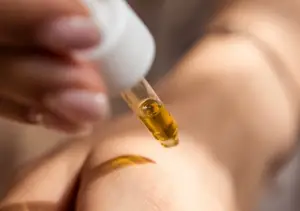
Format changes how much you absorb. Oil held under the tongue is absorbed relatively quickly, while CBD capsules and edibles pass through digestion first, which delays onset and reduces how much reaches the bloodstream. Two products listing the same milligrams will not necessarily feel the same.
If you take prescription medication, speak to your doctor or pharmacist before adding CBD, because CBD can affect how some medicines are processed.
When to take CBD for sleep
Timing follows absorption. If you are using oil under the tongue, most people take it around 30 to 60 minutes before bed. With capsules or edibles, allow longer, often 60 to 90 minutes, because they have to be digested first.
A few practical points:
- Be consistent. Taking it at roughly the same time each evening makes it far easier to judge whether it is doing anything.
- Fat helps. Cannabinoids are fat soluble, so taking CBD with or shortly after a meal containing some fat generally improves absorption.
- Attach it to a cue. Linking it to something you already do, such as brushing your teeth, means you actually remember it.
- Do not stack it with a late screen session. Whatever CBD is doing, bright light and stimulating content at midnight will work against it.
What to expect in the first two weeks
Expectations are where most people go wrong with CBD and sleep. It rarely produces a dramatic first night, and if it does, treat that with mild suspicion.
Nights one to three. Many people notice nothing specific. Some feel a little more relaxed in the evening. This is normal and not a sign the product is not working.
Days four to seven. If anything is going to shift, this is often when people start describing it: falling asleep with less effort, or fewer long stretches of lying awake. It is usually subtle rather than obvious.
Week two. By this point you have enough nights to see a pattern rather than a coincidence. This is the right moment to look at your notes and decide whether to keep going, adjust the amount, or accept that it is not doing much for you.
Mild side effects are possible, most commonly drowsiness the next morning, dry mouth or digestive upset. If morning grogginess is the issue, taking a smaller amount or taking it earlier in the evening is usually the first thing to try.
Sleep habits that matter more than any supplement
This is the part most CBD companies skip. The evidence behind basic sleep behaviors is considerably stronger than the evidence behind any cannabinoid, and if these are not in place, no supplement will compensate.
- Keep a fixed wake time. A consistent wake time, including weekends, anchors your circadian rhythm more effectively than a consistent bedtime does.
- Get light early. Daylight within an hour of waking is one of the strongest signals your body clock responds to. Ten to twenty minutes outdoors does more than most people expect.
- Watch the caffeine curfew. Caffeine has a half life of roughly five to six hours, so a late afternoon coffee is still measurably present at bedtime.
- Alcohol is not a sleep aid. It shortens the time it takes to fall asleep and then fragments the second half of the night, particularly REM sleep.
- Keep the room cool and dark. Core body temperature needs to fall for sleep to begin, which a warm bedroom works against.
- Do not lie awake for an hour. If you have been awake a long time, get up, do something dull in low light, and go back when you feel sleepy. Lying there teaches your brain that bed is a place for being awake.
- Give yourself a wind-down. Thirty minutes of low light and low stimulation before bed matters more than the specific activity you fill it with.
Treat CBD as something you add on top of these, not something that replaces them.
Frequently asked questions about CBD and sleep
Does CBD make you sleepy?
Drowsiness is one of the more commonly reported effects of CBD, particularly at higher amounts, but it is not a reliable sedative and it does not work like one. Many people describe feeling calmer rather than sleepy. Responses vary a lot between individuals, which is why starting low is sensible.
How long does CBD take to work for sleep?
Oil taken under the tongue is typically felt within 30 to 60 minutes, while capsules and edibles take longer because they have to be digested. Beyond the single dose, most people need one to two weeks of consistent evening use before they can judge whether it is making any difference.
Is CBD or CBN better for sleep?
CBD has more human research behind it, even though that research is still limited. CBN is marketed harder for sleep but has very little controlled human evidence supporting it. If you want the better-understood option, CBD is it. Blends exist, but check the lab report for actual CBN content.
Can you take CBD every night?
Many people do use CBD daily, and current research has not identified dependency or withdrawal with CBD itself. That said, long-term data is limited. If you find yourself needing it in order to sleep at all, that is a signal to look at the underlying cause with a doctor rather than to increase the amount.
Should I see a doctor about my sleep?
Yes, if poor sleep has lasted more than a few weeks. Persistent insomnia often has an underlying cause such as sleep apnea, thyroid issues, medication side effects, pain or an anxiety disorder, and those need identifying rather than covering over. Speak to your doctor before adding CBD if you take prescription medication.
If you want to try CBD as part of an evening routine that already includes the basics, start with a low-strength product and give it two consistent weeks before you judge it. You can browse the full range of CBD products people use to support sleep or read the batch lab reports first.




Comments are closed