




No products in the cart.

There are three types of CBD: full spectrum, broad spectrum and isolate. They differ by what else from the hemp plant comes along with the cannabidiol. Full spectrum keeps everything, including trace THC. Broad spectrum keeps everything except the THC. Isolate is CBD and nothing else.
That is the whole distinction, and it drives everything downstream: taste, price, drug test risk and whether you get the entourage effect. This guide covers all three, plus the separate question of what forms CBD comes in, since a full spectrum extract and a full spectrum gummy are the same type in different packaging.
The three types of CBD, explained
When people talk about different types of CBD, they are talking about spectrum, which describes how much of the original plant survives extraction and refinement.
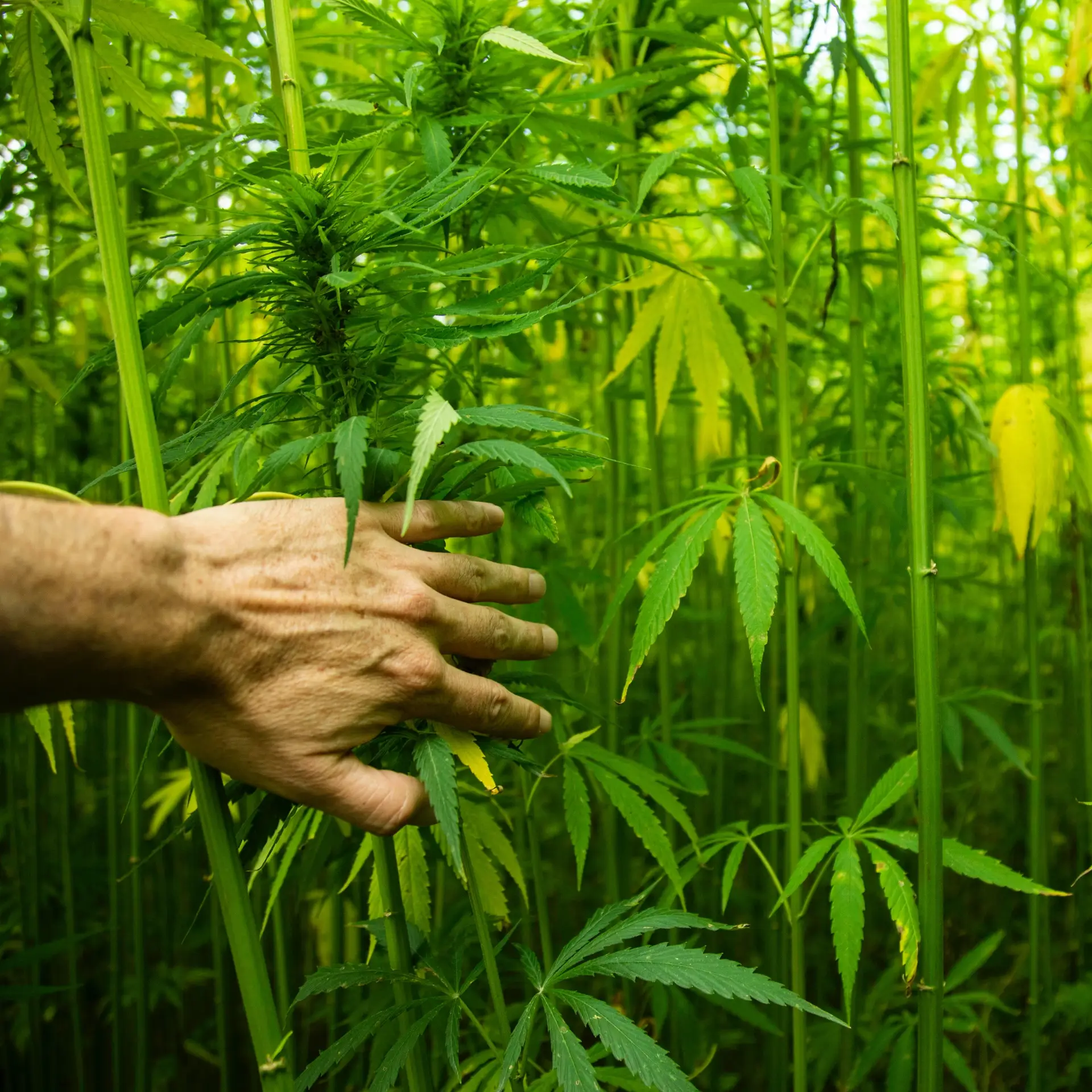
Hemp contains far more than cannabidiol. It holds over a hundred other cannabinoids, including cannabichromene (CBC) and cannabinol (CBN), plus aromatic terpenes such as myrcene, limonene and pinene, and flavonoids. How a producer handles those extra compounds is what creates the three types.
- Full spectrum retains the complete profile, including up to 0.3% THC.
- Broad spectrum retains the profile but has the THC removed.
- Isolate strips everything away, leaving CBD on its own at over 99% purity.
None of the three is universally better. They suit different people for different reasons, and the rest of this article covers which is which.
Full spectrum CBD
Full spectrum CBD contains the full range of compounds extracted from the cannabis plant. That includes terpenes, essential oils, flavonoids and other cannabinoids such as cannabinol, cannabichromene and cannabigerol.
It also includes THC, the psychoactive compound in cannabis, at up to 0.3% by dry weight. That is the legal ceiling for hemp in the United States under the 2018 Farm Bill. At that concentration THC will not make you high in normal use, but it is present and it matters for drug testing.
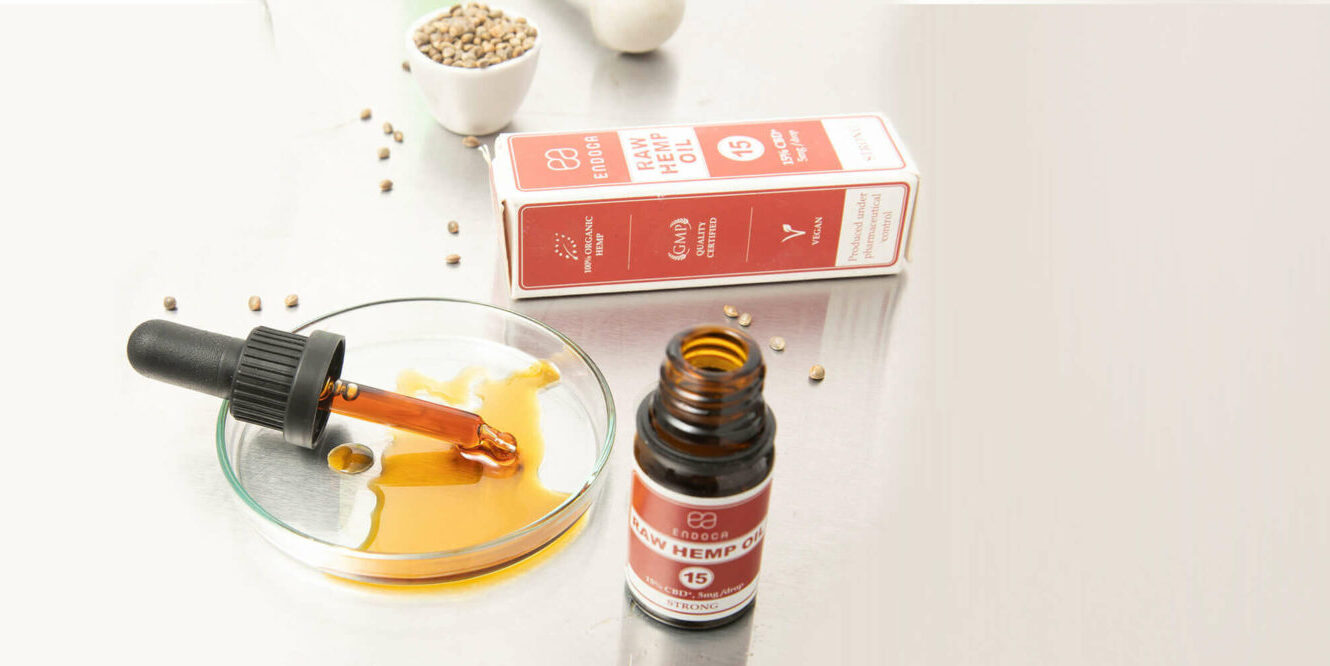
Full spectrum is the type most closely associated with the entourage effect, because it is the only one that keeps the plant’s chemistry intact. Endoca’s hemp extracts and pastes and most of its CBD oils are full spectrum for this reason.
Trade-offs: full spectrum has a strong, earthy, distinctly hemp taste and smell. It carries a real, if small, drug test risk. And it is the type most affected by varying state laws on THC.
Raw versus heated full spectrum
Within full spectrum there is a further split that most brands skip. In the living plant, cannabinoids exist in acidic form as CBDA rather than CBD. Heat converts them through decarboxylation. Endoca’s RAW range is deliberately left unheated, so it retains CBDA alongside CBD. Heated products contain CBD only. Both are full spectrum; they simply hold different versions of the same cannabinoid.
Broad spectrum CBD
Broad spectrum CBD products contain a variety of compounds and cannabinoids from the cannabis plant, including cannabichromene (CBC) and cannabinol (CBN), as well as terpenes like myrcene, limonene and pinene. The defining characteristic of broad spectrum CBD is that it contains no THC. Some products retain trace amounts, but not in the way full spectrum CBD does.
Broad spectrum is made by taking a full spectrum extract and removing the THC through additional refinement, usually chromatography. Everything else is left in place.
The appeal is straightforward. You keep most of the plant’s supporting compounds, and therefore much of the entourage effect, without the THC. For people who are drug tested at work, that is the reason broad spectrum exists.
Trade-offs: the extra refinement step costs money, so broad spectrum often prices higher than full spectrum at the same CBD strength. Removing THC also removes one contributor to the entourage effect, so it is a middle position rather than a free upgrade.
CBD isolate
CBD isolate is the pure form of CBD. Isolate products are more than 99% pure cannabidiol. There is no THC, and no other plant compounds such as cannabinoids, terpenes or flavonoids. It also has no taste and no smell, which is what makes it useful.
Isolate is usually sold as a fine white crystalline powder or as crystals. Endoca’s 99.9% CBD crystals are an example, and we cover the material in more depth in our guide to what CBD isolate is.
Generally, people choose CBD isolate if they want to consume CBD alone, if they are concerned about a drug test that screens for THC, or if they cannot tolerate the taste of hemp extract. It is also the base for most CBD skincare and for anyone who wants to measure an exact milligram intake with no other variables.
Trade-offs: no entourage effect. One study from 2015 reported that purified CBD produced a narrow, bell-shaped dose response in an animal model, while a whole-plant extract enriched in CBD did not, suggesting the surrounding compounds change how the dose behaves. That research was preclinical, and more work is needed before it can be applied to people.
Full spectrum vs broad spectrum vs isolate
| Full spectrum | Broad spectrum | Isolate | |
|---|---|---|---|
| Cannabinoids present | CBD plus CBC, CBN, CBG, terpenes and flavonoids | CBD plus CBC, CBN, CBG, terpenes and flavonoids | CBD only |
| THC content | Up to 0.3% | None, or trace only | None |
| Entourage effect | Complete | Partial, without the THC contribution | None |
| Taste and smell | Strong, earthy, distinctly hemp | Noticeable but milder | None |
| Drug test risk | Real but small; THC is present | Low, though not zero if trace THC remains | Lowest of the three |
| Best for | People who want the whole plant and are not drug tested | People who want most of the plant but must avoid THC | People who want CBD alone, precise dosing, or no taste |
Forms of CBD: oils, capsules, gummies, topicals and crystals
Type and form are two different questions. Type is what is in the extract. Form is how you take it. Any of the three types can appear in most of these forms, so read the label for both.
- CBD oil and drops. Extract suspended in a carrier oil, taken under the tongue. The most flexible form, because you can adjust the amount drop by drop. Browse CBD oils.
- Capsules. A fixed amount in a swallowable shell. No taste, no measuring, slower onset because they pass through digestion. See CBD capsules.
- Gummies and chewables. The easiest starting point for people who dislike the taste of hemp. Fixed strength per piece. See CBD gummies.
- Topicals. Creams, balms and salves applied to skin, used where you want the product to stay local rather than being absorbed body-wide. See CBD skincare.
- Extracts and pastes. Concentrated whole-plant material, usually full spectrum, for people who want the highest concentration per serving.
- Crystals and isolate powder. Pure CBD in loose form, for people who want to weigh their own or make their own preparations.
- Suppositories and chewing gum. Less common formats that suit specific situations, including people who cannot take anything orally.
Which type of CBD is right for you?
A short decision path covers most cases.
- If you are drug tested at work, avoid full spectrum. Start with isolate, or broad spectrum if you want some of the supporting compounds. This is the one factor that should override everything else.
- If you are not drug tested and want the whole plant, choose full spectrum. It is the type most of the entourage effect research relates to, and usually the best value at a given CBD strength.
- If the taste is the obstacle, choose isolate, or a gummy or capsule. Isolate has no flavor at all, and encapsulated products bypass the taste entirely regardless of type.
- If you want to measure an exact intake, choose isolate. With no other cannabinoids present, the milligram figure is the only variable.
- If you are unsure, start with full spectrum oil and give it a consistent few weeks. It is the reference point that makes the other two easier to judge.
Whichever type you pick, the certificate of analysis matters more than the category name. It tells you the actual cannabinoid breakdown, the THC figure and the contaminant screening results for that specific batch. Endoca publishes every batch on our lab testing page.
If you take prescription medication, speak to your doctor before starting any CBD product.
Do all three types show up on a drug test?
No, and the difference between them is the main practical reason the three types exist.
Standard workplace drug tests do not look for CBD. They look for THC metabolites. That means the risk tracks the THC content, not the CBD content.
- Full spectrum contains THC at up to 0.3%. In a single serving this is a very small amount, but THC metabolites accumulate with regular use, and there are documented cases of heavy daily full spectrum users testing positive. If you are tested, this is a genuine risk.
- Broad spectrum has the THC removed, so the risk is low. It is not automatically zero, because some broad spectrum products retain trace amounts. Check the certificate of analysis for a non-detectable THC result rather than trusting the label.
- Isolate contains no THC at all and carries the lowest risk of the three.
No CBD company can guarantee a test result, since testing thresholds, your intake and your own metabolism all play a part. If your job depends on a clean screen, choose isolate and keep the batch certificate.
Frequently asked questions about types of CBD
What are the three types of CBD?
Full spectrum, broad spectrum and isolate. Full spectrum contains all of the plant’s cannabinoids and terpenes including up to 0.3% THC. Broad spectrum contains the same range with the THC removed. Isolate is over 99% pure CBD with no other plant compounds present.
What is the difference between types and forms of CBD?
Type describes what is in the extract, meaning full spectrum, broad spectrum or isolate. Form describes how you take it, such as oil, capsule, gummy, topical or crystal powder. The two are independent, so you can buy full spectrum capsules or isolate-based gummies.
Which type of CBD is strongest?
Strength depends on the milligrams of CBD per serving, not the type. Isolate has the highest CBD purity by weight, but a full spectrum oil can contain more CBD per dose. Compare the milligram figure on the label rather than assuming one category is stronger.
Is broad spectrum CBD better than full spectrum?
Neither is better overall. Broad spectrum suits people who need to avoid THC entirely, and full spectrum suits people who want the complete plant profile. Broad spectrum usually costs more because removing THC requires an additional refinement step after extraction.
Does CBD isolate work without the entourage effect?
Isolate still delivers cannabidiol, and many people use it successfully. What it does not deliver is the supporting terpenes and minor cannabinoids. Research suggests those compounds change how a dose behaves, though most of that work is preclinical and more study is needed.
Can you mix different types of CBD?
Yes. Some people use a full spectrum oil daily and add isolate when they want extra CBD without extra THC. Keep track of your total intake across products so you know what you are actually taking, and change one thing at a time.
If you are choosing your first product, a full spectrum CBD oil is the most useful starting point, and you can move to broad spectrum or CBD isolate once you know how you respond. Check the batch certificate on our lab testing page before you buy.





Comments are closed