


No products in the cart.

CBD extraction is the process of separating cannabinoids from raw hemp plant material so they can be made into a finished product. The four methods in commercial and home use are supercritical CO2, ethanol, steam distillation and olive oil infusion. Each differs in purity, cost and how much of the plant survives.
This guide explains how each method works, what happens to the extract afterwards, and how to read the difference on a label. It is written for anyone comparing CBD products and wondering why two oils at the same strength can be so different.
What is CBD extraction?
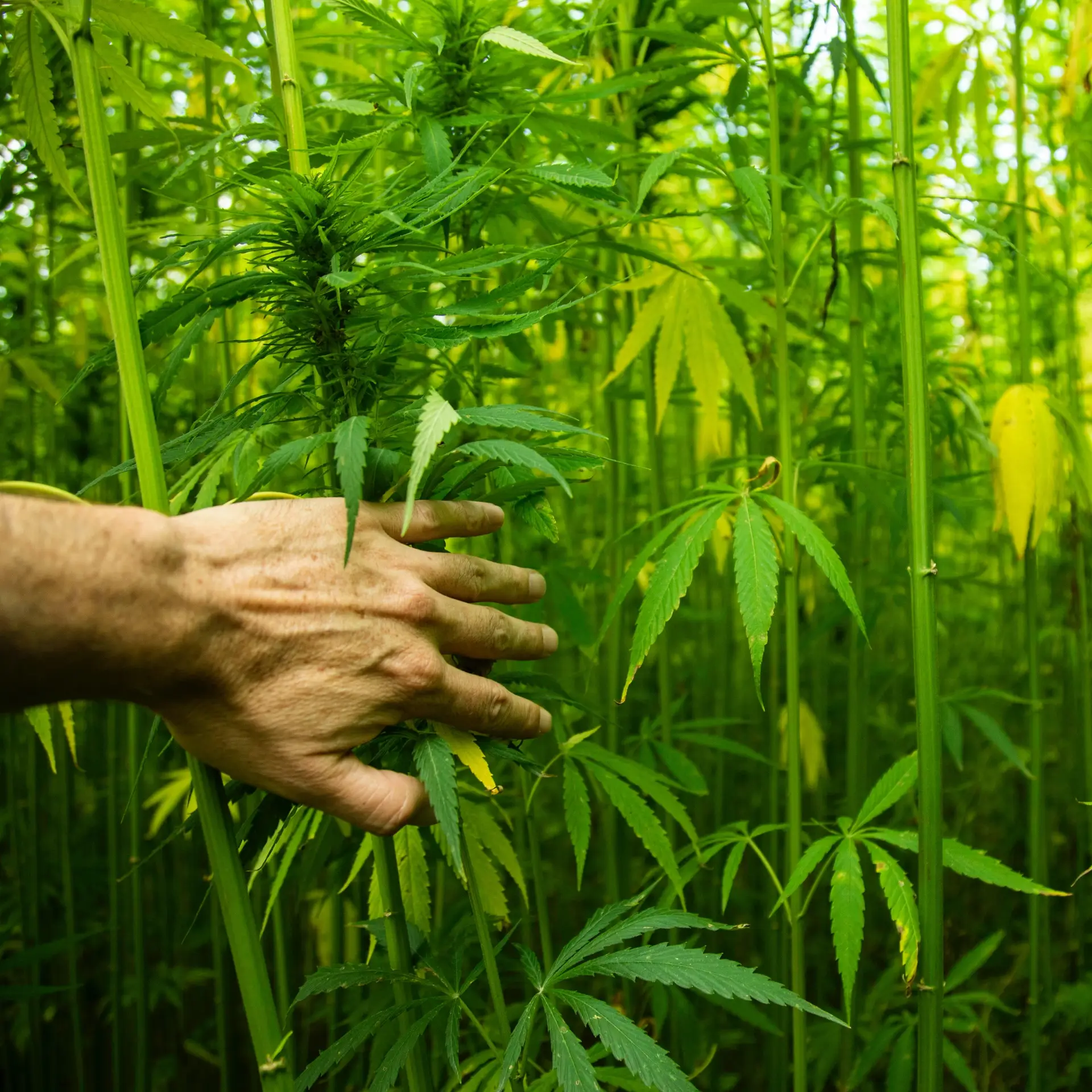
CBD, otherwise known as cannabidiol, is a compound found in the cannabis plant. The richest source of CBD is the flowers of the hemp plant. There are many products that contain CBD, including oils, capsules, topicals such as balms and lotions, gums and more.
Before any of those can exist, the cannabinoids have to come out of the plant. That is what extraction is: separating the compounds you want, cannabinoids and terpenes, from the ones you do not, meaning waxes, chlorophyll, cellulose and plant fibre.
There are many different ways to extract CBD from hemp, and some methods are safer or more efficient than others. It is worth knowing the difference, because the way cannabinoids are extracted affects the efficacy and purity of the final product. It also determines whether solvent residue can end up in the bottle.
Three things separate a good extraction from a poor one:
- Selectivity. How well the method pulls out cannabinoids and terpenes while leaving chlorophyll, waxes and plant matter behind.
- Preservation. Whether delicate terpenes and acidic cannabinoids such as CBDA survive the process, or are destroyed by heat.
- Residue. Whether anything used to perform the extraction remains in the finished extract.
Supercritical CO2 extraction
Supercritical CO2 extraction allows for a safe and clean extraction without the use of additional additives or contaminants. It produces a clean, pure, high-quality extract, gives efficient yields so more is recovered from the hemp, and is sustainable and environmentally friendly because the carbon dioxide can be captured and reused.
The underlying principle was first discovered in 1822 by the French engineer Charles Cagniard de La Tour, who identified the supercritical state of matter. It allows for a great deal of control over the separation of components during extraction.
How supercritical CO2 extraction works
In this method, temperature and pressure are used to create a series of changes in carbon dioxide. Pushed past its critical point, CO2 stops behaving purely as a gas or a liquid and takes on properties of both. It has the density of a liquid, so it can dissolve compounds, and the diffusivity of a gas, so it can move through plant material.
That combination is what makes it useful. By adjusting temperature and pressure through the run, an operator creates conditions in which plant compounds of different weights can be separated and filtered during a single extraction. Lighter terpenes come off under one set of conditions, heavier cannabinoids under another.
When the pressure is released at the end, the CO2 returns to gas and simply leaves. Nothing is left behind to remove, which is the central advantage of the method.
Trade-offs: it is a process that requires expertise to perform and it is expensive. Equipment runs to hundreds of thousands of dollars, and it is slower per batch than ethanol.
Ethanol extraction
Ethanol extraction is the most widely used method in commercial CBD production, largely because it scales. Where CO2 requires expensive pressure vessels, ethanol requires tanks, and the volume a facility can process is limited mainly by how much solvent it can handle.
How ethanol extraction works
Ground hemp is soaked in food-grade ethanol, which dissolves cannabinoids and terpenes out of the plant material. The plant solids are then filtered off, leaving a solution of ethanol and hemp compounds. That solution goes into an evaporator, usually a rotary evaporator or falling film unit, where gentle heat and reduced pressure boil the ethanol away and recover it for reuse. What remains is a crude hemp extract.
Producers usually run this cold, at temperatures well below freezing, in a variation called cryo-ethanol extraction. Ethanol is a polar solvent, so at room temperature it also pulls out chlorophyll and water-soluble plant material that make the extract dark, bitter and harder to refine. Chilling the ethanol first leaves most of that behind.
Strengths and limitations
- Fast and scalable. A facility can process large volumes of biomass per day at a far lower capital cost than CO2.
- High recovery. Ethanol is efficient at getting cannabinoids out of the plant.
- Generally recognised as safe. Ethanol is a food-grade solvent, which is why it is preferred over hydrocarbons such as butane for consumer products.
- Less selective. It extracts more of the plant than you want, so the crude output almost always needs additional refinement.
- Residual solvent risk. Any solvent-based method carries the possibility of trace ethanol remaining in the finished product. This is why residual solvent testing belongs on the certificate of analysis, not just cannabinoid content.
- Terpene loss. The evaporation step removes some volatile terpenes along with the solvent, so many ethanol producers reintroduce terpenes afterwards.
Steam distillation
Steam distillation is a centuries-old process, commonly used to distil alcohol and to extract essential oils from botanicals. It is less complicated than CO2 extraction.
The plant matter is introduced to a distillation tank. Water is heated below it, and the steam that is produced carries oils up to the top of the tank. The vapour then passes through a condenser, which returns it to liquid, resulting in a mix of water and oil. Further distillation separates the water from the oil, leaving a full spectrum oil.
This CBD extraction process is much simpler than supercritical CO2 extraction, but it is more prone to error. It is also less efficient, and can potentially damage part of the essential oil profile of the plant, because sustained heat degrades both terpenes and cannabinoids. For these reasons steam distillation is not used very often to extract cannabinoids, and it is largely a legacy method in this industry.
Olive oil extraction
Olive oil extraction can be performed at home, but the plant material has to be decarboxylated first. This means the acidic cannabinoids are activated by heat. It happens when hemp is smoked or vaped, and it can also be done deliberately in an oven.
Once the plant matter is decarboxylated, you mix it with olive oil and heat it on the stove for several hours. The CBD, along with other essential terpenes, binds to the fat in the oil, producing an infused product. Once the mixture has cooled, you filter the oil and remove any leftover plant material.
This is a reasonable method if you want to produce CBD oil at home, and it is relatively safe because no volatile solvent is involved. However, there is very little control over the final product. The CBD content can be weak and unreliable compared with professional methods, and because the oil is not concentrated, the result cannot be stored for long or standardised to a known strength.
CBD extraction methods compared
| Supercritical CO2 | Ethanol | Steam distillation | Olive oil | |
|---|---|---|---|---|
| How it works | CO2 held past its critical point dissolves and carries out plant compounds, then evaporates | Cold food-grade ethanol dissolves cannabinoids, then is boiled off and recovered | Steam lifts volatile oils, which are condensed and separated from water | Decarboxylated hemp is simmered in olive oil so cannabinoids bind to the fat |
| Purity | High, and tunable by adjusting pressure and temperature | Moderate as crude; high after refinement | Low to moderate; heat degrades part of the profile | Low and unstandardised |
| Solvent residue risk | None; CO2 leaves as gas | Present; requires residual solvent testing | None; only water is used | None; the olive oil is the finished carrier |
| Equipment cost | Very high | Moderate | Low to moderate | Minimal |
| Scalability | Good, but constrained by vessel size and cycle time | Excellent; the standard for large-volume production | Poor for cannabinoids | None; batch-by-batch only |
| Best suited to | Producers who want clean, controllable, solvent-free extracts | High-volume commercial production feeding into refinement | Essential oil and terpene work rather than cannabinoids | Home preparation for immediate use |
Other methods exist, including hydrocarbon solvent extraction using butane or propane, and cold-press or rosin techniques that use pressure alone. Each has its own advantages and disadvantages. Supercritical CO2 remains the cleanest and most controllable method, and makes the most sense for any producer that can afford it.
What happens after extraction: winterisation, distillation and decarboxylation
Extraction produces crude extract, not a finished product. Almost every commercial CBD oil goes through several more steps, and this is where much of the real quality difference is decided.
Winterisation
Crude extract contains plant waxes, lipids and fats that make it cloudy and give it an unpleasant mouthfeel. Winterisation removes them. The extract is dissolved in ethanol, chilled to well below freezing for several hours, and the fats and waxes solidify and drop out of solution so they can be filtered off. The ethanol is then evaporated away. CO2 extracts often need this step because supercritical CO2 pulls waxes along with cannabinoids.
Filtration and colour remediation
The extract may then pass through activated carbon or bentonite clay to strip chlorophyll and pigments. This is what turns a dark green crude into a clear golden oil. It is cosmetic, but it also removes some off-flavours.
Short path and fractional distillation
Distillation separates the extract by boiling point under vacuum, concentrating cannabinoids into a high-potency distillate and separating out remaining plant material. Taken far enough, and combined with chromatography, this is how a producer arrives at CBD isolate at over 99% purity. Chromatography is also the step used to remove THC and turn a full spectrum extract into a broad spectrum one.
Decarboxylation
This is the step that decides whether you end up with a raw product or a heated one, and it is worth understanding properly.
In the living hemp plant, cannabinoids do not exist in the form named on most labels. What the plant actually makes is cannabidiolic acid, CBDA, which carries an extra carboxyl group on the molecule. Applying heat breaks that group off and releases it as carbon dioxide. CBDA becomes CBD. The same reaction turns THCA into THC and CBGA into CBG.
Decarboxylation happens slowly with time, light and air, and quickly with heat. Roughly speaking, the more heat and the longer it is applied, the more complete the conversion.
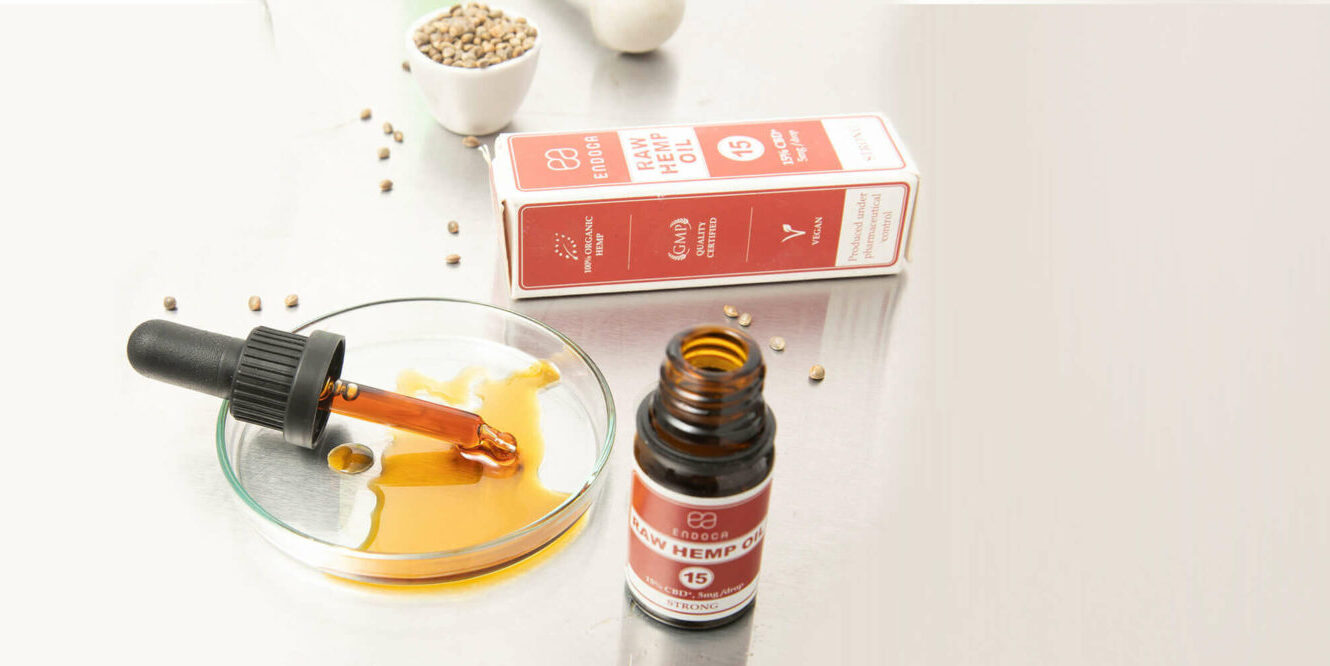
Neither the acid nor the neutral form is inherently superior. They are different molecules with different properties, and skipping the heat step is a deliberate choice rather than an omission. It is what separates Endoca’s RAW range, which retains CBDA, from its heated range, which contains CBD. A certificate of analysis lists CBDA and CBD as separate lines, so you can see exactly which you are buying.
How Endoca extracts CBD
Extraction quality starts before extraction. If the hemp going into the machine carries pesticide residue or heavy metals from the soil, extraction concentrates those alongside the cannabinoids. That is the argument for controlling the whole chain rather than buying biomass on the open market.
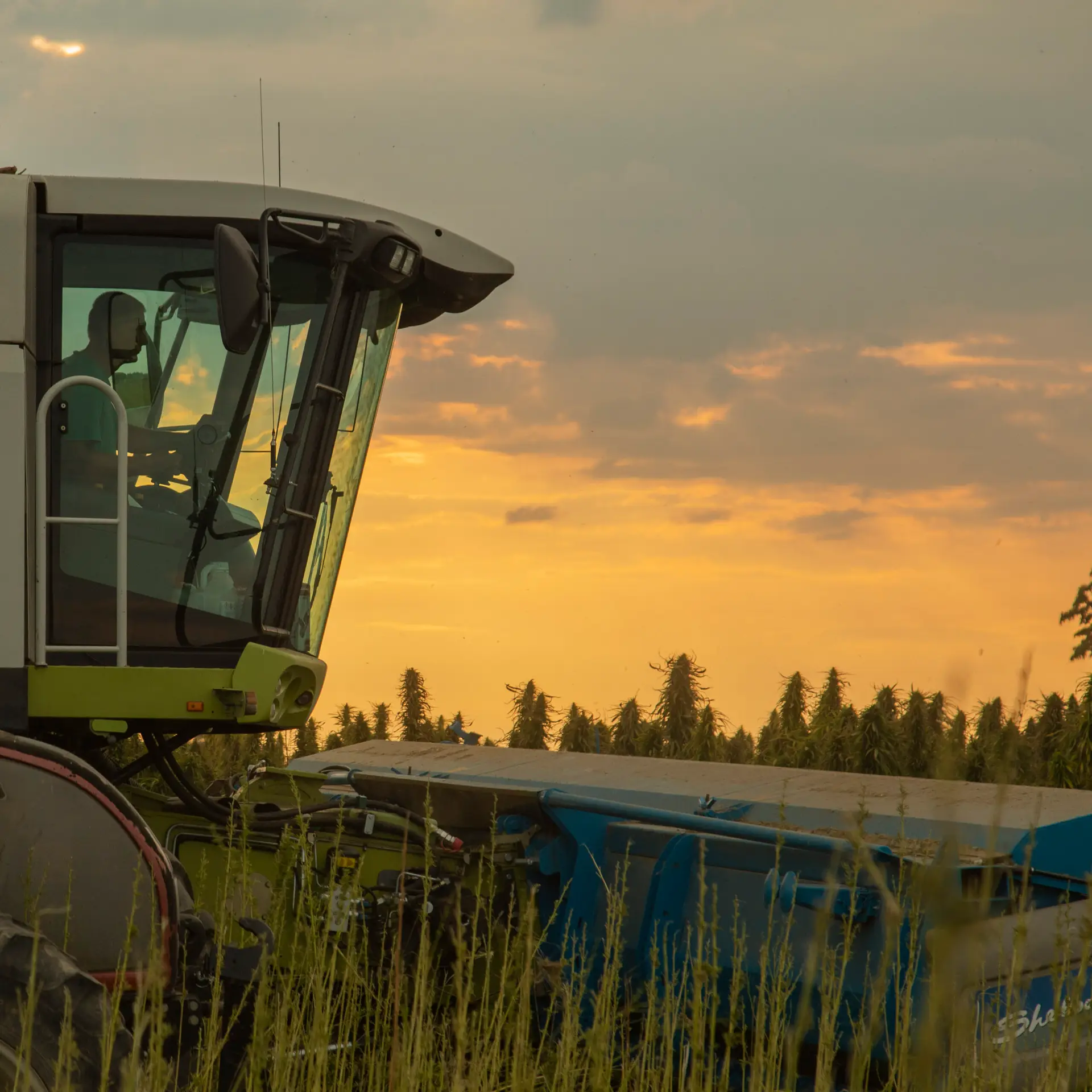
Endoca grows its own hemp on its own farms, which means the input to extraction is known rather than sourced. From there:
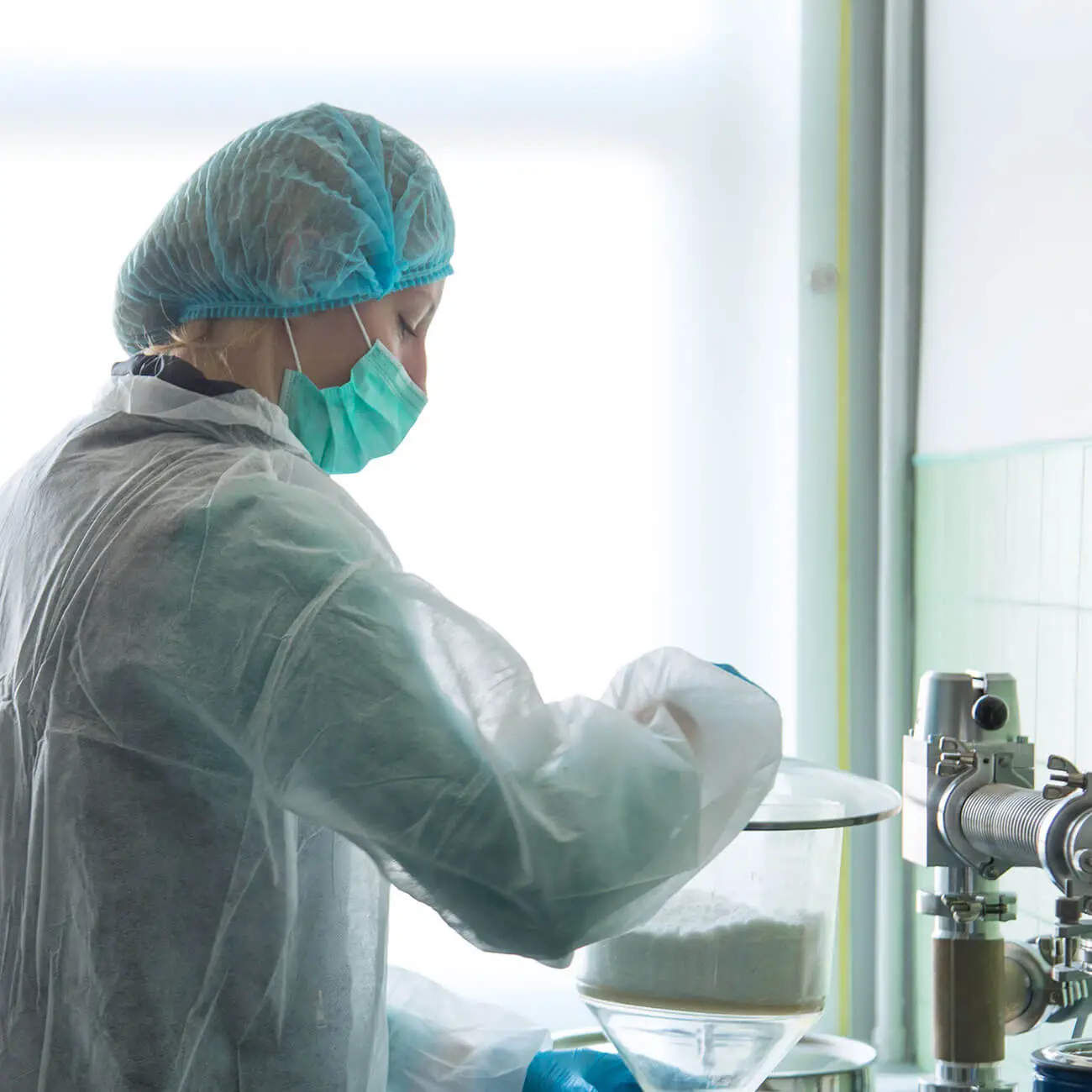
- Supercritical CO2 extraction, performed in-house rather than outsourced, so no solvent is introduced at any point and none can remain in the finished extract.
- GMP-certified manufacturing, meaning documented, repeatable procedures and batch traceability rather than ad hoc production runs.
- Screening for more than 200 pesticides, plus heavy metals and mycotoxins, on the finished product.
- HPLC and NMR analysis to verify the cannabinoid profile. HPLC separates and quantifies each cannabinoid, and NMR confirms molecular identity, so the figure on the label is the figure in the bottle.
- RAW and heated ranges kept separate, so unheated products retain CBDA and the acidic cannabinoid profile the plant actually produced.
You can see the full production chain on our process page, the standards behind it under quality control, and every batch certificate on our lab testing page.
Frequently asked questions about CBD extraction
What is the best CBD extraction method?
Supercritical CO2 is generally considered the best method for consumer products. It leaves no solvent residue, gives close control over which compounds are pulled out, and preserves the profile well. Ethanol is the most practical at very large scale, but requires residual solvent testing on every batch.
How is CBD extracted from hemp?
Dried hemp flower and biomass is ground, then treated with a solvent that dissolves the cannabinoids out of the plant material. That solvent may be supercritical CO2, ethanol, steam or a fat such as olive oil. The solvent is then removed, leaving a crude extract that is refined further.
Can you extract CBD at home?
You can make an olive oil infusion at home, which is safe and simple but produces a weak, unstandardised product with an unknown CBD content. Solvent-based methods using butane or high-proof alcohol carry real fire and residue risks and are not advisable outside a properly equipped facility.
Does extraction remove THC?
No. Extraction concentrates whatever is in the plant, THC included. THC is removed afterwards, usually by chromatography, which is how a full spectrum extract is turned into a broad spectrum one. Hemp grown for CBD is bred to stay under 0.3% THC in the first place.
What is decarboxylation in CBD extraction?
Decarboxylation is the heat-driven reaction that converts CBDA, the acid the plant actually produces, into CBD by removing a carboxyl group. Products described as RAW skip this step deliberately and retain CBDA. Heated products complete it. Both appear as separate lines on a lab report.
How can I tell how a CBD product was extracted?
Check the certificate of analysis. A CO2-extracted product should carry no residual solvent, while a solvent-extracted one should show a residual solvent panel with results under the limit. If a brand does not publish batch-level lab results, you have no way to verify either the method or the contents.
If you want to see the difference extraction makes, start with a CO2-extracted hemp extract or a full spectrum CBD oil and read the batch certificate alongside it. Speak to your doctor before starting any CBD product, particularly if you take prescription medication.



Comments are closed