
- Shop
Learn About CBD
New to CBD? Start your journey here.
Watch Our YouTube Channel
Science, wellness, and product education.
- About Us

Our Story
From humble beginnings to a global mission – we grow, harvest, and craft hemp with care for people and planet.
What Is CBD?
CBD is nature’s way to restore balance, calm, and overall well-being – naturally and without the high.
The Process
From seed to shelf, we grow organically, extract cleanly, and follow strict quality standards for purity.

Lab Testing
Every batch is third-party tested to ensure purity, safety, and the exact amount of CBD every time.
Our Values
Sustainability, transparency, and wellness guide every decision – for you and for the planet.

Not All THC-Free CBD Is Created Equal
Two words on a British label carry more weight than most shoppers realise, and THC free is one of them. Said properly it means the compound was refined out until an assay could no longer see it, and that a certificate records the result. Said loosely it means somebody typed it. Everything gathered here has a batch document behind it, and if a seller cannot produce one for a product making that claim, you have learned something about the seller.
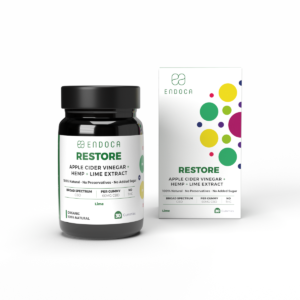
Getting there happens in two ways and both sit on this page. Isolate strips everything back until only cannabidiol remains, which on our product is stated at 99.9%. Broad spectrum removes the THC and leaves the terpenes and minor cannabinoids where they were. Restore carries 0.0% on the jar. The Chocolate Mint oil is produced to the same figure. Which route makes sense depends entirely on whether you want the rest of the plant along with it.
The reason this matters more in Britain than almost anywhere else is a rule about containers rather than percentages. Controlled cannabinoids in an exempt product are capped at one milligram per container here, and a percentage on a label tells you nothing about whether a jar clears that. A product with the THC taken out sidesteps the arithmetic entirely, which is a compliance advantage as much as a personal preference, and it is set out properly in the compliance section of this package.

100% Organic
Organically grown hemp without unnecessary pesticides

Third Party Tested
Every batch is independently tested for purity and cannabinoid content

Highest Quality
Produced in GMP-certified facilities with rigorous quality control

THC Removed
Broad Spectrum and Isolate Only

UK Delivery
Fast and Discreet
Compare Endoca THC-Free Products
All five, compared by how the THC was taken out, the format, who each was built for and what the pack states.
| PRODUCT | CBD TYPE | FORMAT | BEST FOR | WHAT THE PACK STATES |
|---|---|---|---|---|
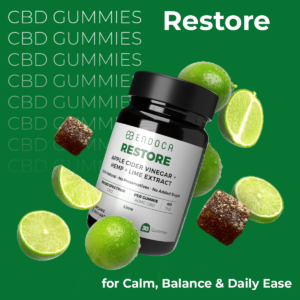
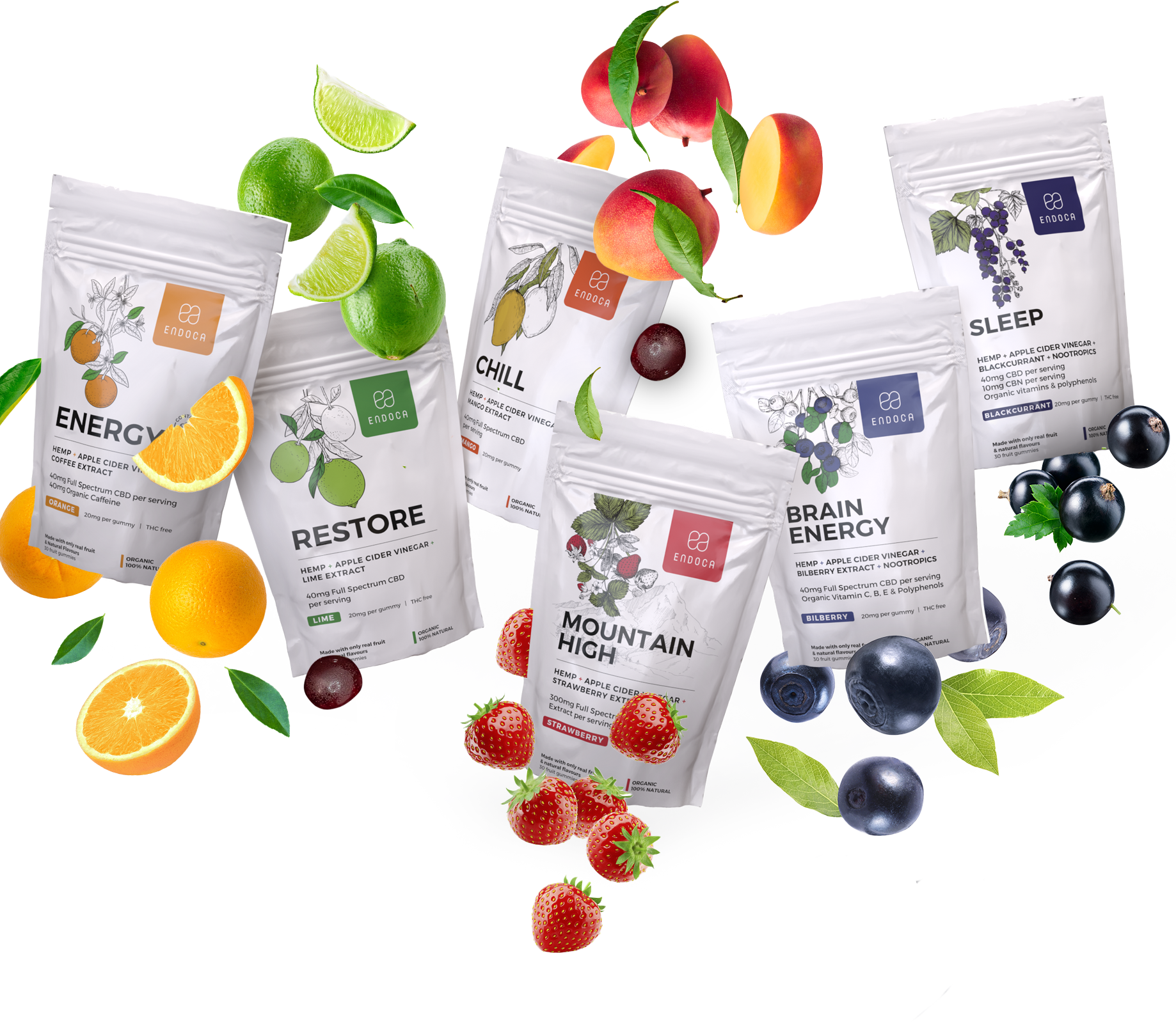
| THC Free CBD Gummies Restore | Broad spectrum | 30 gummies, lime | A stated jar total | 1200mg broad spectrum per jar, 0.0% THC |
| CBD Gummies Energy 1200mg, Orange | Broad spectrum | Gummies, orange | A chew carrying natural caffeine | 1200mg CBD, THC free, no added colourants |
| Pineapple Express Gummies | Broad spectrum | 30 gummies, pineapple and lime | A daily chew without THC | THC-free broad spectrum, no added sugar |
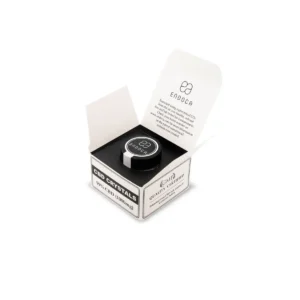
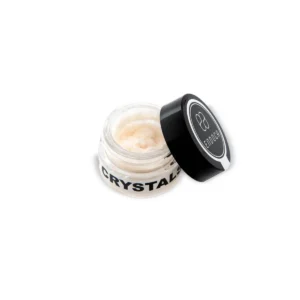
| CBD Isolate 1000mg | Isolate | Crystalline powder | Making your own, or absolute purity | 99.9% cannabidiol on the UK listing |
| CBD Oil 30mg Chocolate Mint | Produced to 0.0% THC | 10ml dropper bottle | Drops without hemp taste or THC | 1mg per drop, cocoa and mint |
What Is THC-Free CBD
It is cannabidiol from hemp that has had tetrahydrocannabinol taken out, rather than carrying the trace quantity hemp makes naturally. Nothing about the plant or the cannabidiol molecule changes. What changes is how many refining steps the extract went through, and the one that removes THC is the reason these five sit together rather than being scattered across the shop.
Isolate is the furthest end. Waxes and lipids drop out in cold alcohol, the material is filtered and crystallised, and what remains is a fine white powder that smells of nothing at all. Broad spectrum stops before that point, taking out the THC while leaving the terpenes and the minor cannabinoids in place. That middle step is technically harder than either alternative, which is why fewer companies offer it.
Below the detection limit is the phrase doing the real work, and it deserves explaining rather than hiding. An assay does not find nothing. It finds nothing above the smallest quantity it can measure. A stated 0.0% is therefore a statement about the method used, and the certificate is where you find out which method that was. We would rather set that out than let anyone read an absolute into a measurement.
What Can THC-Free CBD Be Used For?
Almost everyone arriving here does so for one of two reasons, and they have very little to do with each other. Either THC is a problem in some part of your life, or you simply want the one compound and nothing else.
The five below are sorted on that basis and then by format. Nothing here says what any of them does, because no cannabidiol product sold in Britain may be presented as doing anything to your health.
- Testing At Work Or In Sport: Screens look for THC metabolites rather than for cannabidiol, so isolate is the lowest risk we sell on that measure. Read our piece on CBD and drug tests before relying on anything.
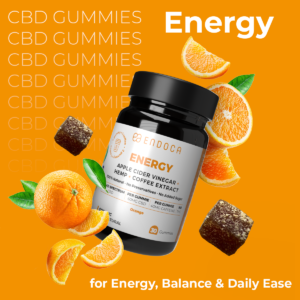
- A Chew Without THC: Restore, Energy and Pineapple Express cover lime, orange and pineapple, none of them carrying added sugar.
- Drops With No Hemp Taste: CBD Oil 30mg Chocolate Mint is produced to 0.0% and is the only bottle in the range that tastes of neither hemp nor apology.
- Making Something Yourself: Isolate dissolves into a carrier oil, a warmed butter or a hot drink, so you set the strength and nothing carries a flavour into whatever you have made.
- Learn More: Begin with what are the different types of CBD, then the entourage effect if you want to understand what refining takes away alongside the THC.
If nothing in your life makes THC awkward, the full spectrum range holds more of the plant and is where most of our customers end up instead.
Frequently Asked Questions
That the compound was refined out until the testing method could no longer detect it, with a batch certificate recording the outcome. It describes a measurement rather than an absence. Everything here is either broad spectrum, with the THC removed and the rest kept, or isolate, with everything but cannabidiol removed.
Broad spectrum holds on to the terpenes and the minor cannabinoids and drops only the THC. Isolate keeps cannabidiol alone, at 99.9% on the UK listing. One is nearer the plant, the other is nearer a single ingredient.
With a gummy if you want the amount decided for you, and Restore is the jar that publishes a total. With the Chocolate Mint oil if you would rather have drops. With isolate if you intend to put cannabidiol into something you are making yourself.
Yes, and it is obvious immediately. Terpenes carry nearly all of what people mean by the taste of hemp, so isolate has none of that and broad spectrum has considerably less. Fruit rather than sugar covers whatever remains in the gummies.
There is less cannabidiol in nothing and no less in these, which is the only part of that question anyone can answer. Whether an extract behaves differently once the THC is gone has not been settled by research, and a confident answer in either direction goes past the evidence.
By chromatography, which separates compounds according to how they travel through a medium and allows the THC fraction to be drawn off while everything else is collected. It is a longer process than producing either full spectrum or isolate, which is reflected in what broad spectrum products cost.
The entourage idea holds that cannabinoids and terpenes act on one another rather than alone, and it remains a research question rather than an established finding. Isolate holds a single compound, so it is outside the discussion by definition. Broad spectrum keeps the terpenes, which is where the argument actually lives.
By high performance liquid chromatography on the finished batch, published alongside screens for residual solvents, pesticides and heavy metals. Certificates carry batch numbers and sit on the lab testing page rather than being sent out when somebody asks.
No laboratory threshold can be guaranteed against, and we are not going to pretend otherwise. Isolate carries no detectable THC, which makes it the lowest risk in the range, and that is the limit of what we will say. Where a job depends on it, the certificate and your employer’s threshold are the two documents that matter.
Partly, and in the part that matters most. Cannabidiol remains a novel food in Great Britain with no application authorised to date, and that is unaffected. What removing THC does address is the separate exempt product route, which caps controlled cannabinoids at one milligram per container. A product without them clears that question rather than having to answer it.
A Food Standards Agency list of cannabidiol products that were on sale before a cut-off date and may remain while novel food applications are assessed. Being on it is not an authorisation and it should never be described as one.
The FSA advises against cannabidiol for anyone under 18, anyone pregnant, breastfeeding or trying to conceive, anyone taking medication and anyone immunosuppressed. Removing the THC does not change any part of that advice.
Plenty of countries restrict cannabidiol itself, quite separately from anything about THC, so a THC-free product is not automatically easier to carry. Check the position at both ends of the journey rather than assuming the label settles it.
Yes, and a good number of customers keep both, using isolate on the days it matters. Nothing conflicts and there is nothing to declare between them.
Sealed, somewhere cool and dry, away from the light. A fine powder draws moisture out of the air and clumps together, which does it no harm but makes weighing it a nuisance.
They soften in a warm parcel and set again once cool, with the extract untouched even where the shapes are not. Isolate and the oil both travel better than any chew does.
On the lab testing page, listed against batch numbers. This is the collection where reading it actually matters, so match the batch on your pack to the document rather than trusting the front of the label.