



 26Apr
Lion’s mane (Hericium erinaceus) is a shaggy, white, pom-pom-shaped mushroom that has been used in East Asian food and traditional practice for centuries. Today it is one of the most popular functional mushrooms in the UK, usually taken as a daily lion’s mane supplement for focus and general wellbeing. This guide explains what lion’s mane is, what the research does and doesn’t show, how much people take, the difference between extract and powder, and what to look for on a UK label before you buy.
What is lion’s mane?
Lion’s mane is an edible mushroom that grows on hardwood trees across Europe, North America and Asia. In Britain it grows wild but is a protected species, so supplements are made from cultivated mushrooms. The part of the mushroom matters: the fruiting body (the visible mushroom) and the mycelium (the root-like network) contain different compounds in different amounts, which is why good products state clearly which part they use.
The compounds most often discussed are hericenones and erinacines, along with beta-glucans — a class of polysaccharides found across functional mushrooms. These are the molecules researchers are most interested in, though it’s important to be clear that most of the evidence is still early.
What is a lion’s mane good for?
People most commonly take lion’s mane for focus and mental clarity, which is why it’s often described as a “brain” or nootropic mushroom. It’s also used as a calm alternative to caffeine and as part of a daily wellness routine. Below is an honest summary of where the research stands — lion’s mane is a food supplement, not a medicine, and it isn’t intended to diagnose, treat or cure any condition.
Focus and mental clarity. This is the most popular reason people try lion’s mane. A handful of small human trials have looked at cognitive measures and reported encouraging results, but the studies are small and short, so they justify further research rather than firm conclusions.
Brain and nerve health. Lion’s mane is widely studied for its effect on nerve growth factor (NGF). Most of this work has been done in cell cultures and animals, not in humans, so it should be read as promising laboratory science rather than proven human benefit.
Antioxidant activity. Lion’s mane contains phenolic compounds that show antioxidant activity in laboratory settings. This is a common finding across many plants and mushrooms and has mostly been measured in the lab.
Immune support and beta-glucans. Beta-glucans are the most-studied compound class across functional mushrooms and are the main reason many people include mushrooms in a daily routine. As with the other areas, the strongest evidence is preclinical.
Lion’s mane extract vs powder: which is stronger?
This is one of the most important things to understand before you buy, because it decides how much active compound you actually get.
Powder is simply milled, dried whole mushrooms. It’s minimally processed, but the active compounds are locked inside tough cell walls made largely of chitin, which the body doesn’t break down easily.
Lion’s mane extract is made by concentrating the mushroom — most often with hot water, and sometimes with a combination of hot water and alcohol (“dual extraction”). Heat breaks down the chitin cell walls and releases compounds such as beta-glucans, so a well-made extract delivers more active material per gram. Good extracts state an extract ratio (for example 8:1, meaning 8 kg of mushroom went into 1 kg of extract), which lets you compare strength between products.
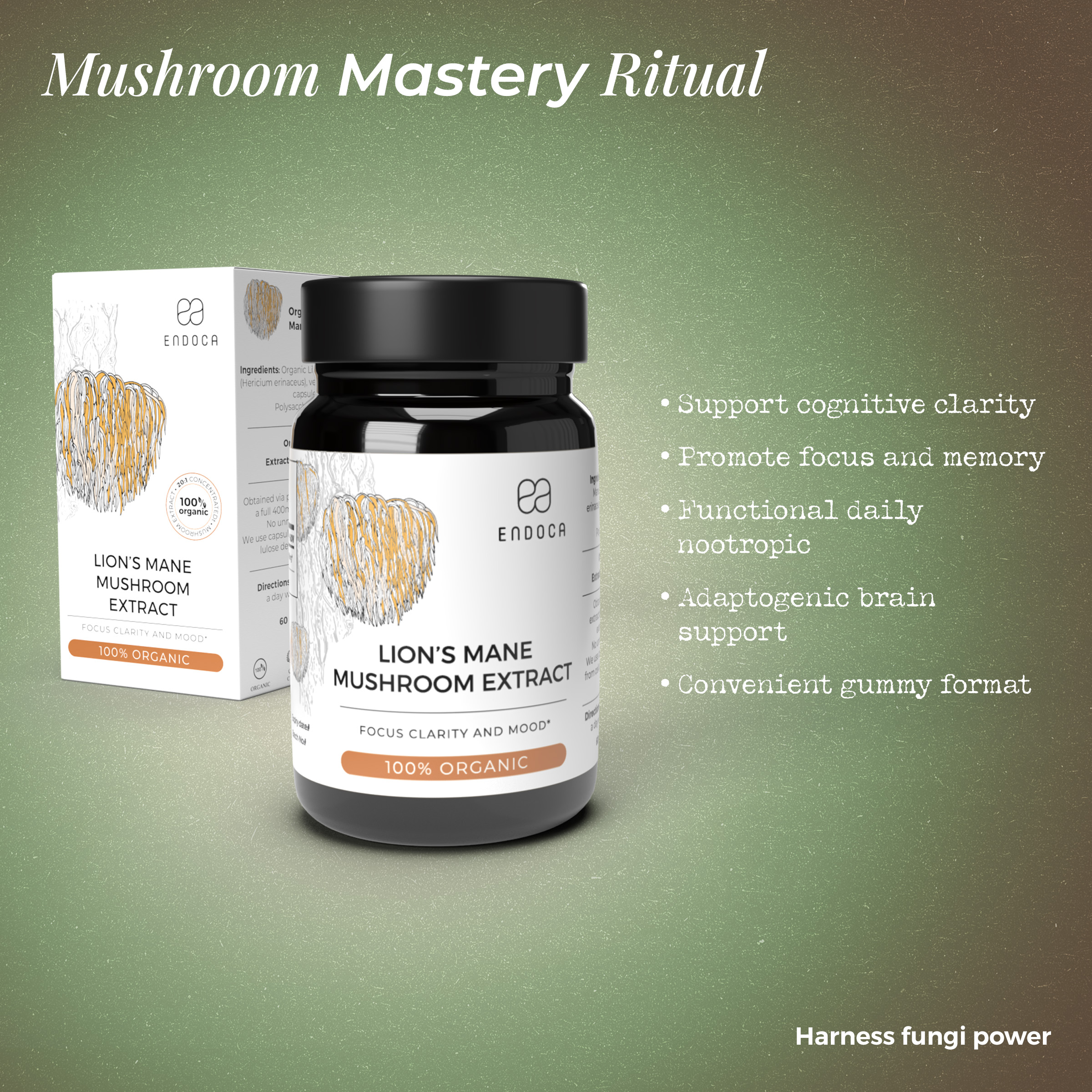
A simple rule of thumb: if you want a concentrated, measurable dose, choose an extract with a stated ratio and beta-glucan content. If you prefer whole-food simplicity and don’t mind a larger serving, powder is fine. Endoca’s lion’s mane capsules use a concentrated extract, and the lion’s mane gummies are an easy, measured option for daily use.
How does lion’s mane work?
Endoca takes a whole-mushroom approach, using the fruiting body and a hot-water extraction that breaks down chitin so the active compounds are more available. The mechanisms under study — NGF support, antioxidant and immune activity — are areas of active research rather than settled science, and we describe them that way deliberately.
Lion’s mane dosage: how much do people take?
Commercial lion’s mane products typically provide 500 mg to 3,000 mg per day, with the right amount depending on whether it’s an extract or a powder and how concentrated it is. A sensible approach is to start at the lower end, take it consistently every day, and follow the instructions on the label. If you take prescription medication, are pregnant or breastfeeding, or have a health condition, speak to your GP or pharmacist first.
How long does lion’s mane take to work?
Responses vary from person to person. The human studies that exist typically ran for four to sixteen weeks, so lion’s mane is best thought of as something you take consistently over several weeks rather than expecting an immediate effect.
When is the best time to take a lion’s mane?
Most people take lion’s mane in the morning or early afternoon, often as part of their focus routine. It contains no caffeine, so it won’t keep you awake — but because many people use it for daytime clarity, mornings are the natural fit. If you’re looking for an evening mushroom, reishi is the one more commonly used to wind down.
Side effects and who should avoid lion’s mane
Lion’s mane is generally well tolerated. The most commonly reported effect is mild digestive upset. The key risk to be aware of is mushroom allergy — if you’re allergic to mushrooms, avoid it. As a precaution, lion’s mane is not recommended during pregnancy or breastfeeding, if you take prescription medication, or in the run-up to surgery, unless a healthcare professional advises otherwise.
Lion’s mane vs other functional mushrooms
Lion’s mane is usually chosen for focus; other mushrooms are used for different reasons. Cordyceps is associated with energy and physical performance, while reishi is used for relaxation and sleep. If you’re weighing them up, these comparisons go into detail: lion’s mane vs cordyceps and lion’s mane vs reishi vs cordyceps. Blends can be convenient, but they’re only worth it when the label lists the amount of each individual mushroom — otherwise you can’t tell how much of anything you’re getting. You can see the full functional mushroom range to compare formats.
Buying lion’s mane in the UK: what to check on the label
In the UK, lion’s mane mushroom extracts are sold as food supplements. When comparing products, check the label for: the species name (Hericium erinaceus), the part used (fruiting body is generally preferred), the extract ratio and beta-glucan content, organic certification, a batch number, and a UK or EU business address. Most importantly, look for third-party testing for contaminants such as heavy metals — mushrooms readily absorb what they grow in. Every Endoca batch comes with independent lab testing you can check.
Endoca’s lion’s mane range
Endoca’s lion’s mane is organic, vegan and made from concentrated extract with documented lab results. For a precise daily dose, the lion’s mane capsules are the simplest option; if you prefer something easier to take, the mushroom gummies range includes lion’s mane. Give it a few weeks of consistent daily use and judge it by your own experience.
Frequently asked questions about lion’s mane
What is lion’s mane good for?
Lion’s mane is most commonly used to support focus and mental clarity, which is why it’s often called a “brain” or nootropic mushroom. It’s also used for general wellbeing and as a caffeine-free part of a daily routine. Early human studies are small and not conclusive, and it’s also studied for nerve health, antioxidant activity and immune support via beta-glucans.
What does lion’s mane do?
Lion’s mane provides compounds — hericenones, erinacines and beta-glucans — that researchers are studying for their effects on the brain, nerves and immune system. Most of this evidence is still preclinical, so it’s best understood as a supplement people take for daily focus and wellbeing rather than a treatment for any condition.
How much lion’s mane should I take?
Commercial products typically provide 500 mg to 3,000 mg per day. Start at the lower end, take it consistently, and follow the label. Ask a GP or pharmacist first if you take medication, are pregnant or breastfeeding, or have a health condition.
Can you take lion’s mane every day?
Yes — lion’s mane is designed for daily use, and most of the benefits people report come from taking it consistently over several weeks. It contains no caffeine, so it won’t disrupt sleep.
What’s the difference between lion’s mane extract and powder?
Powder is milled whole mushroom; extract is concentrated, usually with hot water (sometimes plus alcohol), to break down the tough chitin cell walls and raise the level of active compounds such as beta-glucans. Extracts list an extract ratio, so you can compare strength between products.
Does lion’s mane have side effects?
Lion’s mane is generally well tolerated. The most common effect is mild digestive upset, and the main risk is for people with a mushroom allergy. Avoid it during pregnancy and breastfeeding, alongside prescription medication, or before surgery unless a healthcare professional advises otherwise.
Is lion’s mane legal to buy in the UK?
Yes. Lion’s mane mushroom extracts are sold in the UK as food supplements. Check the label for the species name, the part used, the extract ratio and a UK or EU business address, and look for third-party lab testing.
Is lion’s mane a nootropic?
Lion’s mane is often described as a natural nootropic because people take it for focus and mental clarity. The human research is still early, so it’s fair to call it a popular nootropic mushroom while being honest that the evidence is developing.