

 26Apr

CBD became a mainstream subject for athletes in 2018, when the World Anti-Doping Agency removed cannabidiol from its Prohibited List. THC stayed on it. That single distinction is the most practically important thing a competing athlete needs to understand, and it is the thing most articles on this subject skip.
This guide covers the anti-doping position, including where UK Anti-Doping fits, what research has and has not examined around exercise, and how people fit CBD around training. It is written for anyone training seriously, whether or not they are tested.
Why athletes are interested in CBD
Cannabidiol is a non-intoxicating compound from the hemp plant. It interacts with the endocannabinoid system, a signalling network involved in regulating pain perception, mood, sleep and immune response, through CB1 and CB2 receptors found in the brain, in immune cells and in peripheral organs. CB2 receptors, concentrated in immune tissue, are the ones that draw research attention in the context of exercise, because hard training produces microscopic muscle damage and an inflammatory response.
Athletes ask about it partly for that reason and partly for more ordinary ones: sleep during heavy training blocks, the mental side of competition, and a preference for fewer over-the-counter painkillers.
The evidence position is worth stating before anything else. A 2020 narrative review in Sports Medicine Open assessed the available research on cannabidiol and sports performance and concluded that there was no evidence cannabidiol improves performance, and that the human research needed to answer the recovery questions had largely not been done. Most of what circulates about CBD and exercise is preclinical work or personal accounts.
CBD and anti-doping rules
This is the section that matters if you compete in a tested sport, and getting it wrong has consequences.
The World Anti-Doping Agency removed cannabidiol from its Prohibited List with effect from 1 January 2018. Cannabidiol itself is permitted, in and out of competition. All other cannabinoids remained prohibited, including natural and synthetic THC, and they are prohibited in competition rather than at all times. WADA has since reviewed the status of cannabis and retained the in-competition prohibition.
In the UK, the organisation that applies those rules is UK Anti-Doping. UKAD operates the national anti-doping programme, carries out testing and publishes guidance for athletes and support staff, and British competitors are also bound by the rules of their own national governing body and, where relevant, their international federation. Those rules can be stricter than the baseline, so the Prohibited List is the starting point rather than the whole answer.
The difficulty is that cannabidiol and THC come from the same plant. Full spectrum hemp extract contains trace THC by design, because it is a whole-plant extract. That trace is lawful in a consumer product and is nowhere near enough to cause intoxication, but a doping test is not measuring intoxication. It is measuring whether a metabolite is present above a stated threshold.
WADA sets a urinary threshold for the THC metabolite rather than requiring an absolute zero, which gives some margin. The figure sits in technical documents that are periodically revised, so do not rely on a number you read in an article, including this one. Check the current Prohibited List, and check UKAD’s guidance and your governing body’s rules alongside it.
The practical position for a tested athlete:
- Avoid full spectrum products. They contain THC. The amount is small, use is often daily, and cannabinoid metabolites are stored in fat and cleared slowly, so repeated trace intake behaves differently from a single exposure.
- Choose broad spectrum or isolate. Broad spectrum has the THC removed. CBD isolate is cannabidiol alone, which is the lowest-risk option available. The differences between the three are set out in our guide to full spectrum, broad spectrum and isolate.
- Read the batch certificate of analysis, not the label. Check that delta-9 THC is reported as not detected, and check the detection limit the laboratory used. A brand that cannot show you a report for the batch in your hand cannot tell you what is in it. Endoca publishes a lab report for every batch.
- Understand that strict liability applies. Under anti-doping rules the athlete is responsible for what is in their body, however it got there. A contaminated supplement is not a defence.
- Ask before you use, not after. UKAD and most governing bodies publish supplement guidance, and no supplement can be certified risk-free. If you are in a testing pool, treat every product as a decision to check rather than assume.
CBD before training
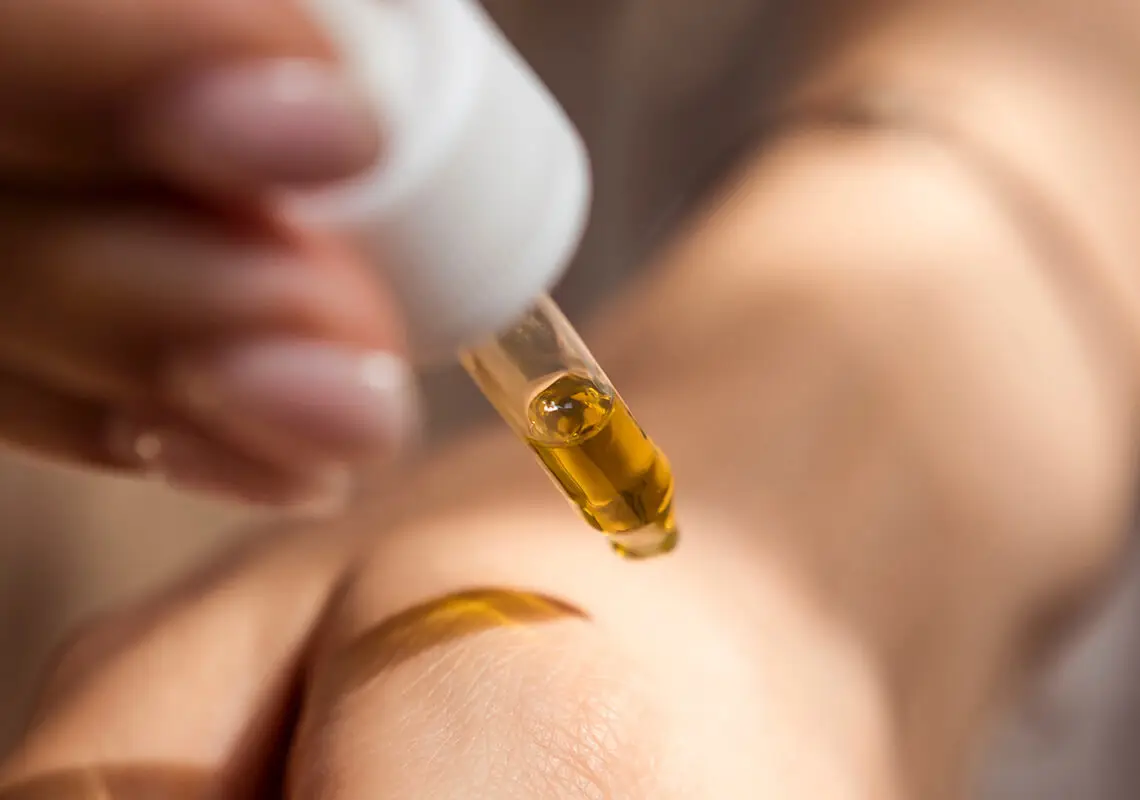
Some people take CBD around 30 minutes before a session, usually an oil held under the tongue, and describe it as part of settling before competition. Sublingual products are the common choice because they take effect sooner than a capsule that has to pass through digestion. Cannabidiol affects some people’s alertness, so find out how you respond on an easy day rather than before a session that matters, and change one thing at a time or you will not know what did what.
CBD after training and recovery
Post-training is where most athletes use it. The two common patterns are a topical applied to one area and an oral product taken in the evening. The evening pattern is usually about sleep rather than muscle tissue, which is worth separating out because they are different questions with different evidence behind them.
Whatever the pattern, the fundamentals do the heavy lifting. Sleep, protein intake, hydration and sensible management of training load are what determine recovery, and no supplement substitutes for any of them.
CBD and muscle soreness
Delayed onset muscle soreness follows unfamiliar or eccentric loading and peaks a day or two after the session. The research position is genuinely limited: a handful of small human studies have looked at cannabidiol and markers of exercise-induced muscle damage, with mixed results and small samples, and the 2020 review found the evidence base insufficient to draw conclusions. Nobody can tell you that CBD does anything for muscle soreness, and a brand that does is going beyond what has been shown.
There is also a point the fitness world rarely raises. The inflammatory response to training is part of the adaptation signal rather than simply a problem to suppress, and research on blunting it with high-dose anti-inflammatories has raised questions about long-term adaptation. That reasoning does not transfer directly to cannabidiol, which behaves differently, but it is a reason to be wary of assuming that less inflammation is always better for an athlete.
If soreness is severe or persistent, or comes with swelling, weakness or dark urine, that is a matter for your GP rather than a supplement.
Topical versus oral for athletes
| Topical | Oral | |
|---|---|---|
| Where it acts | Applied to a specific area of skin and the tissue under it | Enters general circulation and is distributed around the body |
| Onset | Applied as needed, with no systemic wait | Sublingual oil roughly 15 to 45 minutes, capsules longer |
| Typical use | One joint or one muscle group after a session | Evening use and general daily use |
| Systemic absorption | Minimal | Yes, which is what matters for testing |
| Doping consideration | Still check the product for THC, as skin is not a barrier to everything | The higher-risk route if the product contains THC |
| UK regulatory status | A cosmetic | A novel food, so it should be on the FSA public list |
Plenty of athletes use both: a CBD topical on one area after training, and CBD oil in the evening.
Practical notes on timing and amount
There is no established amount of CBD for exercise, because the studies that would establish one have not been done. What follows is how people approach it in practice rather than a prescription.
- Start low and change slowly. Individual response varies with body weight, metabolism and training load.
- Keep the timing consistent for a fortnight before judging anything. Recovery varies day to day for reasons unconnected to a supplement.
- Take oral CBD with a meal containing fat. Cannabinoids are fat soluble and absorption is better with food.
- Write it down. Note the amount, the timing, your sleep and your session quality. It is the only way to tell an effect from a good week.
- Check your medicines. Cannabidiol can affect the liver enzymes that metabolise other drugs. Speak to your GP, pharmacist or team doctor if you take anything regularly.
Frequently asked questions about CBD and exercise
Is CBD allowed in competition?
Cannabidiol was removed from the World Anti-Doping Agency’s Prohibited List with effect from 1 January 2018 and is permitted. Other cannabinoids, including THC, remain prohibited in competition. Check the current Prohibited List along with UKAD’s guidance and your own governing body’s rules, which can be stricter.
Can CBD oil make you fail a drug test?
Cannabidiol is not what a test looks for, but full spectrum products contain trace THC, and repeated daily use of a THC-containing product accumulates. Broad spectrum or isolate, with a batch report showing THC as not detected, is the lower-risk choice for a tested athlete.
Does UKAD say anything about CBD?
UK Anti-Doping applies the WADA Prohibited List in Britain and publishes guidance for athletes on supplements, testing and the principle of strict liability. It is the body to ask before using a product rather than after a test, and your national governing body may add rules of its own.
Should I take CBD before or after training?
Most people use it after training or in the evening rather than before. No research establishes an optimal time, so test it on ordinary training days rather than before a competition, and change one variable at a time.
Does CBD help with muscle recovery?
The evidence does not support that. A 2020 review in Sports Medicine Open found the human research on cannabidiol and exercise too limited to draw conclusions. Sleep, nutrition and training load remain what actually determines recovery.
If you compete in a tested sport, start by choosing a product with no THC and a batch report you can actually read. Endoca’s CBD isolate is cannabidiol alone, and every batch has a published certificate of analysis, so you can check the THC line before you use it. Speak to your GP or team doctor first if you take prescription medication.