
No products in the cart.

- Shop
- About Us
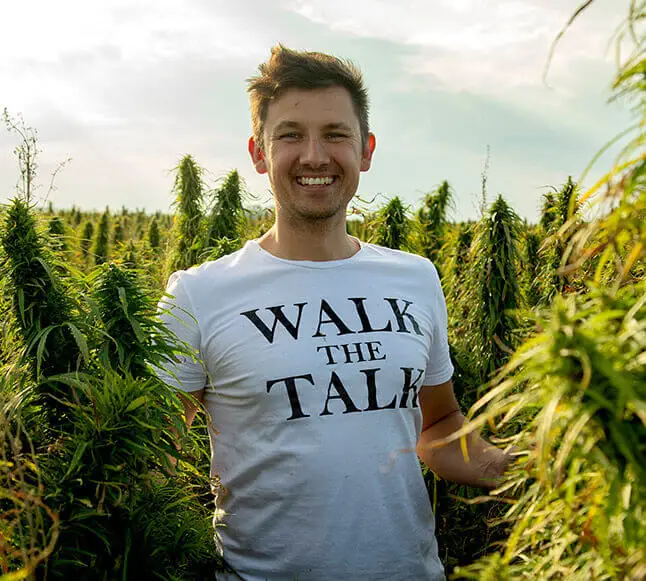
Our Story
From humble beginnings to a global mission – we grow, harvest, and craft hemp with care for people and planet.
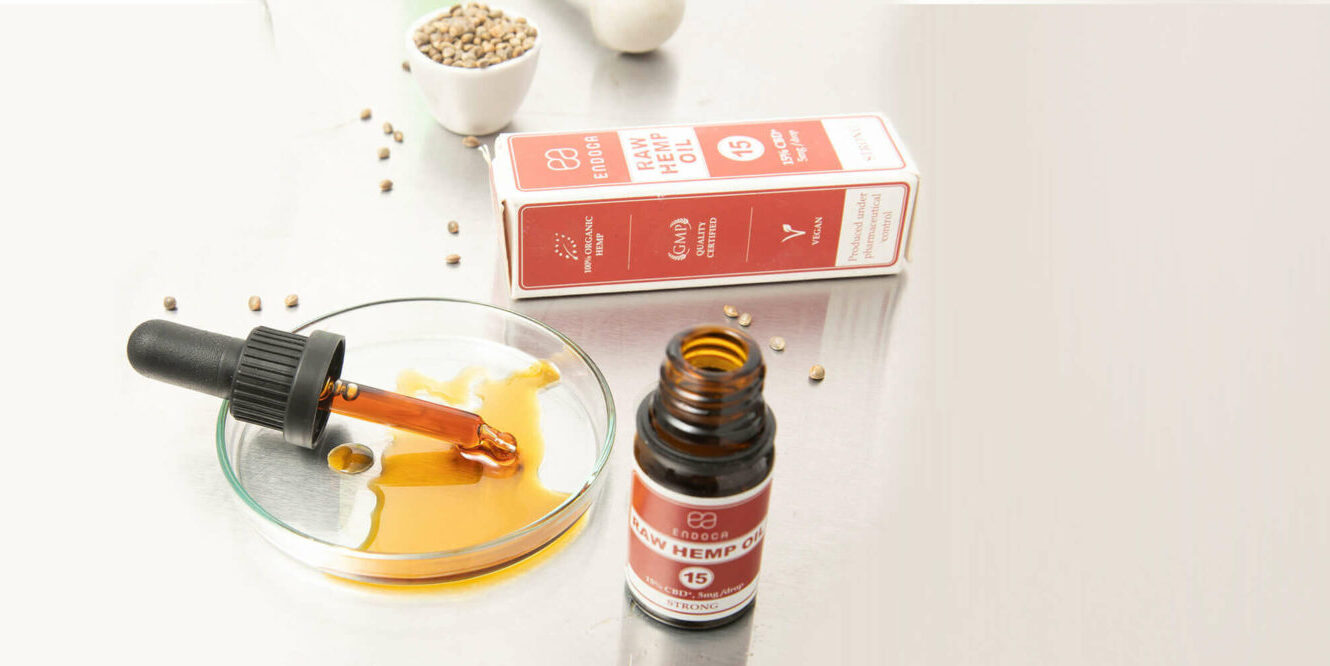
What Is CBD?
CBD is nature’s way to restore balance, calm, and overall well-being – naturally and without the high.
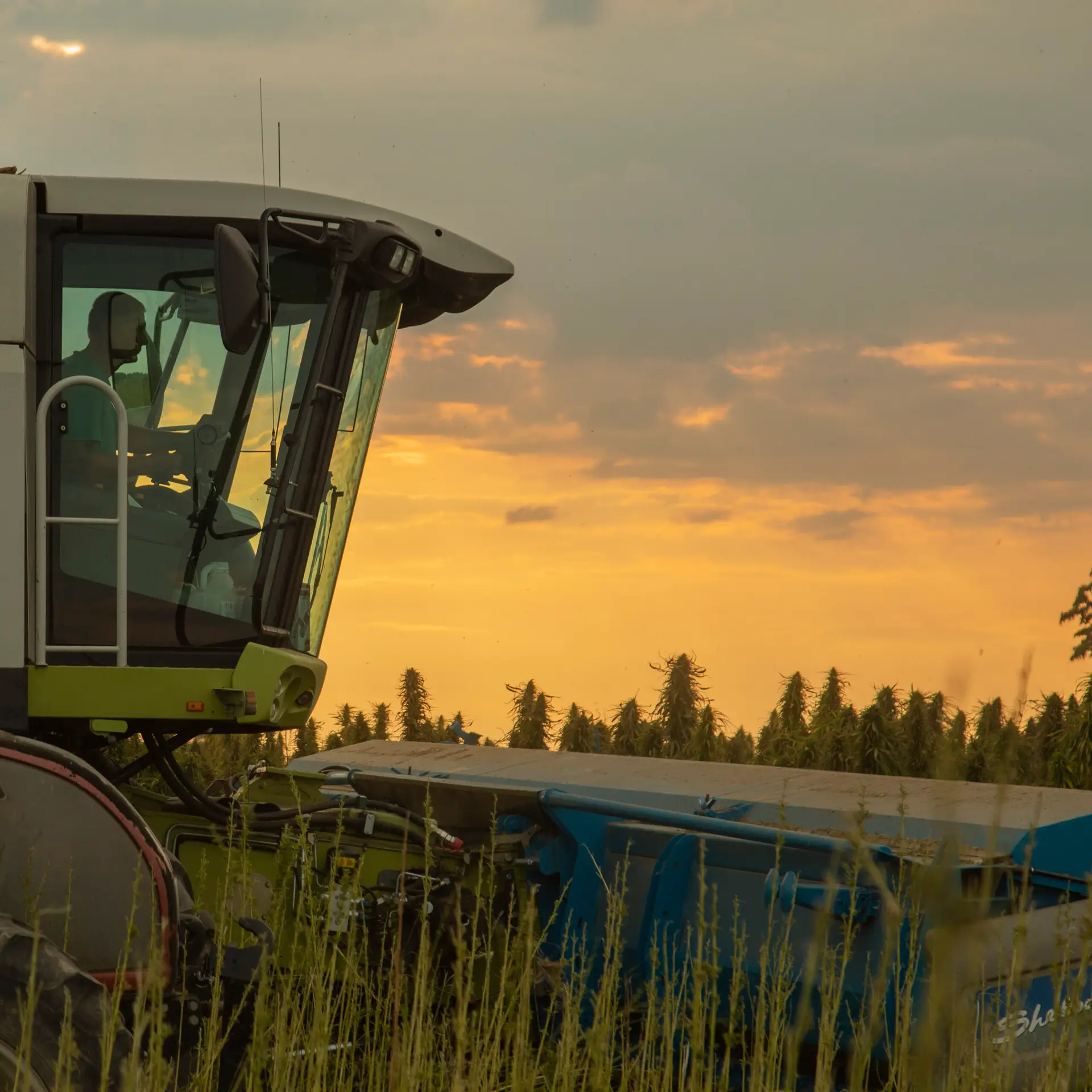
The Process
From seed to shelf, we grow organically, extract cleanly, and follow strict quality standards for purity.
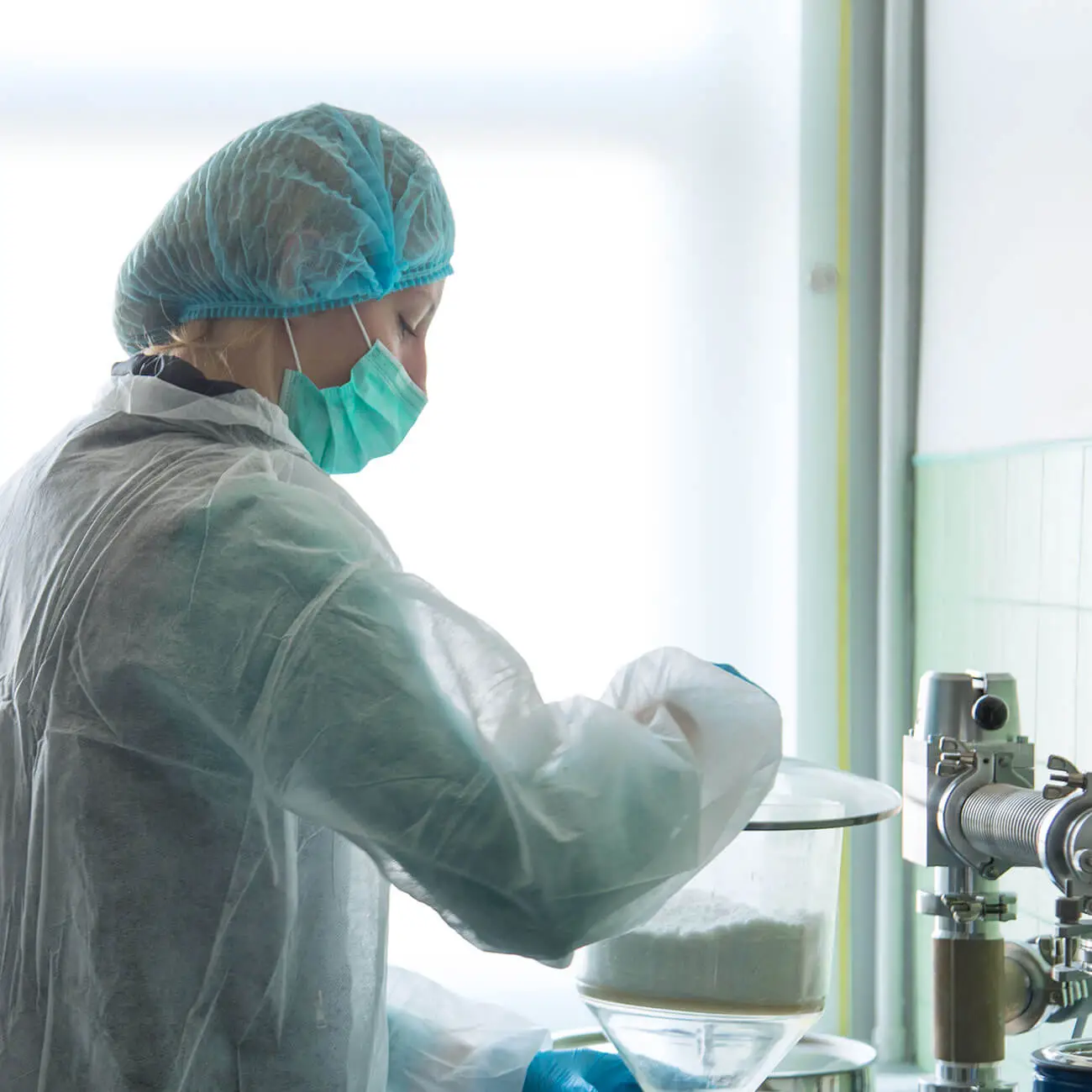
Lab Testing
Every batch is third-party tested to ensure purity, safety, and the exact amount of CBD every time.
Our Values
Sustainability, transparency, and wellness guide every decision – for you and for the planet.
At a glance
What these three actually are
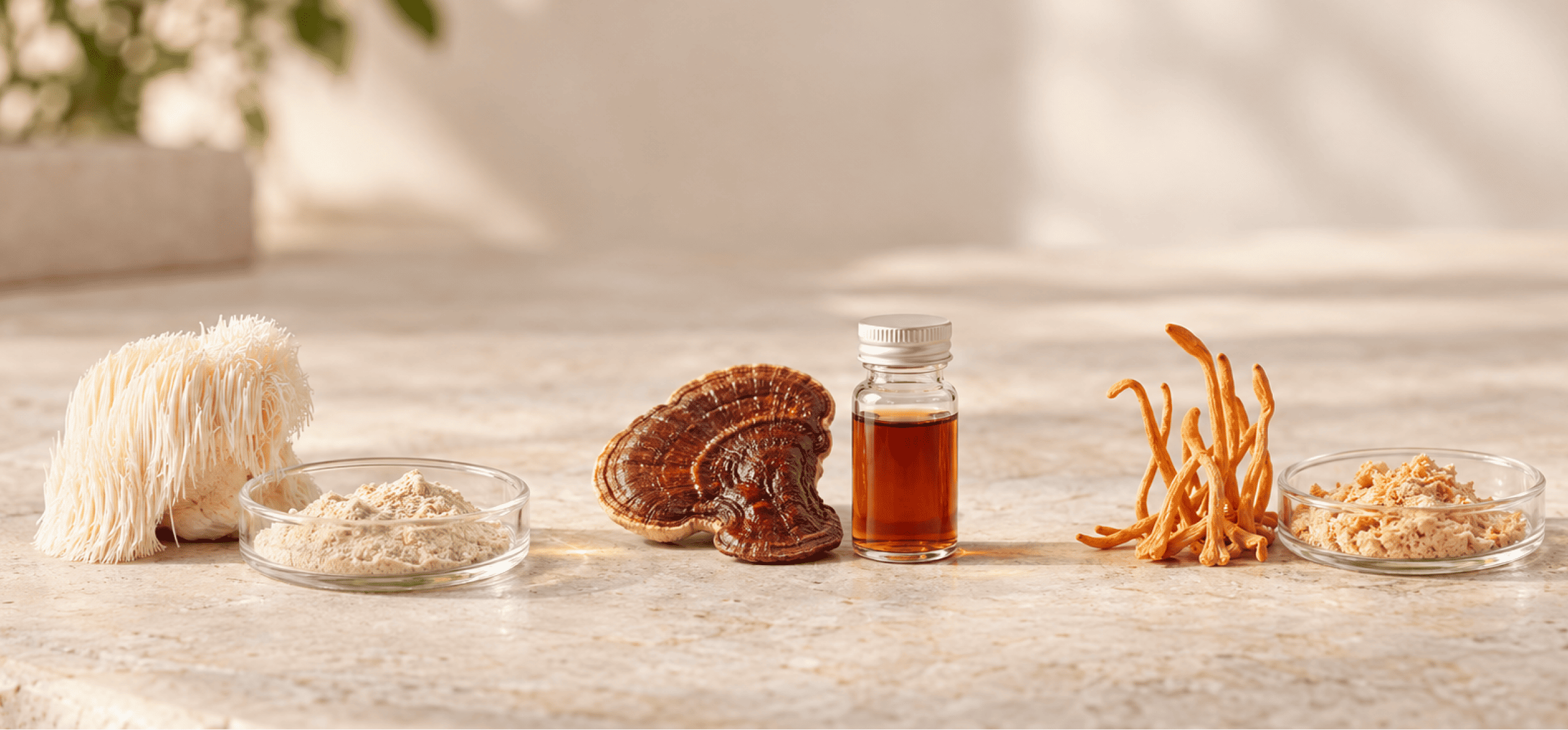
Only one of the three names on these packs is dependable. Hericium erinaceus is a settled species, a wood-rotting tooth fungus grown on sawdust, and the open question is anatomical rather than taxonomic: hericenones C to H were isolated from fruiting bodies and erinacines A to I from mycelia, so part used decides which compounds are present.
Reishi is a naming problem. Labels read Ganoderma lucidum, a name fixed to an 1881 collection, while the 2023 re-examination of the Ganoderma sichuanense holotype placed Chinese cultivated lingzhi in that species and made Ganoderma lingzhi a later synonym. Cordyceps is a bigger problem still, because the label often names the wrong genus. The 2007 revision moved the caterpillar fungus to Ophiocordyceps, and what is sold is cultivated Cordyceps militaris or Cs-4, a fermented biomass of Paecilomyces hepiali Chen.
Three species, three failure modes: one where the part used is unstated, one where the species is wrong, and one where even the genus may be. That is what makes a three-column comparison worth building, and why a single mushroom complex figure describes none of them.
Beta-glucans, and why the number on the label may not mean what you think
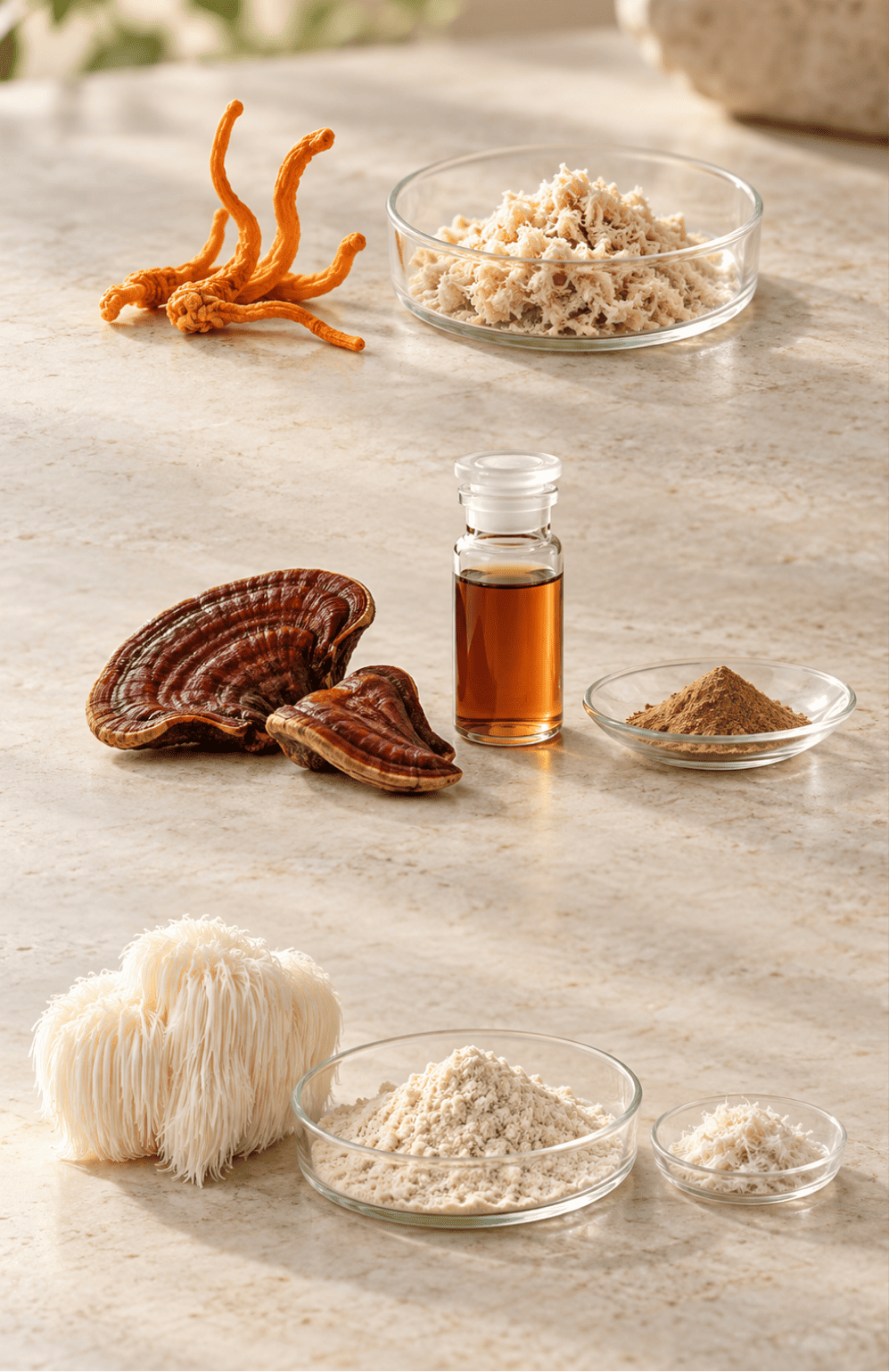
One polysaccharide percentage cannot speak for three species, and often it speaks for none. Mycelium and fermented biomass are raised on starch-rich cereal, and McCleary and Draga found that in mycelial products the bulk of the grain starch remains intact and is by far the major glucan in the finished product. A crude polysaccharide assay counts that starch. A beta-glucan assay hydrolyzes total glucan with acid, measures alpha-glucan separately, and reports only the remainder.
Alpha-glucan is the tell. In a 39-species screen, turkey tail fruiting bodies read 0.41 g alpha-glucan per 100 g dry matter against 60.79 g beta-glucan, and maitake 5.04 g against 25.99 g. A real fruiting body has almost no starch, so a high polysaccharide figure quoted with no alpha-glucan figure beside it is how this category misleads.
Then the three diverge on method. Reishi needs two solvents, because ganoderic acids will not come out in water. Lion’s mane needs two for the same reason, its hericenones staying behind. Cordyceps needs one, its glucans and nucleosides all being water soluble. No single assay and no single extraction covers all three.
What the human evidence shows
Lion's mane
Thirty adults with mild cognitive impairment on 3 g a day for 16 weeks scored above placebo at weeks 8, 12 and 16.
A 49 week pilot in mild Alzheimer's disease, on three 350 mg erinacine A-enriched mycelium capsules daily, saw Mini-Mental State Examination scores improve within the active group.
Reishi
Eighty-four adults with type 2 diabetes and metabolic syndrome took 3 g a day for 16 weeks, with no change in any outcome.
A Cochrane review of five trials found insufficient evidence for reishi as a first line cancer treatment, with no trial recording long-term survival.
Cordyceps
In 20 adults aged 50 to 75, Cs-4 at 333 mg three times daily for 12 weeks raised the metabolic threshold 10.5 percent, 0.83 to 0.93 L per minute.
In 22 trained cyclists, five weeks of Cs-4 at 3 g a day left peak oxygen uptake and a time trial unchanged.
One trial has given two of these three together. Eighty-four adults took reishi, or reishi with Cordyceps sinensis, at 3 g a day for 16 weeks, and nothing moved. Set against that, the positive readings in this table come from 30 and 20 participants. That is the honest size of the evidence base.
What people get wrong
01A mushroom complex gives you the benefits of all three.
It gives you three unknown fractions. Without a weight per species, a part used and a beta-glucan figure for each, a complex label cannot say how much of any one species is in a capsule.
02Stacking species compensates for weak evidence on each.
The one trial that combined two of them found nothing. Reishi with Cordyceps sinensis, given to 84 adults for 16 weeks, moved no outcome, which is the opposite of an additive result.
03The Latin name on the label identifies what you bought.
Not for two of three. Cultivated lingzhi labeled Ganoderma lucidum is Ganoderma sichuanense, and cordyceps labeled Cordyceps sinensis is normally Cordyceps militaris or a Paecilomyces hepiali ferment.
Choosing between them
Pick one and interrogate it, rather than buying all three in a blend. Lion’s mane is the species with the most human trials, and the question to ask is fruiting body or mycelium. Reishi has been tested at the largest scale and came back flat, so take it for the triterpenoids or not at all, and only as a dual extract. Cordyceps turns on which organism you are getting, since both published exercise trials used Cs-4 rather than the militaris fruiting body now sold. Ask all three for beta-glucan and alpha-glucan side by side.
Legal status and safety
Legal status in the United States
All three sell here as dietary supplements under the Dietary Supplement Health and Education Act of 1994. Structure and function statements are permitted when truthful and substantiated and carried with the disclaimer below; disease claims are not, and FDA has approved no mushroom supplement for any disease. Substantiation attaches to the specific ingredient as sold rather than to mushrooms as a category, which is where a three-species blend gets difficult. Separately, under section 413 of the Federal Food, Drug, and Cosmetic Act, a dietary ingredient not marketed here before 15 October 1994 requires a premarket notification.
Safety
Reishi carries the one serious published signal of the three. Fatal fulminant hepatitis was reported in a patient who had taken boiled lingzhi for a long period without incident and then switched to lingzhi powder for one to two months. For cordyceps the concern is the wild material, where high arsenic residues in Ophiocordyceps sinensis are documented, and cultivated militaris and fermented Cs-4 avoid that route. None of the three has human safety data covering pregnancy, breastfeeding or childhood, and none has been studied with prescription medication.
How Endoca tests for this
Three species means three different things a certificate should carry, and ours carries some of them. Identity, heavy metals, pesticides and microbes are tested across the mushroom range. Missing so far: a beta-glucan figure reported apart from alpha-glucan, a ganoderic acid figure for the reishi, and a species and part used on the cordyceps ingredient line. We would rather list what is absent than imply it is covered. Hemp batch certificates come from our own farm, our own land and our own extraction, since 2010.
Frequently asked questions
Nothing published says you should not, but nothing says it adds up either. The only trial that combined two of them gave reishi with Cordyceps sinensis to 84 adults for 16 weeks and recorded no change in any outcome it measured.
Lion’s mane, on quantity rather than strength. It has a positive 16 week trial in 30 adults and a 49 week pilot in mild Alzheimer’s disease. Reishi has had the largest trials and they were negative. Cordyceps has two small exercise trials that contradict each other.
Only if it declares each species, each part used and a beta-glucan figure for each one. Without those three, a complex is three unknown fractions of three different problems, and a single combined polysaccharide percentage cannot describe any of the species in it.
Because the target compounds differ in solubility. Beta-glucans come out in hot water for all three. Reishi also needs alcohol for its ganoderic acids, lion’s mane needs alcohol for its hericenones, and cordyceps needs nothing extra, its nucleosides being water soluble.
References
01
Mori K, Inatomi S, Ouchi K, Azumi Y, Tuchida T. Improving effects of the mushroom Yamabushitake (Hericium erinaceus) on mild cognitive impairment: a double-blind placebo-controlled clinical trial. Phytother Res. 2009;23(3):367-372.
02
Li IC, Chang HH, Lin CH, et al. Prevention of early Alzheimer’s disease by erinacine A-enriched Hericium erinaceus mycelia pilot double-blind placebo-controlled study. Front Aging Neurosci. 2020;12:155.
03
Wang J, Wu J, Yamaguchi R, et al. Uncovering hericenones from the fruiting bodies of Hericium erinaceus through interdisciplinary collaboration. J Nat Prod. 2025;88(1):80-85.
04
Du Z, Li Y, Wang XC, Wang K, Yao YJ. Re-examination of the holotype of Ganoderma sichuanense (Ganodermataceae, Polyporales) and a clarification of the identity of Chinese cultivated lingzhi. J Fungi (Basel). 2023;9(3):323.
05
Jin X, Ruiz Beguerie J, Sze DM, Chan GC. Ganoderma lucidum (reishi mushroom) for cancer treatment. Cochrane Database Syst Rev. 2016;(4):CD007731.
06
Klupp NL, Kiat H, Bensoussan A, Steiner GZ, Chang DH. A double-blind, randomized, placebo-controlled trial of Ganoderma lucidum for the treatment of cardiovascular risk factors of metabolic syndrome. Sci Rep. 2016;6:29540.
07
Sung GH, Hywel-Jones NL, Sung JM, Luangsa-Ard JJ, Shrestha B, Spatafora JW. Phylogenetic classification of Cordyceps and the clavicipitaceous fungi. Stud Mycol. 2007;57:5-59.
08
Chen S, Li Z, Krochmal R, Abrazado M, Kim W, Cooper CB. Effect of Cs-4 (Cordyceps sinensis) on exercise performance in healthy older subjects: a double-blind, placebo-controlled trial. J Altern Complement Med. 2010;16(5):585-590.
09
Parcell AC, Smith JM, Schulthies SS, Myrer JW, Fellingham G. Cordyceps sinensis (CordyMax Cs-4) supplementation does not improve endurance exercise performance. Int J Sport Nutr Exerc Metab. 2004;14(2):236-242.
10
McCleary BV, Draga A. Measurement of beta-glucan in mushrooms and mycelial products. J AOAC Int. 2016;99(2):364-373.
11
Sari M, Prange A, Lelley JI, Hambitzer R. Screening of beta-glucan contents in commercially cultivated and wild growing mushrooms. Food Chem. 2017;216:45-51.
Last reviewed 1 October 2026.
These statements have not been evaluated by the Food and Drug Administration. This product is not intended to diagnose, treat, cure, or prevent any disease.