



 30Apr
CBD deodorant is an aluminium-free deodorant that works on the bacteria responsible for underarm odour rather than on sweat itself, with hemp extract in the formula for the skin. It does not stop you sweating. That is the design, and it is the part most people are not told before they switch.
This covers what separates a deodorant from an antiperspirant, why people look for aluminium-free options, what the CBD is doing, and how to get through the adjustment period that catches most switchers out.
Deodorant and antiperspirant are not the same thing
An antiperspirant reduces sweat. It does this with aluminium salts, which react with moisture in the sweat duct and form a temporary gel plug near the skin surface. Less sweat reaches the surface, so there is less for bacteria to work on.
A deodorant does not touch sweat volume at all. It addresses odour. Sweat is close to odourless when it leaves the body, and the smell comes later, when bacteria on underarm skin break down the proteins and fats in it. A deodorant works on that second step: absorbing moisture, making the skin surface less hospitable to those bacteria, and adding a scent of its own.
One note if you have read American advice on this. In the United States an antiperspirant is classed as an over-the-counter drug, because reducing a bodily function is treated as a drug action. In the UK both deodorants and antiperspirants are cosmetics. The classification differs, the formulas do not.
Natural deodorant is the same thing built from plant and mineral ingredients rather than synthetic actives: arrowroot to absorb moisture, baking soda to shift the pH of the skin surface, plant butters and oils as the base, essential oils for scent. A hemp or CBD deodorant adds hemp extract.
Why people look for aluminium-free deodorant
Aluminium salts are the active ingredient that makes an antiperspirant work, so removing them means you no longer have an antiperspirant. Every natural deodorant is aluminium-free by definition. The reasons people give are worth separating honestly:
- Preference. Some people would rather not apply a synthetic active to their skin daily. That is a legitimate reason on its own and needs no health argument attached.
- Shirt staining. The yellow marks in the armpits of white shirts come from aluminium compounds reacting with sweat and detergent. This is the most concrete reason people switch.
- Comfort after shaving, since freshly shaved skin is more reactive and some people find heavy formulas uncomfortable on it.
- Wanting to sweat normally, particularly during exercise.
What this page will not tell you is that aluminium causes disease. The public health bodies that have reviewed the question have not established a link between antiperspirant use and any illness. Preferring to avoid it does not need a health claim behind it.
What the CBD is actually doing
The honest answer, which most CBD deodorant pages skip: CBD does not deal with odour. The arrowroot, the baking soda and the lime peel oil do that work. The CBD is in the product for the skin, not the smell.
Underarm skin is thin, folded, warm and, for a lot of people, shaved once or twice a week. It is a demanding place to put a product every day. Cannabidiol, usually shortened to CBD, is a non-intoxicating compound from the hemp plant used in cosmetics as an antioxidant, much as vitamin E is, and it will not make you feel anything. The hemp extract brings fatty acids and vitamin E with it, both long-established skin-conditioning ingredients. It is the same reasoning as putting hemp extract in a face cream, applied to an area that usually gets ignored. If the compound is new to you, this is a plain explanation of what CBD is, and our guide to CBD creams covers how hemp extract behaves in topical formulas.
What is in Endoca’s deodorant
The published ingredient list is short:
- Shea butter
- Arrowroot powder
- Baking soda
- Coconut oil
- Lime peel oil
- Coconut extract
- Hemp extract (CBD)
- Cannabidiol
- Vitamin E
Shea butter and coconut oil are the base, arrowroot absorbs moisture, and baking soda works on the pH of the skin surface. The scent is citrus, from the lime peel oil rather than an added fragrance. There is no aluminium, no parabens and no sulphates, and as a full spectrum hemp product it carries only a trace of THC, well inside the very low limit UK rules set for controlled substances per container.
On strength, it is sold as 10mg of CBD per ml and the same page also states 100mg per jar. Those two figures only agree if the jar holds 10ml, and the jar size is not published, so check the volume on the label rather than working from the headline number.
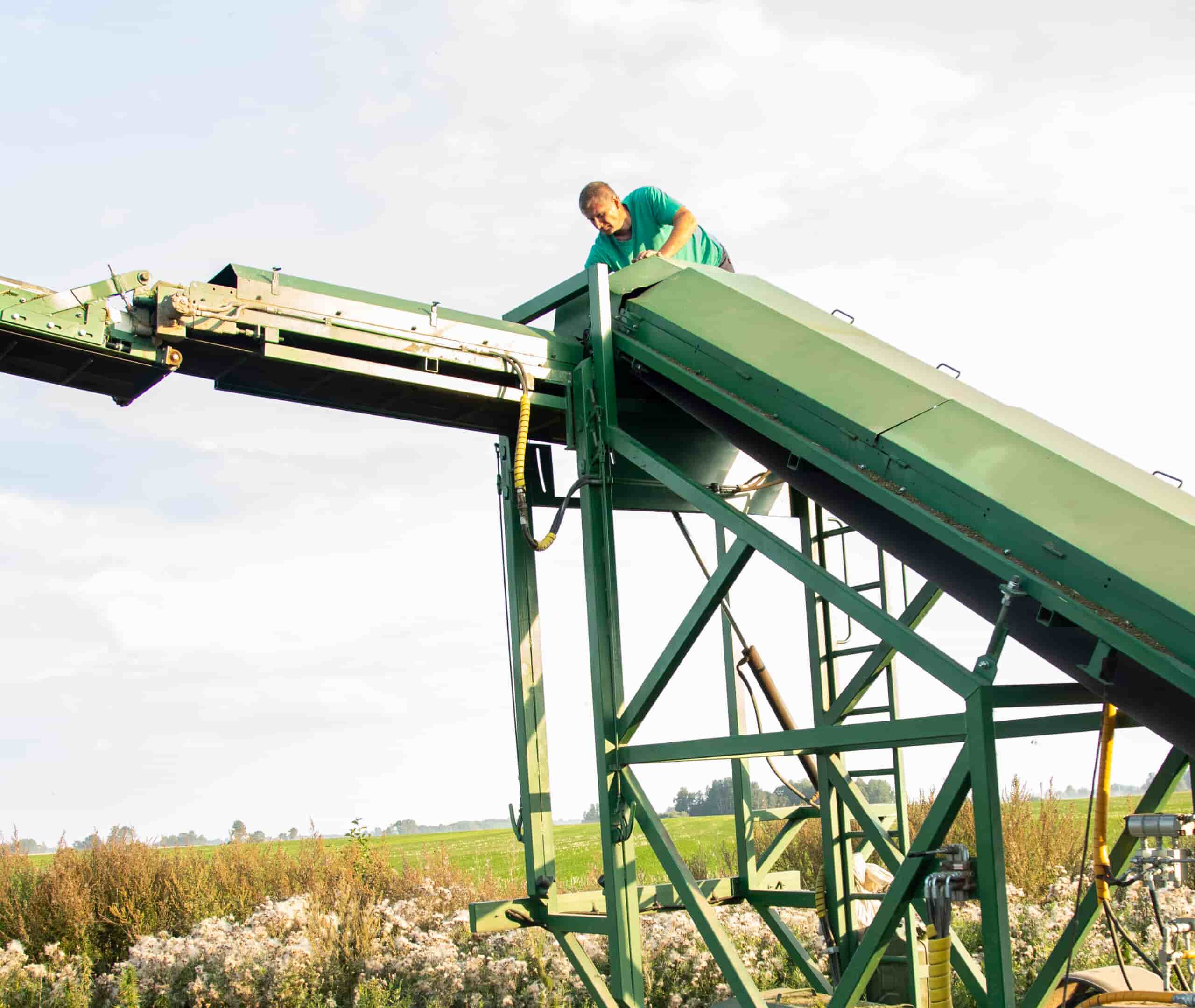
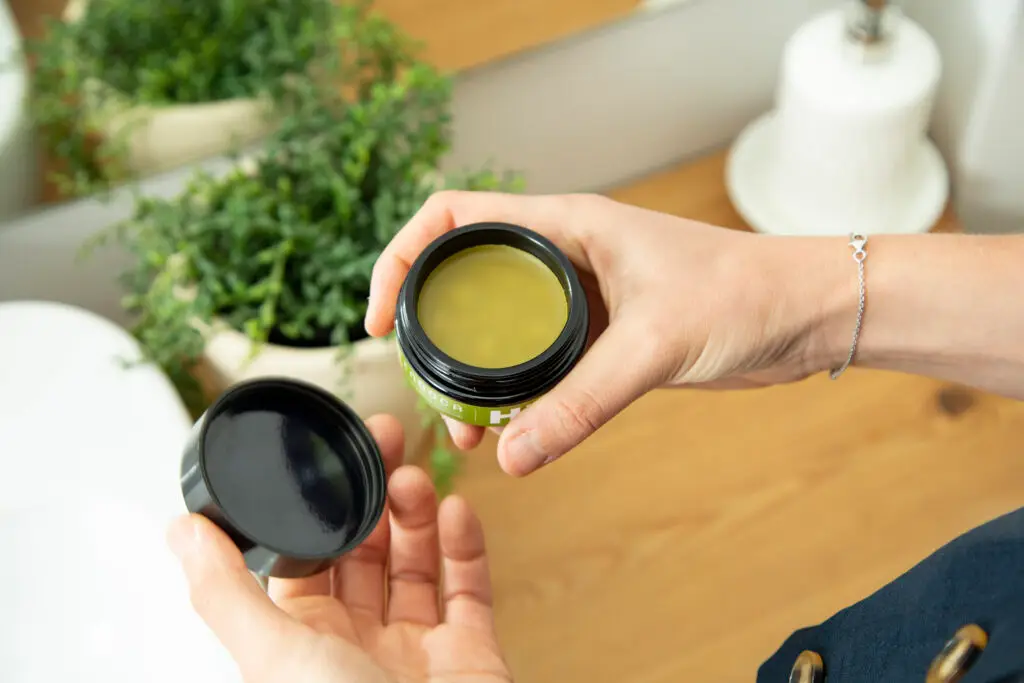
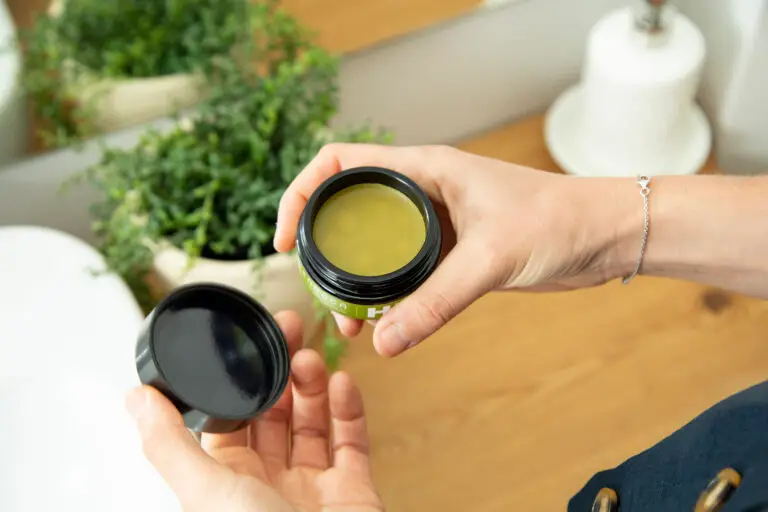
It is a cream rather than a stick, so you apply it with your fingers. The hemp extract comes from Endoca’s own farms and its own supercritical CO2 extraction, documented on the process page, and every batch is screened for more than 200 pesticides plus heavy metals and mycotoxins, with the lab report for each batch published.
The adjustment period, explained
Coming off an antiperspirant you have used for years, expect roughly two to four weeks in which you sweat more than you are used to and may notice more odour than usual. This is the most common reason people abandon natural deodorant, usually in week one, and it is almost never explained properly.
Your sweat volume returns to baseline. You have not started sweating more than normal, you have stopped suppressing it. After years of reduced output, normal output feels like a great deal, and the first warm day after switching feels dramatic.
The bacteria on your skin shift. The mix of microbes in the underarm is influenced by what you apply, and it changes when your routine does. A 2016 study published in PeerJ tracked the underarm microbial community in people who changed their product habits and found the composition shifted measurably over the following weeks. During that shift, odour can be stronger, or simply different, before it settles.
A realistic timeline:
- Days 1 to 5. Noticeably wetter, and odour may be worse. This is the hardest stretch and the point at which most people give up.
- Week 2. Still sweating more than you are used to, odour usually starting to settle.
- Weeks 3 and 4. Most people report it evening out here. You will still sweat, because nothing in the product is designed to stop that, but odour is typically no longer the issue.
What helps: wash the area daily with soap and water, since odour-causing bacteria are what you are managing; reapply at midday; exfoliate the underarms gently once or twice a week to clear residue; wear cotton, linen or wool rather than synthetics, which hold odour in the fabric and give you a false read; and give it a full four weeks, because judging on day three tells you nothing.
One important distinction. Adjustment feels like more sweat and more odour. It should not feel like stinging, burning, a rash or persistent redness. Baking soda is alkaline and a minority of people react to it, which is a formulation mismatch rather than an adjustment phase. If that is what you are experiencing, stop and speak to your pharmacist or GP.
How to switch
- Pick a low-stakes few weeks. Cooler weather, and a stretch with no wedding, conference or interview in it.
- Apply to clean, dry skin. Scoop a small amount, warm it between your fingers and rub it in until it absorbs. Give it a minute before dressing.
- Apply morning and evening at first. An evening application gives the product uninterrupted contact with clean skin.
- Do not apply straight after shaving. Wait a few hours, or until the next day, particularly with a baking soda formula.
- Reassess at four weeks, when you are judging the product rather than the transition.
Natural deodorant vs antiperspirant
| Natural deodorant | Antiperspirant | |
|---|---|---|
| What it does | Addresses odour | Reduces sweat, and therefore odour |
| Typical actives | Arrowroot, baking soda, plant oils, essential oils | Aluminium salts |
| Effect on sweating | None | Reduced |
| Reapplication | Often needed at midday | Usually once daily |
| Adjustment period | Two to four weeks | None |
| Shirt staining | Not associated with yellow marks | Aluminium residue is the usual cause |
| Suits you if | You want to sweat normally and manage odour | Visible sweat is what you need to control |
Neither is better in the abstract. If sweat marks on a shirt are the problem, an antiperspirant solves it and a natural deodorant will not. If odour is the problem and you would rather sweat normally, a deodorant is the right tool.
Frequently asked questions about natural deodorant
Does natural deodorant stop you sweating?
No, and it is not designed to. Only an antiperspirant reduces sweat, using aluminium salts to form temporary plugs in the sweat ducts. A natural deodorant leaves sweating alone and works on odour instead. If less visible sweat is what you need, a deodorant of any kind is the wrong product.
How long is the natural deodorant adjustment period?
Usually two to four weeks. The first five days are the hardest, with more sweat than you are used to and sometimes more odour while the bacteria on your skin shift. Most people find it settles by week three. Wash daily, reapply at midday, and give it the full four weeks.
Can baking soda irritate your skin?
It can. Baking soda is alkaline and a minority of people react to it with stinging, redness or a rash, particularly on freshly shaved skin. That is a formulation mismatch rather than an adjustment phase. Stop using it and speak to your pharmacist or GP.
Why does my natural deodorant stop working in the afternoon?
Because it has a shorter working window than an antiperspirant, which is normal rather than a fault. A deodorant manages odour at the skin surface, and a warm day or a workout uses that up. Carry the jar and reapply once during the day.
If you want to try it, give it four uninterrupted weeks and judge it at the end rather than the beginning. The aluminium-free CBD deodorant sits alongside the balms, salves and creams in Endoca’s CBD skincare range.