
- Shop
- About Us
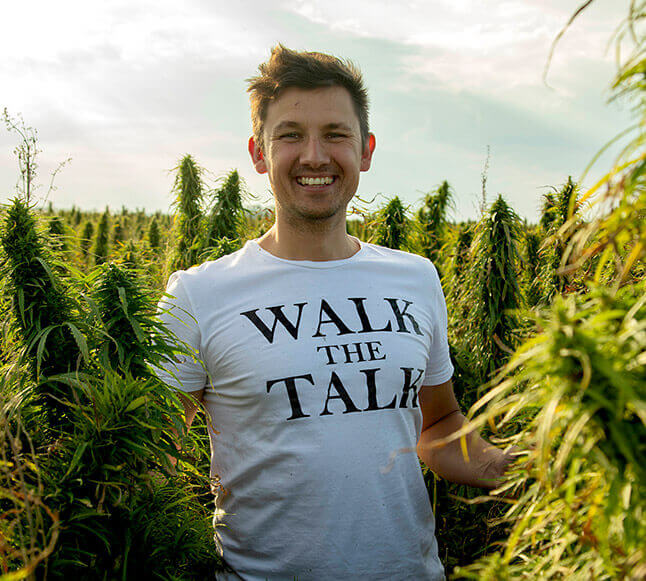
Our Story
From humble beginnings to a global mission – we grow, harvest, and craft hemp with care for people and planet.
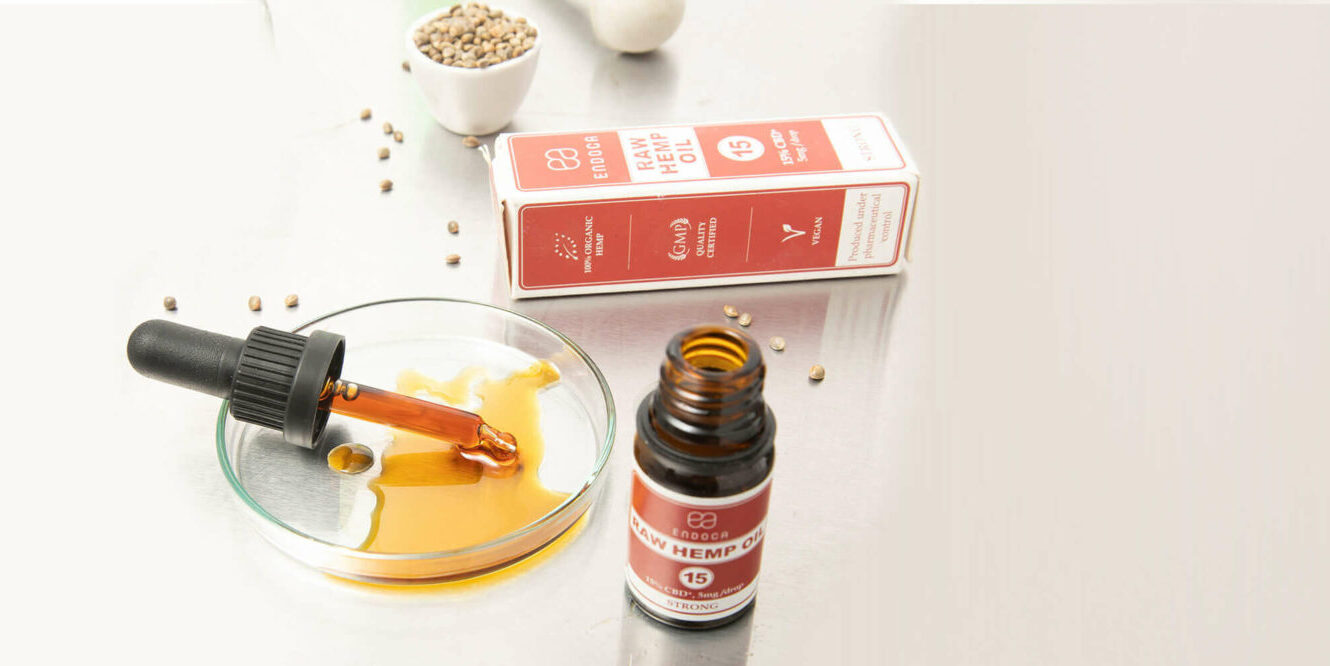
What Is CBD?
CBD is nature’s way to restore balance, calm, and overall well-being – naturally and without the high.
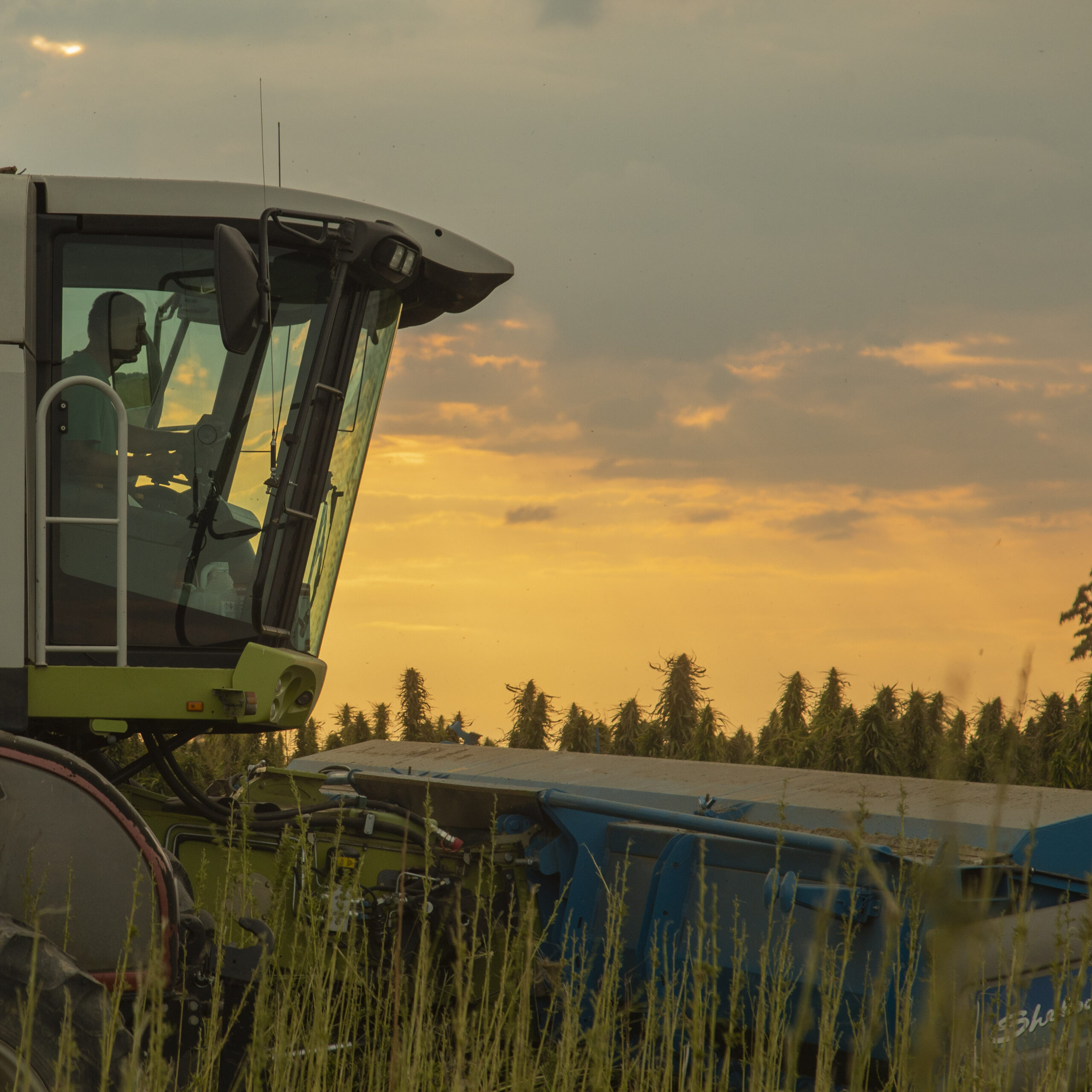
The Process
From seed to shelf, we grow organically, extract cleanly, and follow strict quality standards for purity.
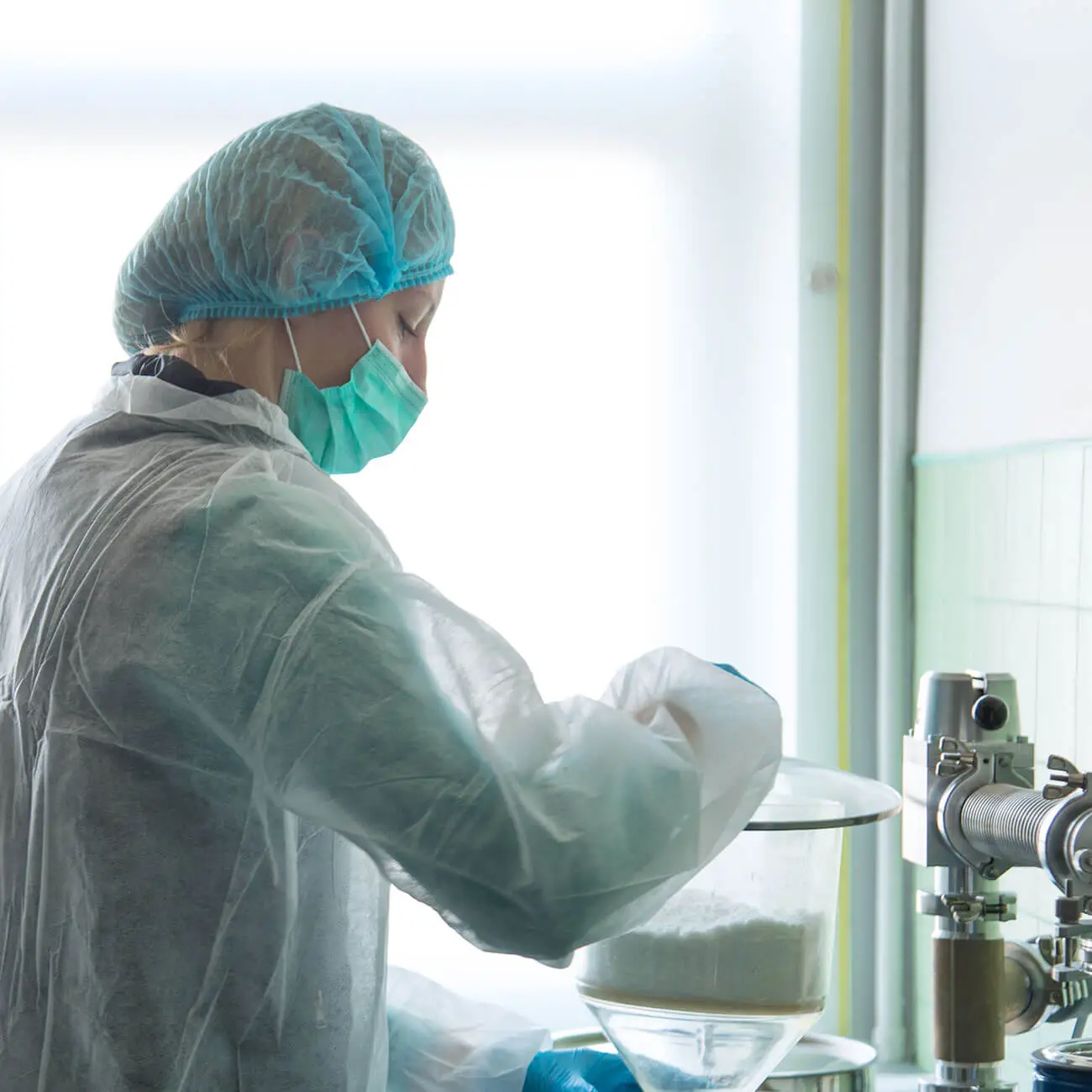
Lab Testing
Every batch is third-party tested to ensure purity, safety, and the exact amount of CBD every time.
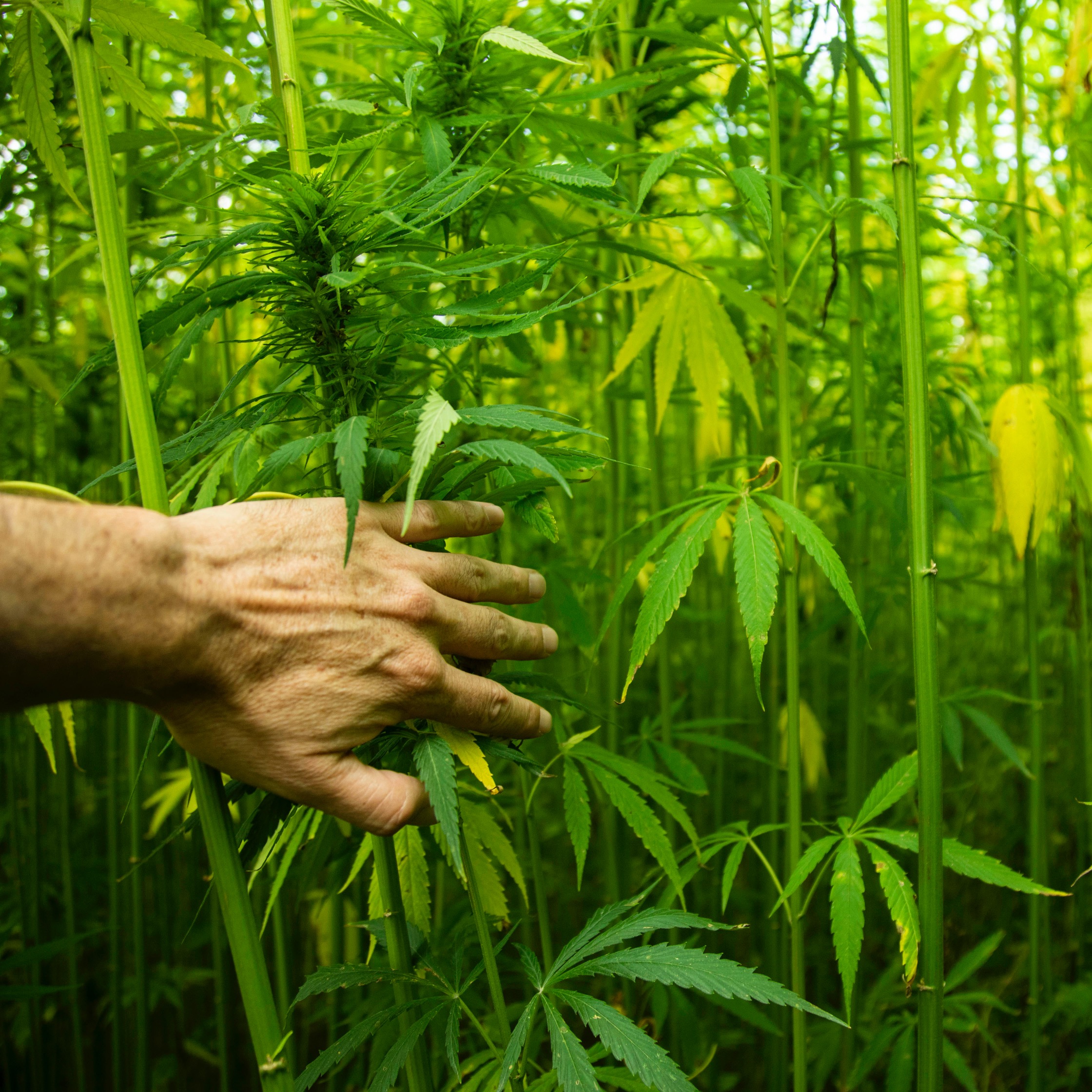
Our Values
Sustainability, transparency, and wellness guide every decision – for you and for the planet.
At a glance
What the three labels actually mean
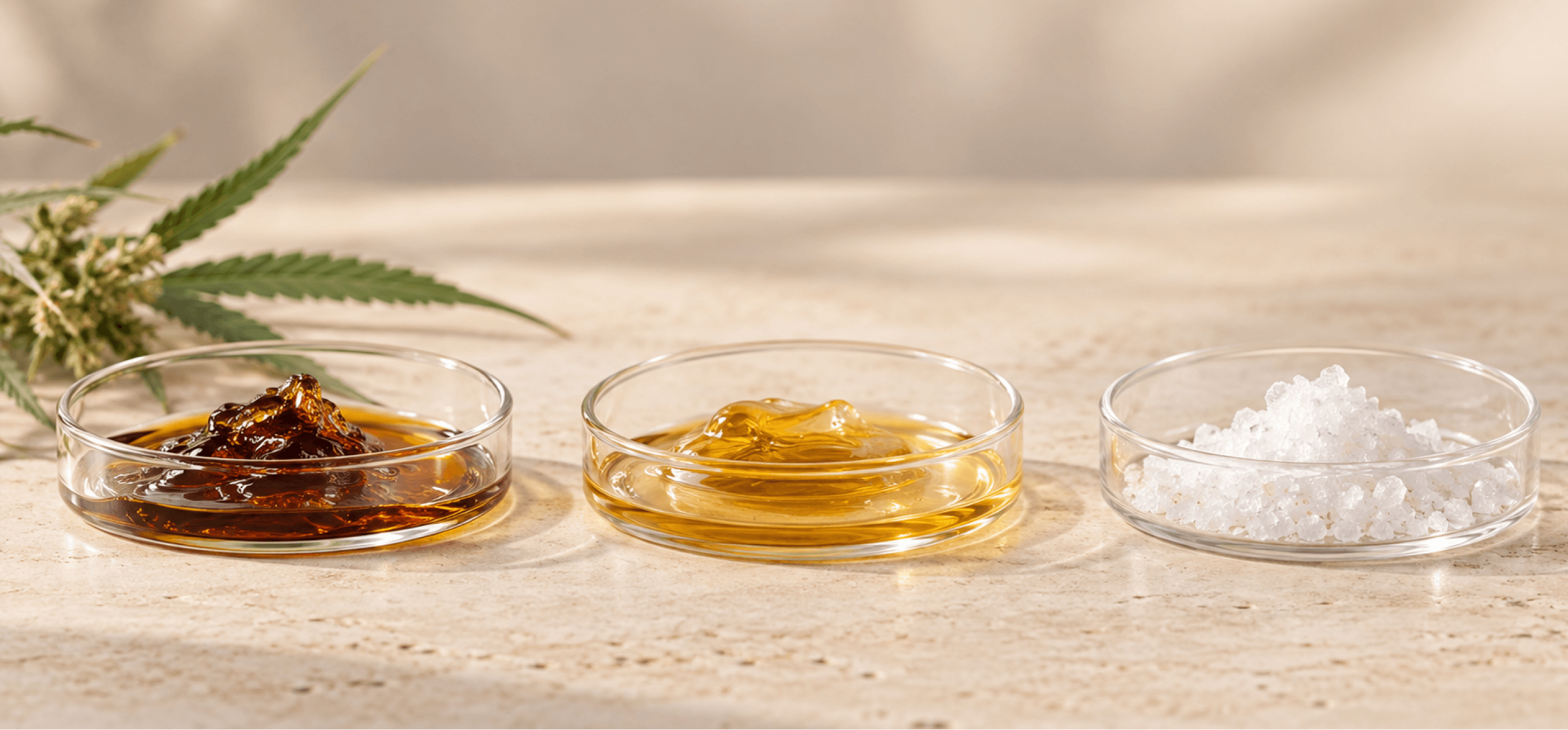
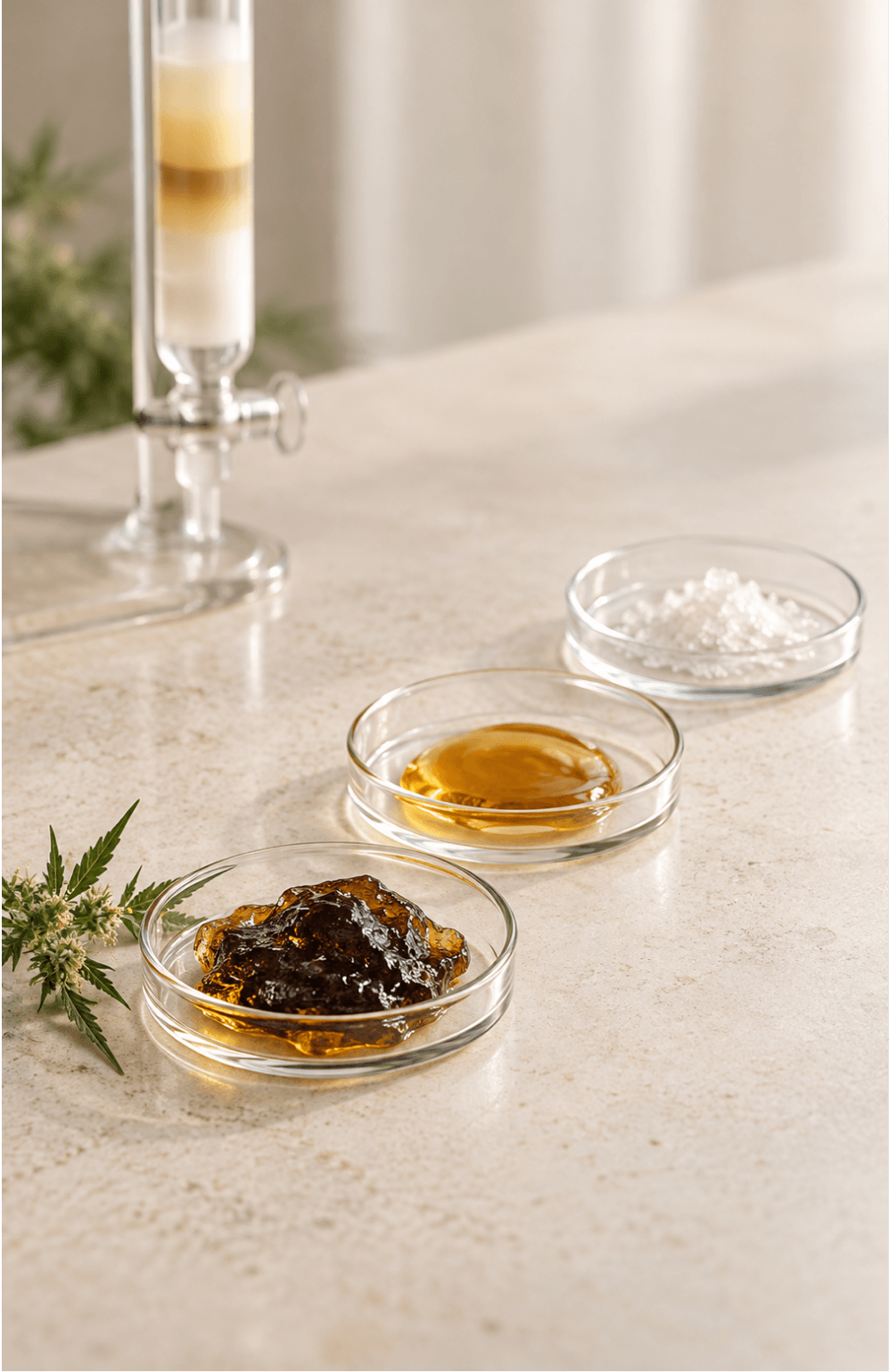
None of these three words is a legal term. Each describes where a manufacturer stopped processing, and that is all it describes. Full spectrum means the extract was not put through a cannabinoid removal step, so it still carries minor cannabinoids, surviving terpenes and the THC the plant made, which in hemp is a small measurable fraction rather than an active ingredient.
Broad spectrum is the same extract after a separation stage, usually chromatography, that pulls out the THC fraction. Chromatography separates by chemical behaviour rather than by name, so a step that removes THC removes compounds that behave like THC on that column, and no published study has measured what is left behind in a finished consumer extract. Two products both labelled broad spectrum can differ in which cannabinoids remain.
Isolate is the end of the same road: chromatography, then crystallisation, until one compound is left and the certificate reports a single number. All three are usually made from decarboxylated material, so the acid forms CBDa and THCa have largely been converted by heat before the spectrum question arises at all.
Why the entourage argument is weaker than it sounds
The case for full spectrum rests on the entourage effect, and the strongest evidence cited is a 2018 meta-analysis of observational epilepsy data. It pooled 11 studies covering 670 patients: 71 percent on CBD rich extracts reported fewer seizures against 46 percent on purified CBD. That is the figure quoted in marketing.
The figure rarely quoted is in the same paper. At the standard clinical threshold, a 50 percent or greater reduction in seizure frequency, there was no difference between the two (p = 0.52). Patients on extracts also took a much lower average dose, 6.0 against 25.3 mg/kg a day, and the studies were observational rather than randomised. The authors said the synergy explanation remains to be confirmed in controlled studies.
A 2024 scoping review found limited evidence for the entourage effect as a stable and predictable phenomenon, and limited evidence for clinical efficacy or regulation built on it. Our reading: a reasonable hypothesis with weak human support. Which leaves an awkward fact for the usual pitch: the cannabidiol with randomised placebo controlled human data is a highly purified one.
What the research shows, and does not
The pattern is uncomfortable for everyone. Full spectrum has observational data that weakens under scrutiny. Broad spectrum has no human data, being a processing category rather than a defined composition. Isolate has the trial evidence, in two rare syndromes at doses above consumer use.
What people get wrong
Choosing between them
Work backwards from the constraint that applies to you. If detectable THC is a problem, isolate is the only one of the three where refinement removes it rather than limiting it. If you want the extract closest to the plant and accept a small measurable THC content, full spectrum is that. Broad spectrum sits between, asking you to trust a step neither defined nor documented.
The entourage effect should not drive it, because the human evidence does not carry that weight. Read the certificate: the measured figures for CBD, CBDa, THC and THCa.
Legal status and safety
CBD extracts are novel foods in the UK under Regulation (EU) 2015/2283 as retained in UK law, and all three are treated the same way. The Food Standards Agency keeps a public list of CBD products that may legally be sold while authorisation applications are assessed; a product not on that list, or marked as removed, must be withdrawn.
No health claim for CBD is authorised under Regulation (EC) 1924/2006. Nobody, including us, may state or imply that any of the three treats, prevents or improves anything. Every figure here is a measurement or a published finding.
The FSA advises that healthy adults take no more than 10 mg of CBD a day, a figure from a joint position of the Advisory Committee on Novel Foods and Processes and the Committee on Toxicity. CBD is not recommended for vulnerable groups, including under 18s, anyone on medication and people pregnant or breastfeeding, unless under medical direction.
THC is a controlled drug under the Misuse of Drugs Act 1971, and consumer CBD products rely on the exempt product criteria in the Misuse of Drugs Regulations 2001, allowing no more than 1 mg of a controlled drug per container. The FSA also gives a safe upper intake of 70 micrograms of delta-9 THC a day. Full spectrum carries a compliance burden that a 99 percent isolate does not.
How Endoca tests for this
Our hemp is grown on our own farm and extracted by us, as it has been since 2010. Every batch certificate reports CBD and CBDa separately alongside THC and THCa, the only way to check a product against the 1 mg per container limit.
A certificate measures composition, not effect. RAW CBD+CBDa Oil 150mg is full spectrum and CBD Isolate 1000mg is the same hemp refined to 99 percent cannabidiol. We make no broad spectrum product, because we could not say what the removal step took with it.
Frequently asked questions
No. No randomised controlled trial has compared a full spectrum extract with purified CBD in any condition. The pooled analysis usually cited found a difference on self-reported improvement but none at the standard 50 percent seizure reduction threshold, and it was observational.
It is meant to contain none, but the term has no legal definition, so the only answer comes from the certificate of analysis. Look for THC and THCa reported below the laboratory’s limit of quantification rather than the words on the label.
No more than 10 mg a day for healthy adults, whichever format you choose, because it concerns CBD intake rather than spectrum. The FSA also advises against CBD for under 18s, anyone on medication, and people pregnant, breastfeeding or trying to conceive.
Read the cannabinoid table on the certificate for that batch. Full spectrum shows THC and usually CBDa, a refined product CBD and little else. In a 2022 analysis of 80 CBD products, 37 were more than 10 percent off their stated CBD content.
References
Devinsky O, Cross JH, Laux L, et al. Trial of Cannabidiol for Drug-Resistant Seizures in the Dravet Syndrome. N Engl J Med 2017;376(21):2011-2020.
Devinsky O, Nabbout R, Miller I, et al. Long-term cannabidiol treatment in patients with Dravet syndrome: An open-label extension trial. Epilepsia 2019;60(2):294-302.
Pamplona FA, da Silva LR, Coan AC. Potential Clinical Benefits of CBD-Rich Cannabis Extracts Over Purified CBD in Treatment-Resistant Epilepsy: Observational Data Meta-analysis. Front Neurol 2018;9:759.
Simei JLQ, Souza JDR, Lisboa JR, et al. Does the Entourage Effect in Cannabinoids Exist? A Narrative Scoping Review. Cannabis Cannabinoid Res 2024;9(5):1202-1216.
Johnson E, Kilgore M, Babalonis S. Label accuracy of unregulated cannabidiol (CBD) products: measured concentration vs. label claim. J Cannabis Res 2022;4(1):28.
Millar SA, Stone NL, Yates AS, O’Sullivan SE. A Systematic Review on the Pharmacokinetics of Cannabidiol in Humans. Front Pharmacol 2018;9:1365.
De Petrocellis L, Ligresti A, Moriello AS, et al. Effects of cannabinoids and cannabinoid-enriched Cannabis extracts on TRP channels and endocannabinoid metabolic enzymes. Br J Pharmacol 2011;163(7):1479-1494.
Elder HJ, Zamarripa CA, Klausner M, et al. The Pharmacokinetics and Pharmacodynamics of a Hemp-Derived Full-Spectrum Oral Cannabinoid Product with a 1:1 Ratio of Cannabidiol to Cannabidiolic Acid and Delta-9-Tetrahydrocannabinol to Delta-9-Tetrahydrocannabinolic Acid. Cannabis Cannabinoid Res 2025;10(2):e299-e313.
Lazarjani MP, Young O, Kebede L, Seyfoddin A. Processing and extraction methods of medicinal cannabis: a narrative review. J Cannabis Res 2021;3(1):32.
Food Standards Agency. Cannabidiol (CBD) guidance, including the public list of CBD products and the 10 mg a day advice for healthy adults. Updated 28 August 2026.
Last reviewed 6 October 2026.
These statements have not been evaluated by the Food and Drug Administration. This product is not intended to diagnose, treat, cure, or prevent any disease.