
- Shop
- About Us
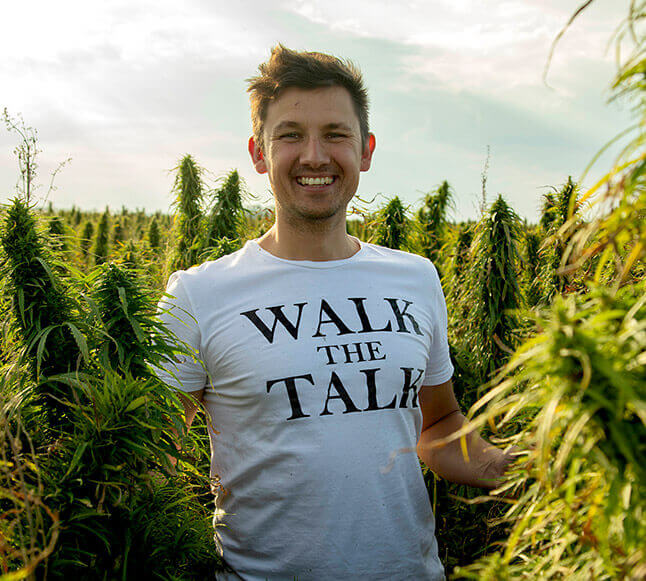
Our Story
From humble beginnings to a global mission – we grow, harvest, and craft hemp with care for people and planet.

What Is CBD?
CBD is nature’s way to restore balance, calm, and overall well-being – naturally and without the high.
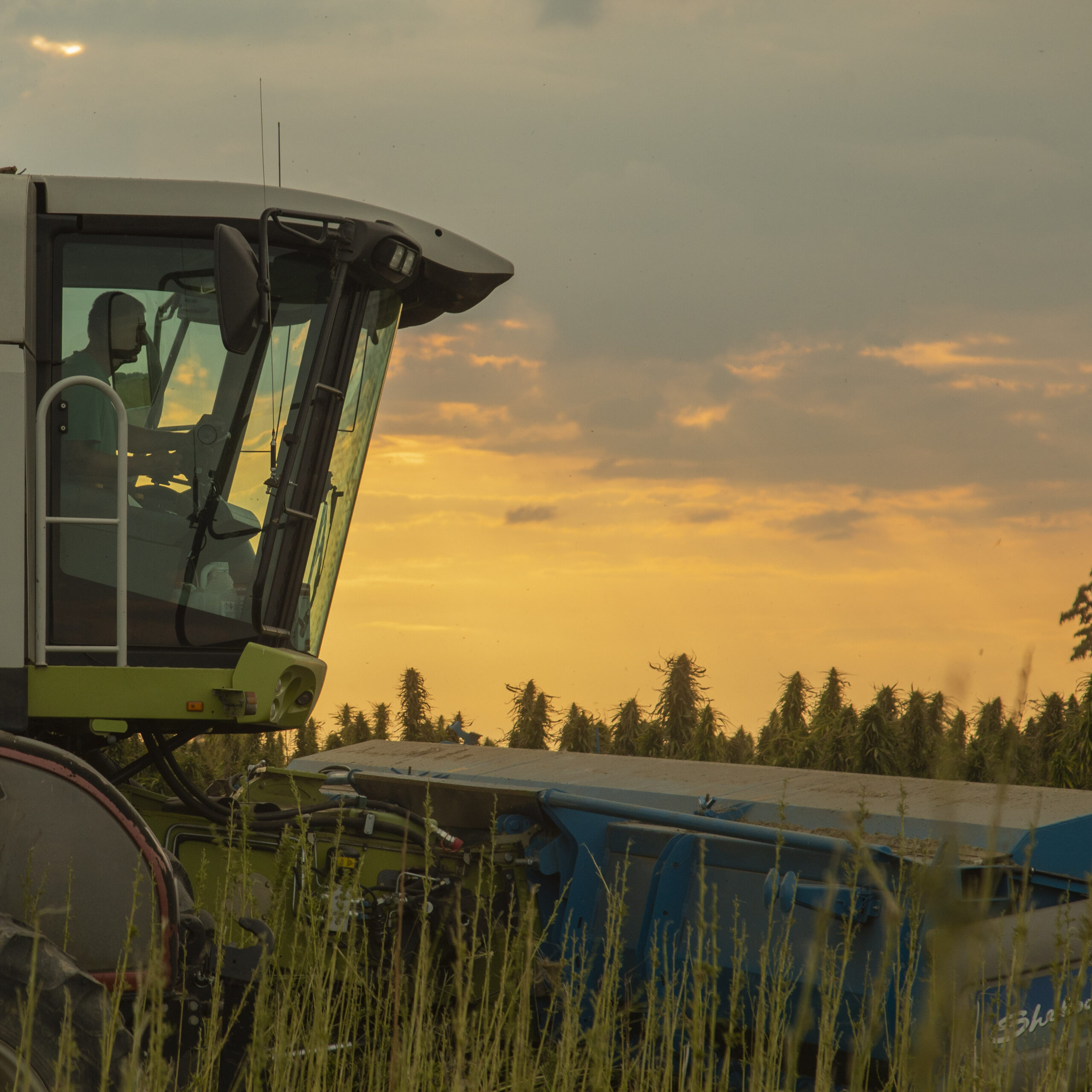
The Process
From seed to shelf, we grow organically, extract cleanly, and follow strict quality standards for purity.

Lab Testing
Every batch is third-party tested to ensure purity, safety, and the exact amount of CBD every time.
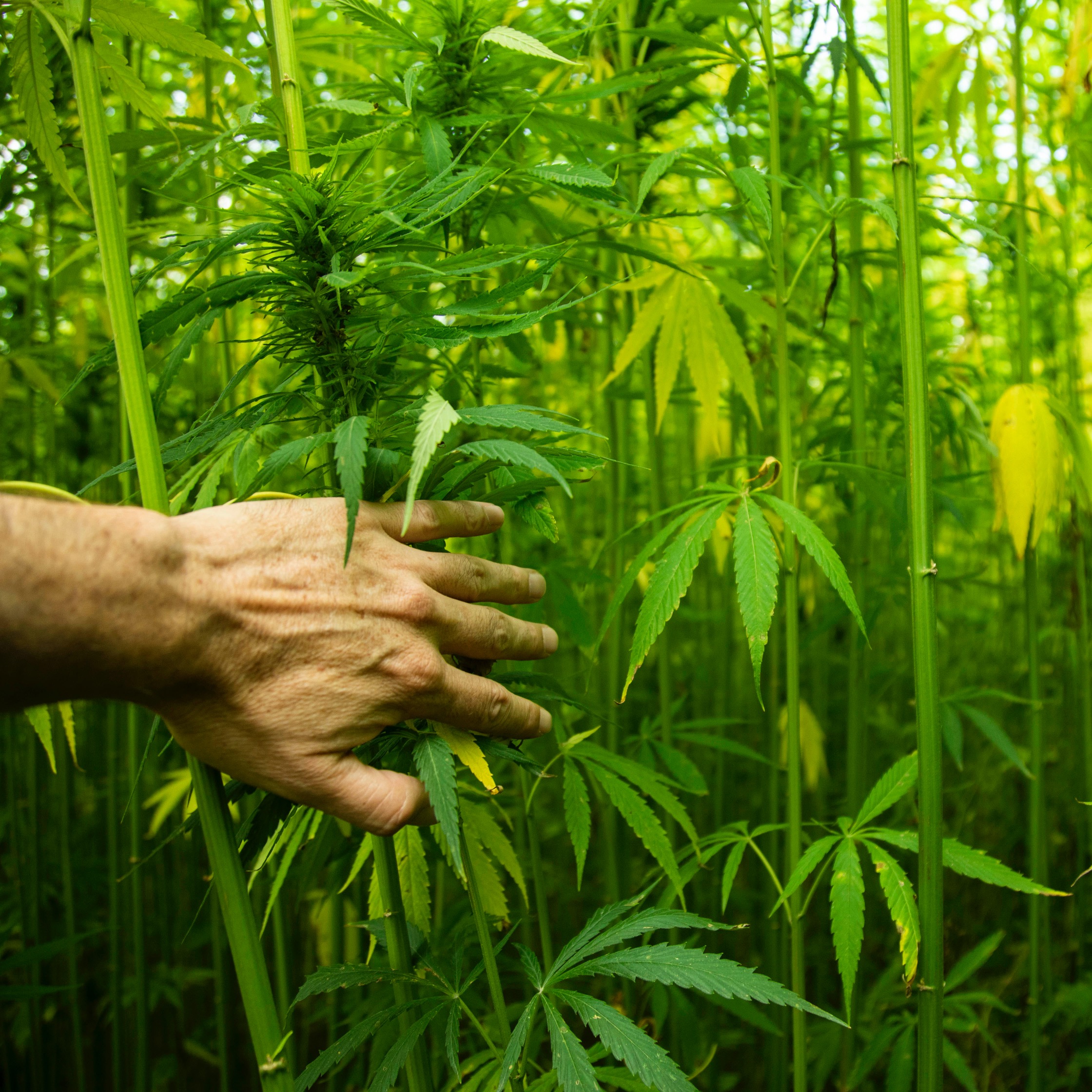
Our Values
Sustainability, transparency, and wellness guide every decision – for you and for the planet.
At a glance
Two carbons shorter, and the shared chemistry stops predicting anything
The varin cannabinoids begin at divarinolic acid instead of olivetolic acid, which is why their side chains are two carbons shorter. The plant runs them through the same synthase enzymes to make CBDVa and THCVa, which decarboxylate to CBDV and THCV. Most hemp cultivars express that branch weakly or not at all, which is why much of the commercial supply of both is produced by conversion.
The pair is interesting precisely because the shared structure predicts so little. THCV displaces a cannabinoid ligand from human CB1 with a Ki of 22 nanomolar and from CB2 at 47 nanomolar. CBDV fails to displace the same ligand from CB1 at concentrations up to 10,000 nanomolar, and produced no measurable agonist effect in a CB1 cAMP assay. The identical truncation leaves one compound a high-affinity CB1 ligand and the other effectively blind to that receptor.
One experiment makes the point cleanly. When a CBDV-rich botanical extract was tested for CB1 affinity it bound more than purified CBDV did, and the investigators traced the difference to the THC and THCV present in the extract rather than to CBDV.
Where the propyl chain actually lands
CBDV’s measurable pharmacology sits well away from CB1. In cells expressing human CB2 it inhibited cAMP accumulation with an EC50 of 5.0 nanomolar, reaching 51 percent of the reference effect, a potent figure with partial efficacy, and it recruited beta-arrestin2 at CB2 to 64 percent of the reference effect. Patch clamp work showed it activates and then rapidly desensitises TRPV1, TRPV2 and TRPA1. In hippocampal slices made epileptiform by magnesium-free solution it reduced burst amplitude and duration, and a selective TRPV1 antagonist did not reverse that, so TRPV1 is not the full mechanism.
THCV’s potency sits at the cannabinoid receptors, and its most striking figure is an antagonist one: an apparent KB of 1.2 nanomolar against anandamide in mouse vas deferens, against roughly 93 nanomolar for CP55940 in mouse brain membranes. The direction then inverts as concentration rises, which makes its dose range the central unknown.
The two have been tested alongside each other once. In the 13-week metabolic trial, the arms combining CBD with THCV produced no significant effect on any endpoint, which is worth holding against the assumption that combining minor cannabinoids adds their activities together.
The evidence, side by side
CBDV is the unusual case here: a minor cannabinoid taken into properly designed trials twice, in two different conditions, which separated from placebo in neither. That is more than almost any other minor cannabinoid can show, and it points the other way.
What people get wrong
Choosing between them
If the priority is knowing what you are taking, CBDV is the clearer case. It is the only one of the two whose clinical profile has been examined properly, it is plainly not intoxicating at the doses those trials used, and both came back negative.
If the priority is pharmacological interest, THCV is the more active compound at the cannabinoid receptors, and that is also the reason for caution. A compound that blocks CB1 at low concentrations and activates it at higher ones cannot be dosed sensibly without pharmacokinetic data in people.
Legal status and safety
Nothing about a health benefit for either. Regulation (EC) 1924/2006 permits only authorised nutrition and health claims, and neither CBDV nor THCV appears on the authorised list. With CBDV the restriction and the evidence agree, because the trials that tested it found no benefit to claim.
What may be said is what was measured, in which population, at what dose, with what result. Seizure frequency fell 40.5 percent on CBDV and 37.7 percent on placebo in 162 adults reports an outcome. CBDV supports brain health would be an unauthorised claim, and one the trial record contradicts.
Cannabinoid extracts sold as food supplements are novel foods under Regulation (EU) 2015/2283, and products linked to validated applications sit on the Food Standards Agency public list while assessment continues. As of the FSA board paper of September 2026 no authorisation had been granted, and the advised maximum for a healthy adult is 10 mg of CBD a day. Any product must also stay within the 1 mg per container limit for controlled cannabinoids.
CBDV’s trials did generate safety data: adverse events in 72.8 percent of participants against 48.1 percent on placebo, most often diarrhoea, nausea and somnolence, with transaminase elevations above three times the upper limit of normal in 3 of 81 participants, 2 of whom stopped. THCV has no equivalent dataset, no pharmacokinetic data in its delta-9 form, and is marketed on the mechanism of rimonabant, a licensed medicine withdrawn after psychiatric adverse effects.
How Endoca tests for this
We sell neither compound, and our cultivars are not varin types, so our batch certificates report CBDV and THCV below the limit of quantification rather than as a trace figure that could be rounded upwards. That cuts in both directions. We cannot claim a varin content we do not have, and a reader can tell an extract from genuine varin genetics from one that merely carries a broad analytical panel.
Frequently asked questions
No. It fails to displace a cannabinoid ligand from CB1 at concentrations up to 10,000 nanomolar, produced no agonist effect in a CB1 cAMP assay, and caused no cannabis-like effects in mice. Across two controlled trials, intoxication did not appear among the reported adverse effects.
No. In 162 adults with inadequately controlled focal seizures, titrated to 800 mg twice daily, seizure frequency fell 40.5 percent on CBDV and 37.7 percent on placebo, p equals 0.648. No secondary measure separated either, and the authors blamed participant expectations.
CBDV, by a clear margin. It has two completed controlled trials, in focal epilepsy and in HIV-associated neuropathic pain, plus a Phase 1 trial and a mechanistic imaging study. THCV has one substantial trial and a 10-person pilot. CBDV’s evidence points negative.
Both come from the varin branch of the pathway, which starts at divarinolic acid rather than olivetolic acid. Most cultivars express that branch weakly, so varin levels stay low. That scarcity is why much commercial CBDV and THCV is produced by conversion.
References
Brodie MJ et al. A phase 2 randomised controlled trial of cannabidivarin as add-on therapy in participants with inadequately controlled focal seizures. Cannabis Cannabinoid Res 2021;6:528-536.
Eibach L et al. Cannabidivarin for HIV-associated neuropathic pain: a randomised, blinded, controlled clinical trial. Clin Pharmacol Ther 2021;109:1055-1062.
Zagzoog A et al. In vitro and in vivo pharmacological activity of minor cannabinoids isolated from Cannabis sativa. Sci Rep 2020;10:20405.
Thomas A et al. Evidence that the plant cannabinoid Delta9-tetrahydrocannabivarin is a cannabinoid CB1 and CB2 receptor antagonist. Br J Pharmacol 2005;146:917-926.
Jadoon KA et al. Efficacy and safety of cannabidiol and tetrahydrocannabivarin on glycaemic and lipid parameters in patients with type 2 diabetes. Diabetes Care 2016;39:1777-1786.
Iannotti FA et al. Cannabidivarin and cannabidiol activate and desensitise transient receptor potential vanilloid 1 channels in vitro. ACS Chem Neurosci 2014;5:1131-1141.
Hill TD et al. Cannabidivarin-rich cannabis extracts are anticonvulsant in mouse and rat via a CB1 receptor-independent mechanism. Br J Pharmacol 2013;170:679-692.
Hurley EN et al. Efficacy and safety of cannabidivarin treatment of epilepsy in girls with Rett syndrome: a phase 1 clinical trial. Epilepsia 2022;63:1736-1747.
Pretzsch CM et al. Modulation of striatal functional connectivity differences in adults with and without autism spectrum disorder in a single-dose randomised trial of cannabidivarin. Mol Autism 2021;12:49.
Sempio C et al. Pharmacokinetics of oral cannabinoid delta-8-tetrahydrocannabivarin and its main metabolites in healthy participants. Pharmaceuticals 2024;17:1603.
Food Standards Agency. CBD novel food applications: recommendations to ministers on first authorisations. FSA Board paper, September 2026.
Last reviewed 6 October 2026.
These statements have not been evaluated by the Food and Drug Administration. This product is not intended to diagnose, treat, cure, or prevent any disease.