



No products in the cart.
The core difference in CBD vs THC is what each one does at the CB1 receptors in your brain. THC binds to them directly and makes you feel high. CBD does not bind there in the same way and will not intoxicate you.
Everything else that separates the two compounds, from how they are grown and extracted to how they are treated in law and on a drug test, follows from that single fact. This guide is for anyone deciding which of the two is right for them, or trying to work out whether a CBD product could cause a problem at work.
What are CBD and THC?
CBD and THC are the two best known cannabinoids in the Cannabis sativa plant. Both interact with the same internal system in your body, but they behave very differently once they get there.
What is CBD?
CBD is short for cannabidiol. It is non-intoxicating, which means it does not produce a high no matter how much you take. That surprises people who assume every part of the cannabis plant has the same effect.
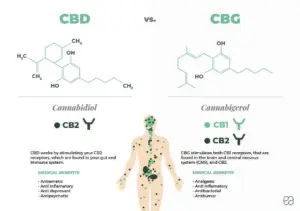
Rather than binding tightly to receptors in the brain, CBD works mostly around the edges of the endocannabinoid system, including at CB2 receptors, and it influences how much of your own endocannabinoids stay in circulation. The endocannabinoid system is a network of receptors and signaling molecules involved in keeping internal processes steady, and many people take CBD as part of a routine built around that idea of balance.
Most CBD sold in the US is extracted from hemp. You will find it as oils, extracts, tinctures, capsules, gummies, topicals and chewing gum. If you want the longer version of how it works, read our explainer on what CBD is.

What is THC?
THC is short for tetrahydrocannabinol. It is the psychoactive and intoxicating compound in cannabis, and it is the reason marijuana is used recreationally. THC is consumed by smoking or vaping cannabis flower, and in oils, tinctures, capsules and edibles.
THC is also the active compound in most medical cannabis programs, which is why access to it in the US is controlled at state level and tied to a physician’s recommendation in many places.
CBD vs THC at a glance
If you only read one part of this article, read the table. It is the fastest way to see where the two compounds overlap and where they part company.
| Factor | CBD | THC |
|---|---|---|
| Chemical difference | Same molecular formula as THC, C21H30O2, with the atoms arranged differently. CBD carries an open ring with a hydroxyl group. | Same formula, C21H30O2. THC’s arrangement closes into a cyclic ring, and that shape is what lets it lock into CB1. |
| Psychoactive | Non-intoxicating. It does not produce a high at any dose. | Intoxicating. Produces euphoria, altered perception and the sensation usually described as being high. |
| How it binds | Poor direct fit at CB1. Acts more indirectly, including activity at CB2 receptors in immune tissue. | High binding affinity at CB1 receptors in the brain and central nervous system, and activity at CB2 as well. |
| Legal status in the US | Hemp-derived CBD containing no more than 0.3% THC by dry weight is federally legal. State rules still vary. | Marijuana-derived THC remains a federally controlled substance. Legal for medical or recreational use only in the states that allow it. |
| Drug test risk | CBD itself is not what tests look for. Risk comes from the THC that travels with it in full spectrum products. | High. THC metabolites are exactly what standard workplace screens are designed to find. |
| Common product types | Oils, extracts and pastes, capsules, gummies, chewing gum, topicals, suppositories, isolate crystals. | Flower, pre-rolls, vapes, edibles, tinctures and medical cannabis preparations. |
| Reported side effects | Drowsiness, lightheadedness, dizziness, nausea, diarrhea, upset stomach, lowered blood pressure. | Raised heart rate, dry mouth, red eyes, dizziness, slowed reactions, trouble concentrating, increased appetite, nausea or vomiting at high doses. |
Where CBD and THC come from in the plant
Both compounds come from the same species. What differs is the variety and the ratio it produces.
- Hemp is bred to produce very little THC. In the US it is legally defined as cannabis containing no more than 0.3% THC by dry weight. Nearly all commercial CBD comes from hemp.
- Marijuana is bred for high THC content, sometimes twenty percent or more of the flower by weight.
Both plant types contain both cannabinoids. The dividing line is quantity, not presence. That is also why the source of a product matters more than the label on the front of the bottle: a CBD oil made from hemp starts from a plant that never had much THC in it, while an oil made from marijuana starts from one that did.
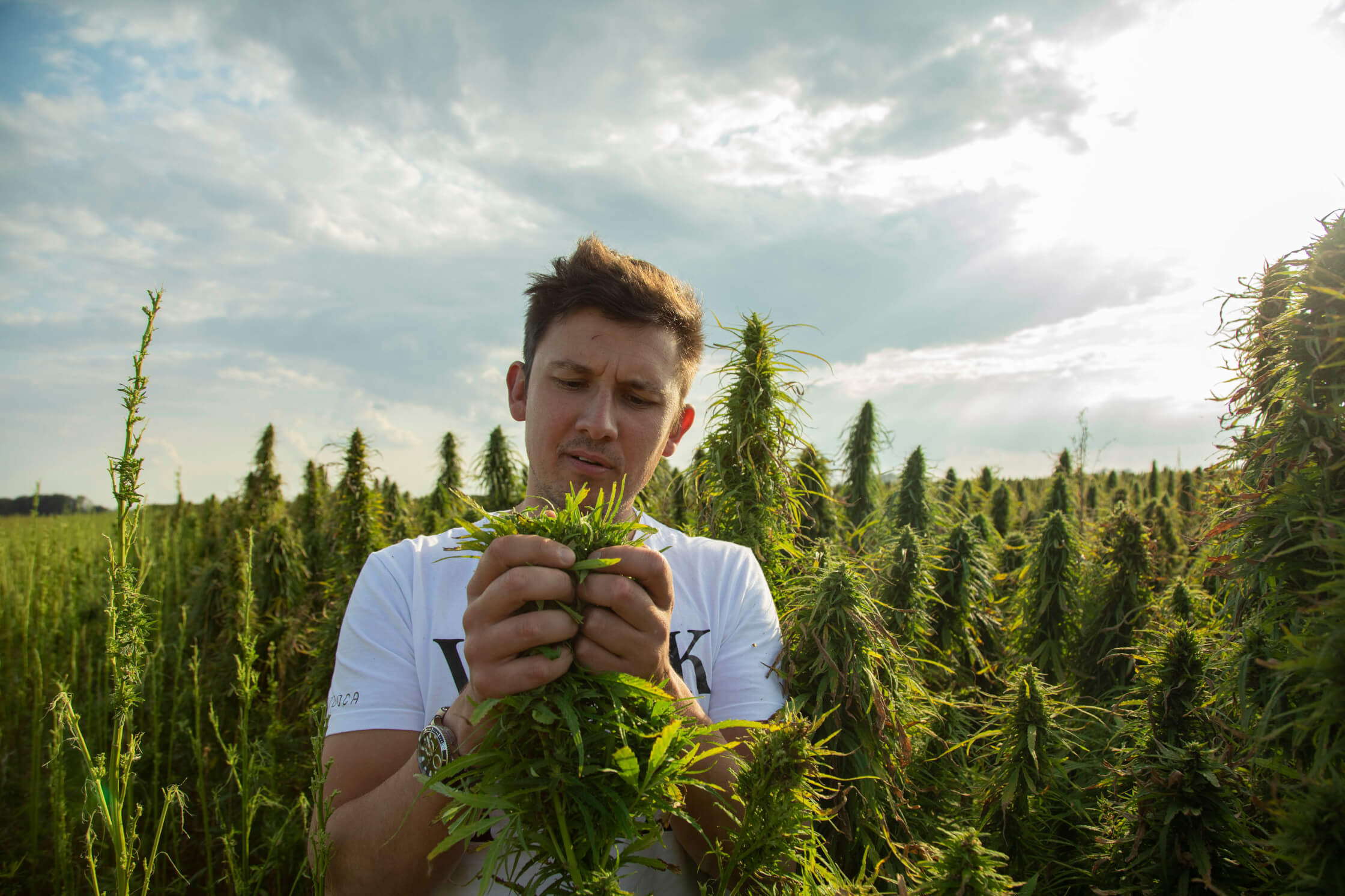
At Endoca the plants are grown on our own farms and extracted with supercritical CO2, so the cannabinoid ratio in the finished oil traces back to a known crop rather than to bulk material of unclear origin. That traceability is a manufacturing decision, not a marketing one, and it is the reason the THC figure on our certificates of analysis stays consistent from batch to batch.

How each one affects the body
Cannabinoids from the plant, called phytocannabinoids, interact with the endocannabinoid system. That system has two main receptor types.
- CB1 receptors sit mainly in the brain and central nervous system, and are involved in processes including mood, memory, appetite and pain signaling.
- CB2 receptors are concentrated in immune tissue and the peripheral nervous system, where they play a part in immune signaling.
THC has a high binding affinity for CB1. It fits into the receptor the way a key fits a lock, activates it directly, and that activation is what produces euphoria and altered perception.
CBD does not fit CB1 in the same way. Its activity is more indirect: it influences CB2 signaling, affects how long your own endocannabinoids stay active, and interacts with several receptors outside the endocannabinoid system entirely. Research into all of this is still developing, and much of it has been done in laboratory or animal models rather than in large human trials.
The molecular detail that explains everything else
CBD and THC share the same molecular formula, C21H30O2. Both are built from 21 carbon atoms, 30 hydrogen atoms and 2 oxygen atoms. The only difference is how those atoms are arranged. THC’s structure closes into a cyclic ring, while CBD’s has an open ring with a hydroxyl group.
That single structural difference is why THC slots neatly into CB1 receptors and CBD does not. Two molecules with an identical ingredient list, assembled differently, produce two entirely different experiences.

Will CBD get you high?
No. CBD is non-intoxicating, and taking more of it does not change that. It does not activate CB1 receptors the way THC does, so the mechanism that produces a high is simply not being triggered.
People do report feeling calmer or more settled after taking CBD, and that is worth separating out. Feeling relaxed is not the same as feeling intoxicated. You will not be impaired, your perception will not change, and there is no equivalent to the disorientation some people get from THC.
One caveat: a full spectrum CBD oil contains trace THC alongside the CBD. At the levels present in a hemp extract this is not enough to intoxicate you at a normal serving. It is, however, enough to matter on a drug test, which is a different question entirely.
CBD vs THC and drug testing
This is where most people get caught out, so it is worth being precise.
Standard workplace drug screens do not look for CBD. They look for THC metabolites, mainly THC-COOH, which is what your body produces as it breaks THC down. CBD is not part of the panel and a pure CBD molecule is not what triggers a positive result.
The risk comes from what else is in the bottle. THC is fat soluble and can be stored in fat tissue, which is why it can be detectable for days or weeks after use rather than hours. If you are taking a product that contains trace THC every day, those small amounts accumulate.
How the three CBD types compare for testing risk
- Full spectrum keeps the whole plant profile, including up to 0.3% THC. It carries the highest risk of the three, and heavy daily use of a full spectrum oil can produce a positive screen.
- Broad spectrum keeps the other cannabinoids and terpenes but has the THC removed to non-detectable levels. Risk is much lower, though “non-detectable” depends on the sensitivity of the test used to check it.
- CBD isolate is CBD on its own, refined to around 99.9% purity with no THC left in it. This is the lowest risk option. Our page on what CBD isolate is explains how it is produced.
No CBD company can promise you a negative test result, because the outcome depends on the product, the dose, how often you take it, your own metabolism and the sensitivity of the test. What you can do is reduce the variables: choose isolate or broad spectrum if you are tested, and buy only from a company that publishes a batch-specific certificate of analysis. Every Endoca batch is tested by an independent laboratory, and the results are on our lab testing page.
If you work in a role with mandatory testing, including government positions, transport, safety-critical work and teaching, check your employer’s policy before you start taking anything derived from hemp.
Side effects of CBD vs THC
Neither compound is free of side effects, but they differ in kind and in duration.
Reported side effects of CBD
- Drowsiness
- Lightheadedness and dizziness
- Nausea, diarrhea or an upset stomach
- Lowered blood pressure
- Dry mouth
The World Health Organization has reported that CBD is generally well tolerated, including at high doses, and has a good safety profile (WHO, 2018). The more important consideration for most people is interaction rather than side effect: CBD can affect how your liver processes certain prescription drugs. If you take any prescription medication, speak to your doctor before adding CBD, particularly if your medication carries a grapefruit warning.
Reported side effects of THC
- Increased heart rate
- Dry mouth and reduced saliva
- Red eyes
- Slower reaction times and difficulty concentrating
- Dizziness
- Increased appetite
- Anxiety, and nausea or vomiting at higher doses
THC’s acute side effects are temporary and usually pass within a few hours. The longer-term picture is where the two compounds diverge most: research has linked prolonged, heavy THC use to mental health outcomes including psychiatric disorders, with the association strongest for frequent use of high-potency products and for people who start young. This is an area where the evidence is still being argued over, and association is not the same as cause.
Legal status in the US and EU

CBD in the US
Under federal law, hemp and hemp-derived products containing no more than 0.3% THC by dry weight were removed from the Controlled Substances Act by the 2018 Farm Bill. That is what made hemp-derived CBD federally legal to grow, extract and sell.
State law is a separate question and it varies. A handful of states have historically taken a much stricter position than the federal government, and the rules keep moving. Check the current law in your state before you buy, and before you travel with CBD.
THC in the US
Marijuana remains a federally controlled substance. Some states permit recreational use for adults, others permit medical use with a physician’s recommendation, and others permit neither. Where THC is legal at state level, CBD is legal there too.
CBD in the EU
In the EU, industrial hemp is grown under its own THC threshold, which has been set at a low level and revised in recent years, and CBD extracts are widely sold across member states. Individual countries apply their own rules on top, so the position in Denmark is not necessarily the position in France or Italy. Endoca is based in Denmark and ships worldwide, and where a country’s rules restrict a particular product type we do not ship it there.
None of the above is legal advice. Laws in this area change frequently, and the responsibility for checking your own jurisdiction sits with you.
Choosing between CBD and THC products

Three questions settle it for most people.
1. Do you want to feel intoxicated?
If the answer is no, you want CBD, and you want it derived from hemp. If the answer is yes, you are looking at THC, and your options depend entirely on what your state permits.
2. Are you subject to drug testing?
If you are, avoid THC and lean towards broad spectrum or isolate rather than full spectrum. See the drug testing section above for the detail.
3. Can you verify what is in the bottle?
The CBD market is loosely regulated, and independent testing has repeatedly found products mislabeled, containing less CBD than claimed, more THC than claimed, or contaminants that should never have made it through. Buy only where a company publishes third-party lab results for the specific batch you are holding.
Endoca screens every batch for more than 200 pesticides as well as heavy metals and mycotoxins, using HPLC and NMR analysis, and manufactures under GMP conditions. Our quality control process covers what is tested and why.
Frequently asked questions about CBD and THC
Is CBD the same as THC?
No. They share the same molecular formula, C21H30O2, but the atoms are arranged differently. That arrangement is why THC binds directly to CB1 receptors in the brain and produces a high, while CBD does not bind there in the same way and is non-intoxicating.
Does CBD show up on a drug test?
CBD itself is not what standard drug tests screen for. They look for THC metabolites. A full spectrum CBD product contains up to 0.3% THC and can produce a positive result with regular use, while broad spectrum and isolate carry substantially lower risk.
Will CBD get you high?
No. CBD is non-intoxicating at any dose because it does not activate CB1 receptors the way THC does. Some people describe feeling calmer or more relaxed after taking it, but that is not the same as intoxication and it does not impair you.
Which is better for beginners, CBD or THC?
Most people new to cannabinoids start with CBD, because it is non-intoxicating, federally legal when hemp-derived, and easier to adjust gradually. THC has a much narrower comfortable range and its effects are far more noticeable, particularly if you have no tolerance.
Can you take CBD and THC together?
In states where THC is legal, yes, and many products are formulated with both. Some research suggests CBD moderates how THC is experienced. Availability depends entirely on your state’s law, so check before buying anything containing more than the federal 0.3% threshold.
Is CBD legal in all 50 states?
Hemp-derived CBD with no more than 0.3% THC is legal federally, but individual states set their own rules and a few have been considerably more restrictive. The position also changes over time, so verify the current law where you live before ordering.
If you have decided CBD is the right fit, the next step is picking a strength you can adjust rather than one you are stuck with. Start with a lower concentration, give it a couple of weeks, and change it if you need to. Browse our range of CBD oils, each one grown, extracted and lab tested in house, and speak to your doctor first if you take prescription medication.

Comments are closed