
- Shop
- About Us

Our Story
From humble beginnings to a global mission – we grow, harvest, and craft hemp with care for people and planet.
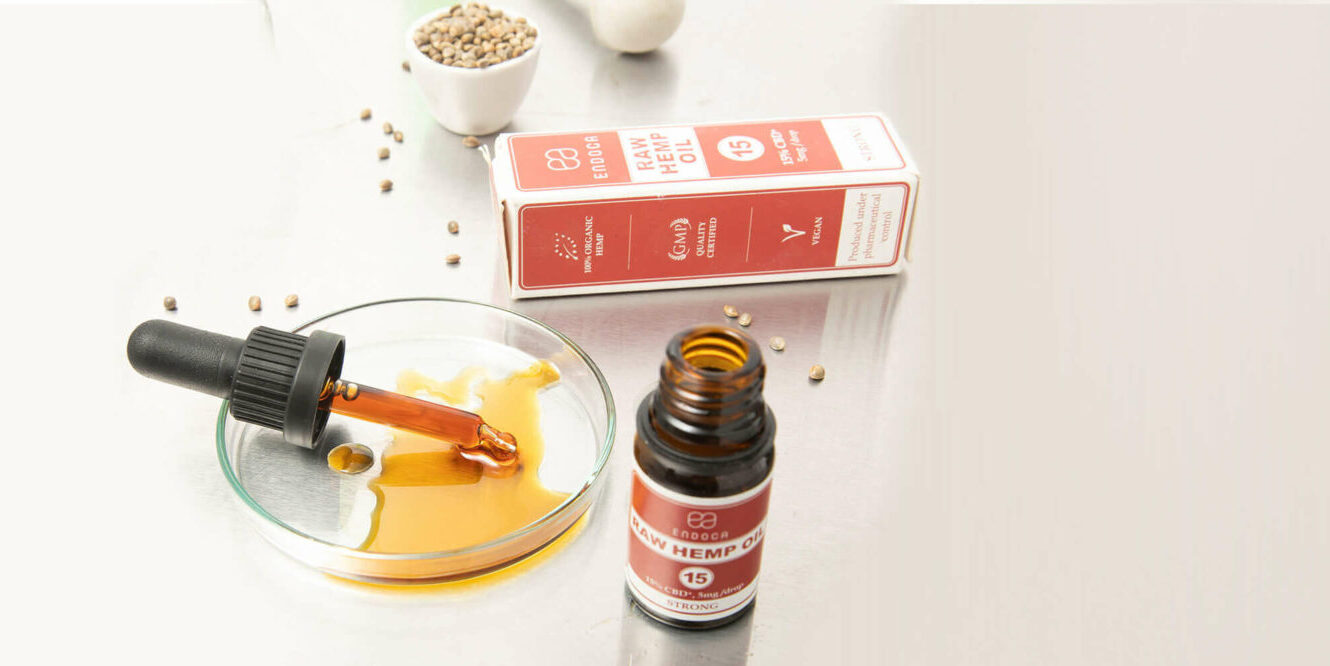
What Is CBD?
CBD is nature’s way to restore balance, calm, and overall well-being – naturally and without the high.
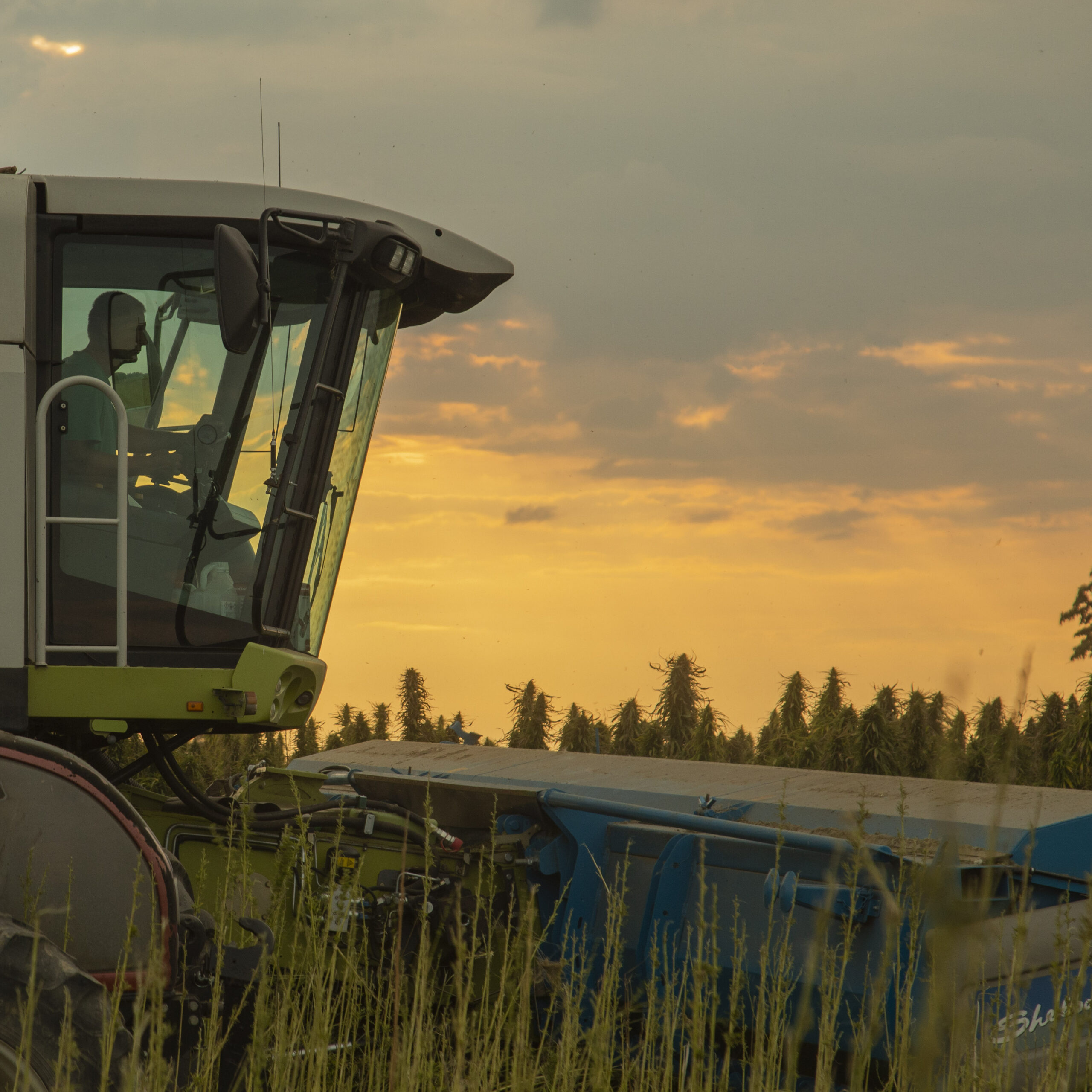
The Process
From seed to shelf, we grow organically, extract cleanly, and follow strict quality standards for purity.

Lab Testing
Every batch is third-party tested to ensure purity, safety, and the exact amount of CBD every time.
Our Values
Sustainability, transparency, and wellness guide every decision – for you and for the planet.
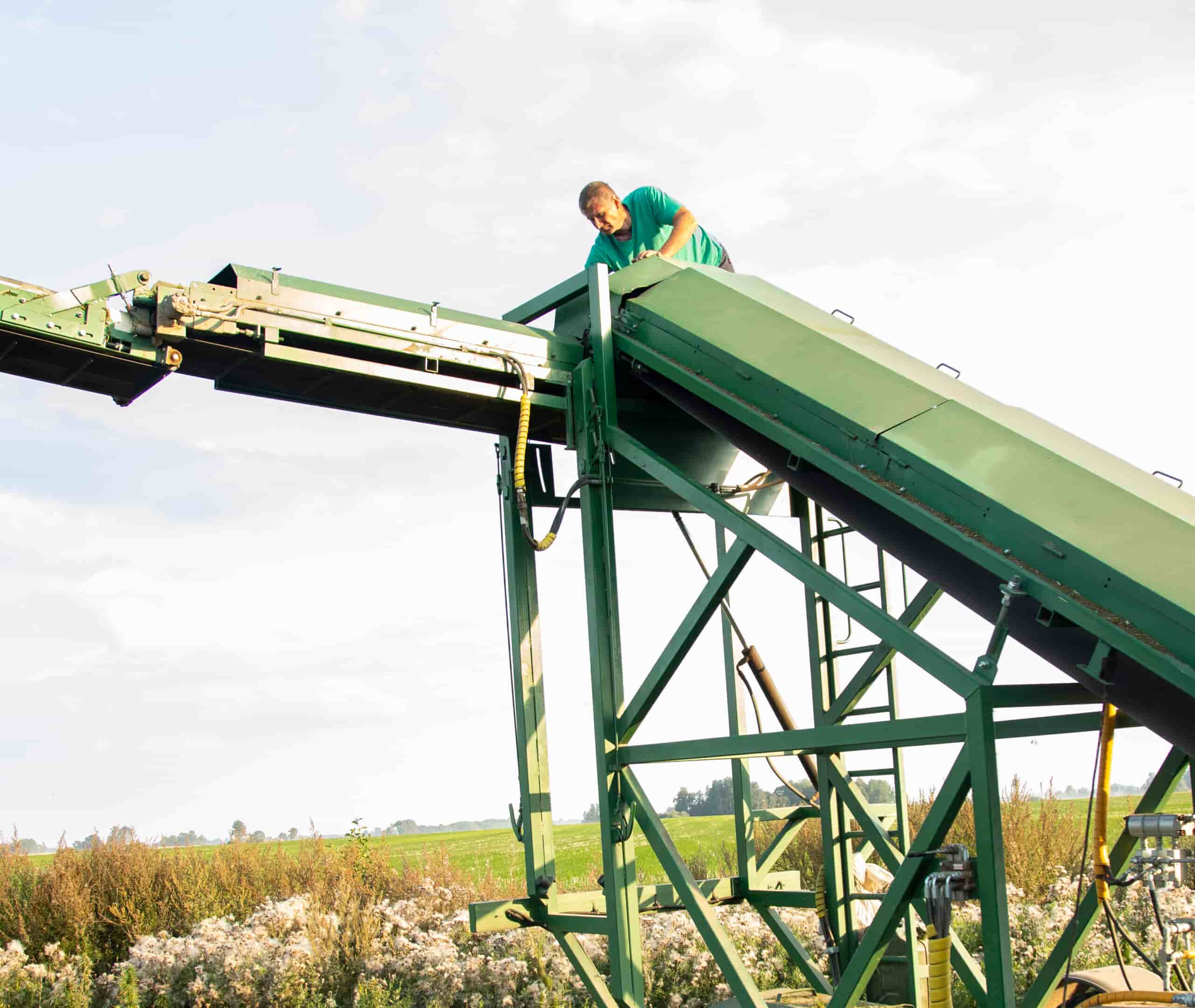
At a glance
The disagreement worth stating plainly
Most writing about minor cannabinoids presents a tidy picture. The literature on CBC is not tidy, and smoothing it over would be misleading.
A 2019 paper in the British Journal of Pharmacology reported that CBC does not activate CB1 at all, and is instead a selective CB2 agonist with higher efficacy at that receptor than THC. A 2020 paper in Scientific Reports reported the opposite: a CB1 binding affinity of 11 nanomolar, which would make CBC the highest-affinity minor cannabinoid tested, along with functional activity.
Both cannot be correct. The likely explanation is a difference in assay method. The 2020 dataset relied on partial displacement of a radioligand, which its own authors flagged as not directly comparable to a full-displacement measurement. But it is unresolved.
The accurate description is that CBC is a CB2-preferring agonist whose CB1 activity is disputed between studies. Anyone quoting a single confident CBC binding figure is citing one paper and omitting the other.
There is a further complication seldom mentioned. A 2025 paper showed that the two mirror-image forms of CBC behave differently, with one activating CB2 and the other not. CBC in plant material and in synthetic products is not necessarily a single form, so the potency of bulk CBC depends on how it was produced.
Where CBC is genuinely potent
CBC’s standout property is TRPA1 activation, at an EC50 of 0.09 micromolar. That is among the most potent TRPA1 actions measured for a phytocannabinoid, and it is comparable to CBD’s own TRPA1 activity, so it is a shared strength rather than a point of difference. TRPA1 is a sensory channel involved in detecting irritants and in inflammatory signalling.
Notably, when CBC’s anti-inflammatory and gut motility effects were examined in mouse colitis models, they operated through TRPA1 rather than through cannabinoid receptors. That suggests the CB1 dispute above may matter less than it first appears.
CBC also inhibits cellular uptake of anandamide, one of the body’s own cannabinoids, more effectively than CBD does.
The evidence, and the absence of it
This does not mean CBC is inert. It means nobody knows, and a company selling it should say so rather than filling the gap with rodent studies presented as findings.
What people get wrong
Legal status and safety
No health claim for CBC, CBD or any cannabinoid is authorised under Regulation (EC) No 1924/2006. Article 10(3) prevents general, non-specific wellbeing language in the absence of an authorised claim. Regulation (EU) No 1169/2011 prohibits attributing disease-related properties to any food.
For a compound with no human data at all, this constraint is arguably useful. There is nothing lawful and nothing honest to say about what CBC does for a person, and those two facts point in the same direction.
CBC falls within the EU Novel Food Catalogue entry covering cannabinoid-containing extracts of Cannabis sativa L. It is not authorised, as no cannabinoid novel food is.
EFSA’s February 2026 provisional safe level applies to CBD isolate of at least 98 percent purity. No equivalent assessment exists for CBC, and its safety in humans has not been formally evaluated by any European body.
National positions on cannabinoid-containing supplements diverge across member states, and CBC is subject to the same divergence as CBD.
How Endoca tests for this
CBC appears on our full-spectrum batch certificates alongside CBD, CBDA, CBG, CBN, THC and THCA. In our extracts it is a genuine minor constituent present at low percentage.
For minor cannabinoids in particular, a measured number tied to a batch code is the only meaningful statement about content, because at these levels “contains CBC” can mean almost anything. We publish the figure the laboratory returns rather than a target.
Frequently asked questions
No. In animal behavioural testing it produced no cannabis-like effects.
At CB2 and TRPA1 in cell assays, on paper. In terms of anything demonstrated in a person, there is nothing to compare.
Unknown. No human pharmacokinetic or dosing study exists.
Usually in small amounts. Check the certificate of analysis.
CBC is scarce and difficult to isolate in quantity, and research funding has concentrated on CBD and THC.
References
Udoh M, Santiago M, Devenish S, McGregor IS, Connor M. Br J Pharmacol 2019;176:4537-4547.
Zagzoog A et al. Sci Rep 2020;10:20405.
De Petrocellis L et al. Br J Pharmacol 2011;163:1479-1494.
Walsh KB, McKinney AE, Holmes AE. Front Pharmacol 2021;12:777804.
Udoh M et al. Cannabis Cannabinoid Res 2025;10.
EFSA Journal 2026;24:9862.
Last reviewed 1 September 2026.
Educational information about published research and European regulation. Not a health claim.