
- Shop
- About Us

Our Story
From humble beginnings to a global mission – we grow, harvest, and craft hemp with care for people and planet.
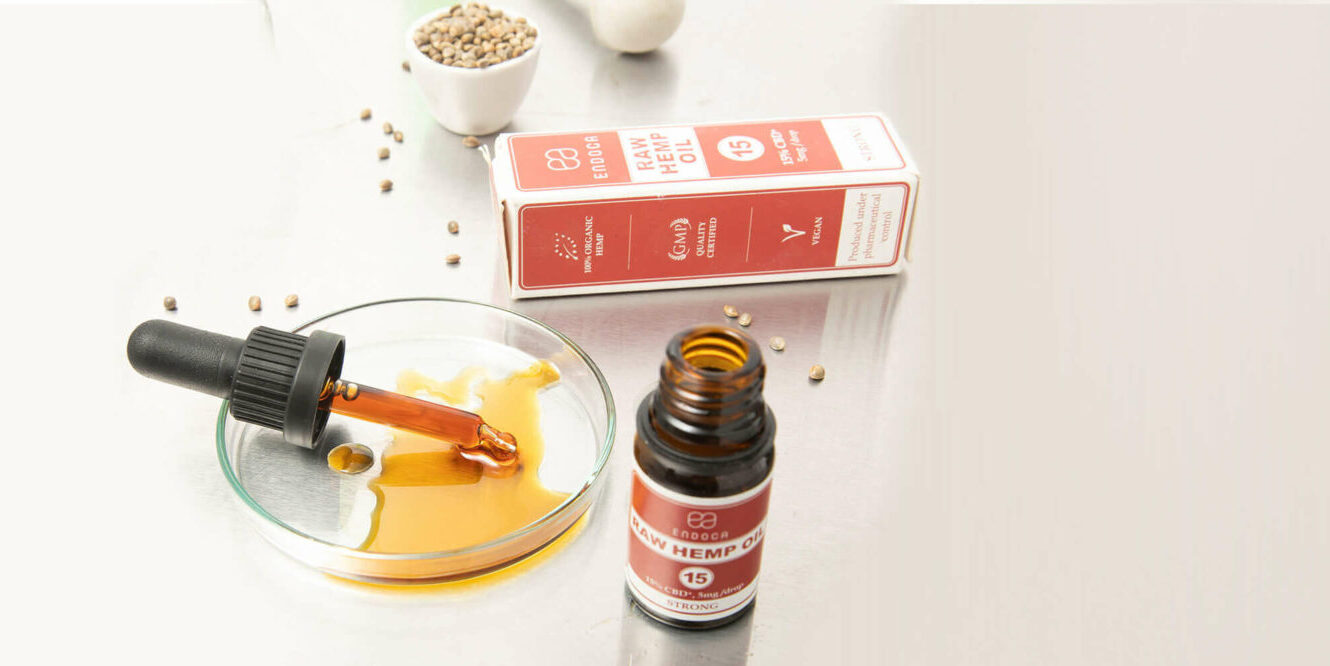
What Is CBD?
CBD is nature’s way to restore balance, calm, and overall well-being – naturally and without the high.
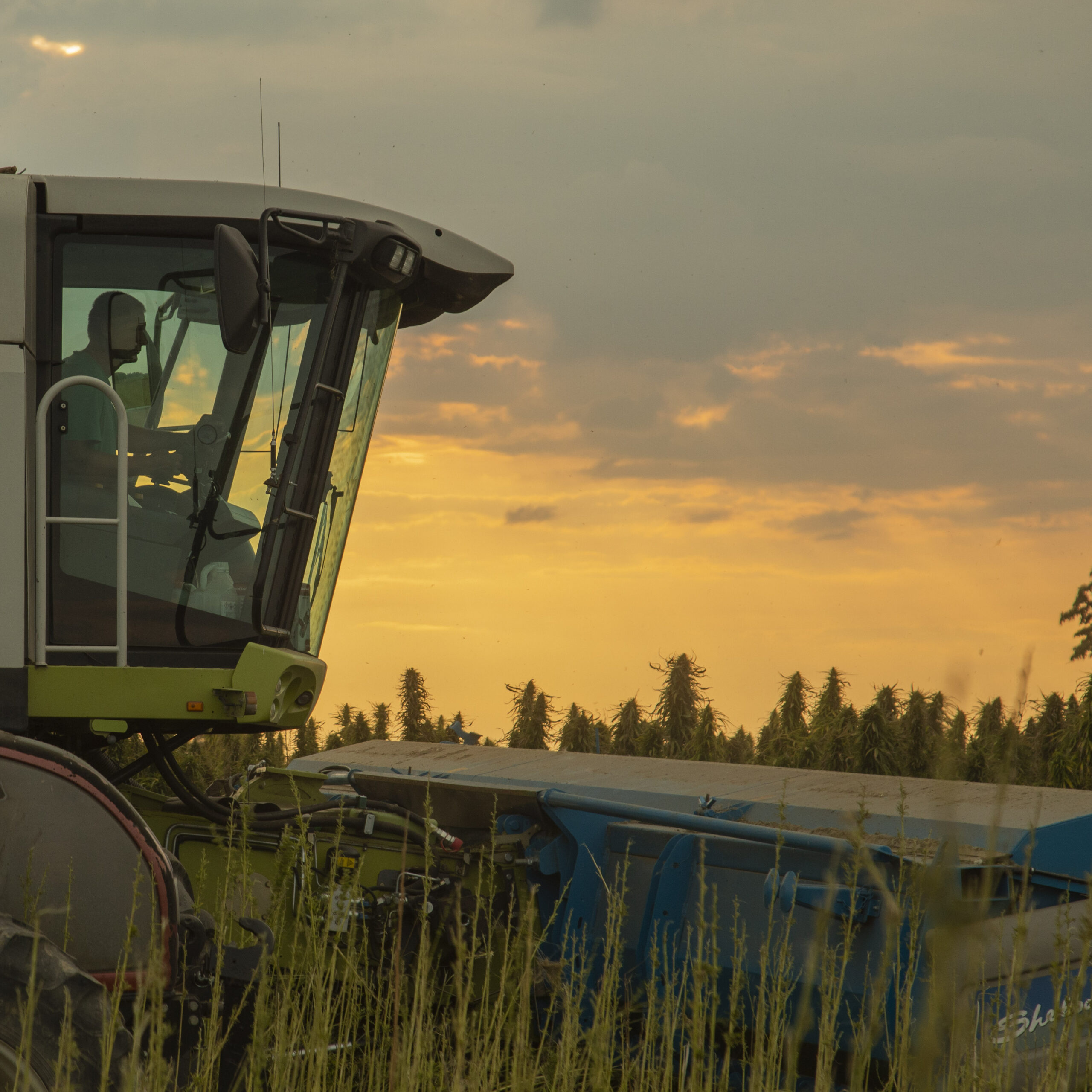
The Process
From seed to shelf, we grow organically, extract cleanly, and follow strict quality standards for purity.
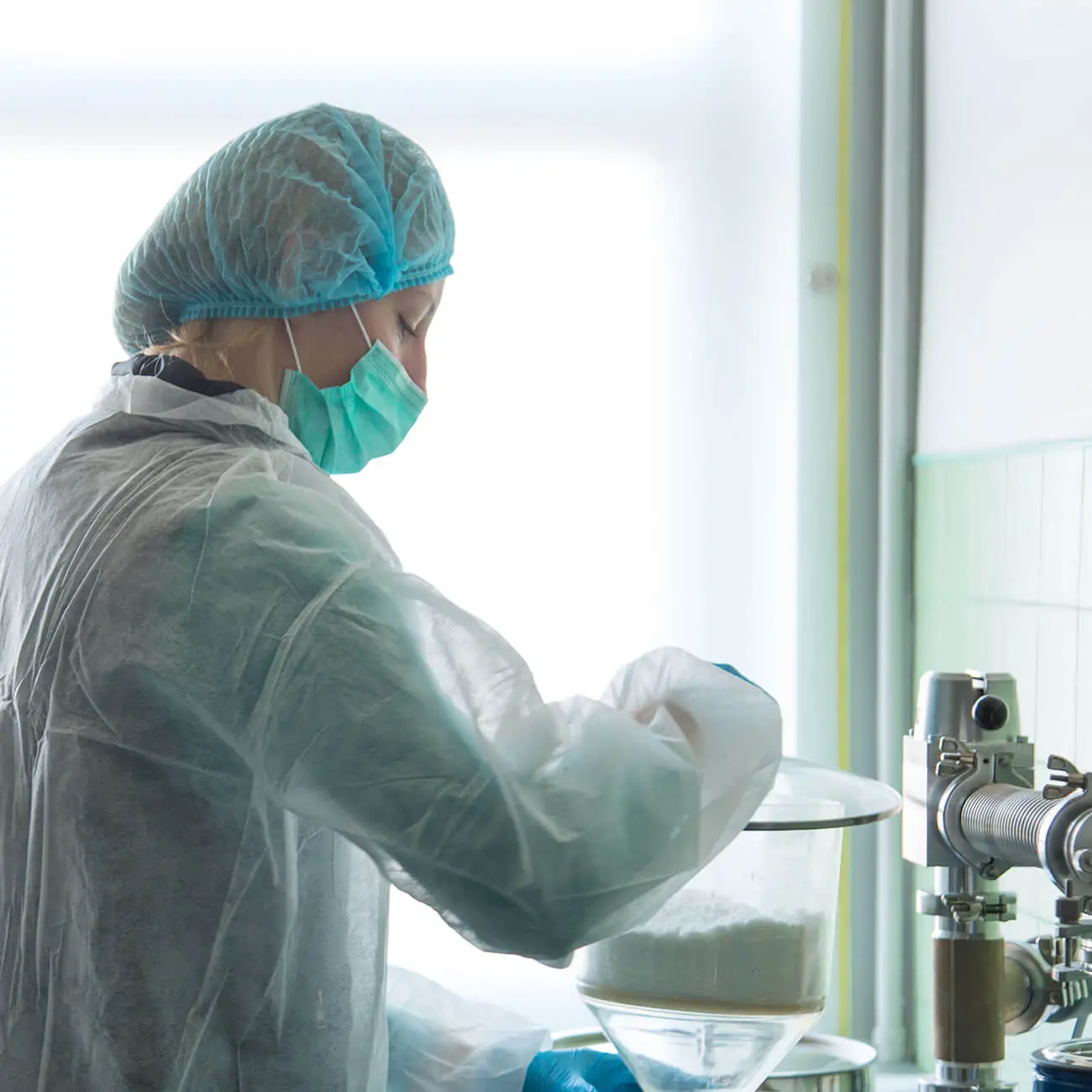
Lab Testing
Every batch is third-party tested to ensure purity, safety, and the exact amount of CBD every time.
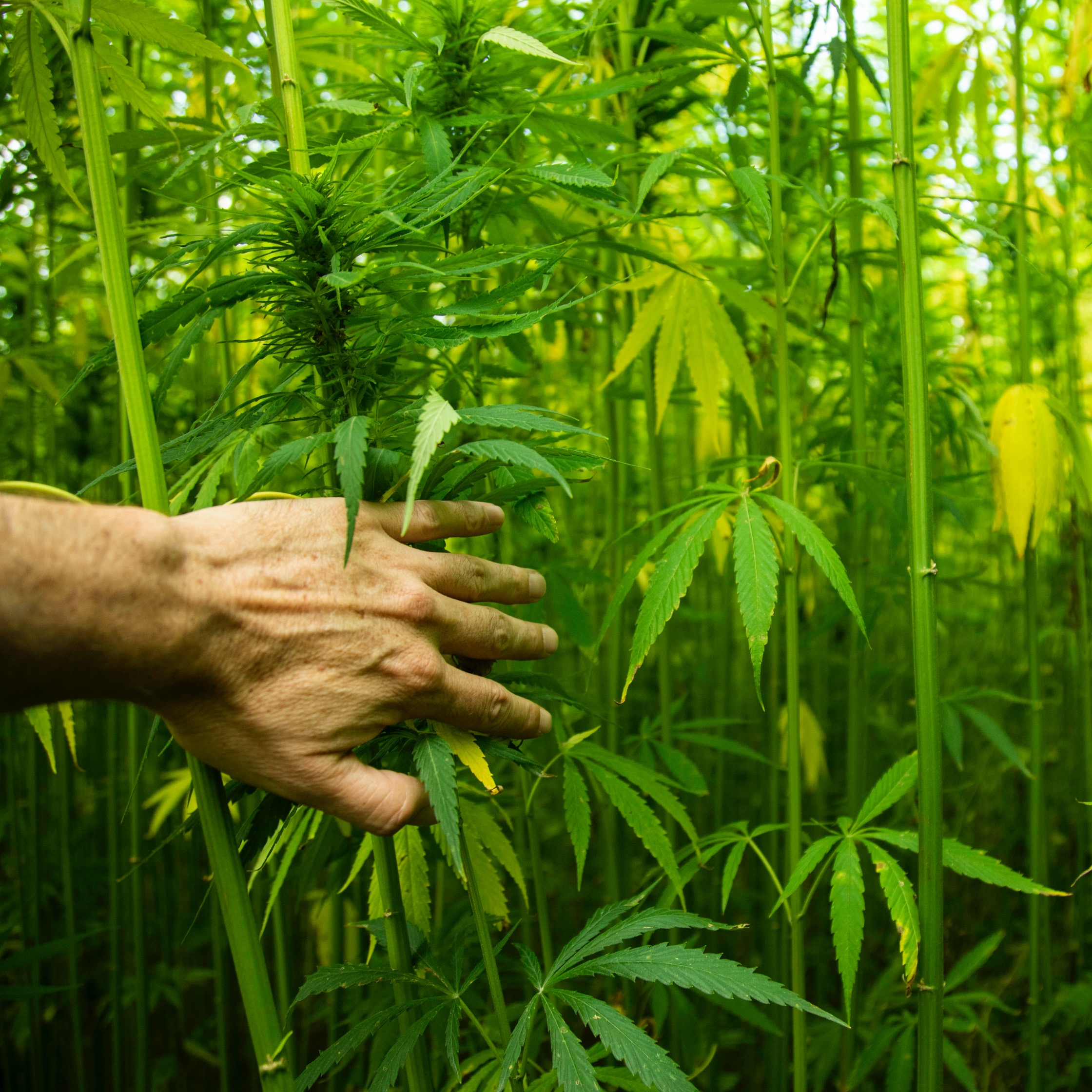
Our Values
Sustainability, transparency, and wellness guide every decision – for you and for the planet.
At a glance
Decarboxylation, and why it matters here
Living cannabis produces acids. CBDA is made by a dedicated enzyme and is what sits in the trichomes of a fresh plant.
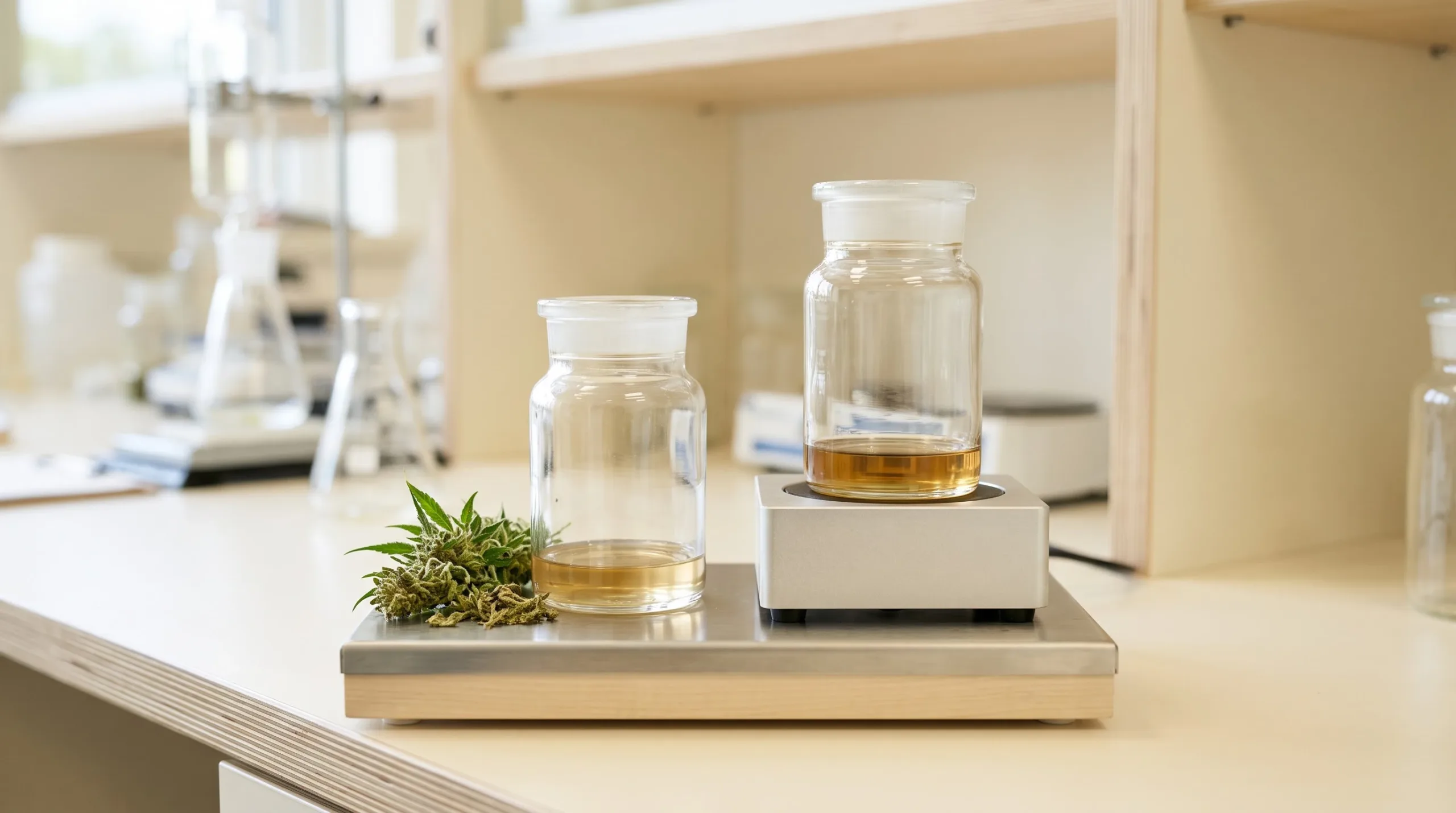
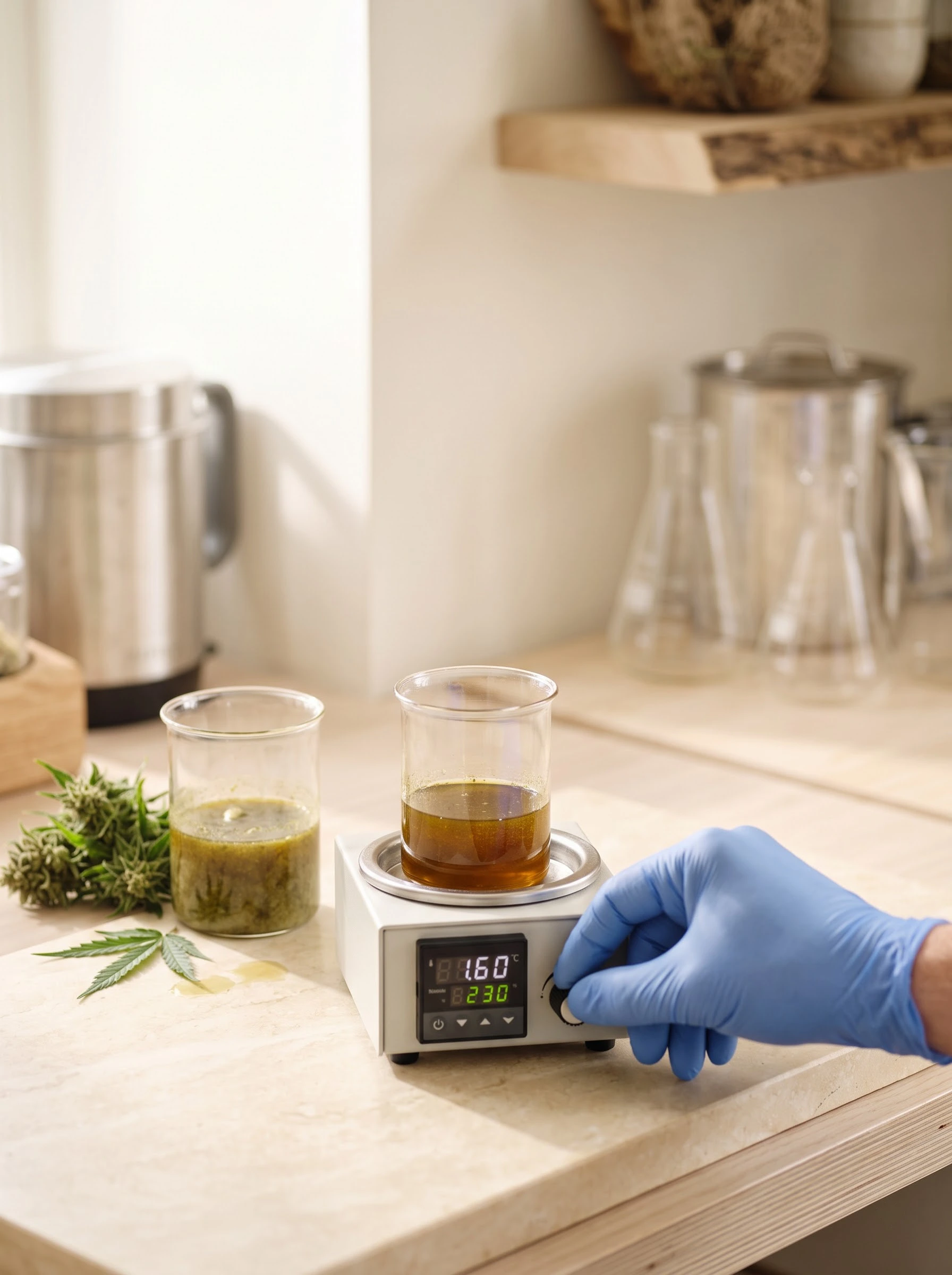
Apply heat, or simply enough time, and a carbon dioxide group breaks away. CBDA becomes CBD. This is decarboxylation, and it makes extraction temperature a formulation decision rather than a technicality.
So CBD is a degradation product of CBDa, not the reverse. A raw or cold-processed extract retains more CBDa; a heated one converts most of it.
The absorption finding, reported carefully
A 2025 study in Cannabis and Cannabinoid Research gave 15 healthy adults oral soft gels containing roughly equal parts CBD and CBDa at three dose levels. Across all doses, peak plasma concentration for CBDa was 19 to 25 times higher than for CBD, with time to peak up to twice as fast.
The same pattern has since been reported in dogs, horses, goats and macaques.
Two qualifications belong with that finding.
It was a co-administration study. Both compounds were given together in one product rather than in separate arms. It is strong evidence but not a formal head-to-head bioequivalence comparison, and the authors themselves called for studies directly comparing the two.
More importantly, plasma is not brain. A 2019 study in mice found all the cannabinoid acids, CBDa included, were rapidly absorbed into plasma but reached brain to plasma ratios of 0.04 or less. They are ionised at physiological pH and cross the blood-brain barrier poorly. Only when CBDa was reformulated in a specialised vehicle did its brain to plasma ratio rise to 1.9.
So “19 to 25 times more bioavailable” is accurate about the bloodstream and potentially misleading about the central nervous system.
They are different compounds, not two strengths of one
This is the part most CBDa marketing omits.
Taken together, CBDa is a distinct compound with a distinct target profile rather than a more bioavailable version of the same molecule.
Legal status and safety
No health claim for CBDa, CBD or any cannabinoid is authorised under Regulation (EC) No 1924/2006, and Article 10(3) excludes general wellbeing language. Regulation (EU) No 1169/2011 prohibits attributing disease-related properties to food.
This is why the section above describes molecular targets and pharmacokinetics rather than telling you what raw extracts will do for you. For a compound with no human efficacy data, that constraint and honest description point the same way.
CBDa falls within the EU Novel Food Catalogue entry covering cannabinoid-containing extracts and is not authorised, as no cannabinoid novel food is.
There is a specific point for raw extracts. Because they retain acid-form cannabinoids, they also retain THCA. Total THC, calculated as delta-9 THC plus 0.877 times THCA, is therefore higher in a raw extract than the delta-9 figure alone suggests. Several member states apply thresholds where this calculation matters, and Denmark publishes action limits that count acid forms explicitly.
Anyone producing or buying raw extracts in Europe should look at the THCA line on the certificate of analysis, not only the THC line.
EFSA’s February 2026 provisional safe level applies to CBD isolate of at least 98 percent purity. It does not cover CBDa or raw extracts.
How Endoca tests for this
Our Raw range is cold-processed specifically to retain CBDa alongside CBD. Every batch certificate reports CBD and CBDA separately, together with THC and THCA.
That separation is not a technicality in Europe. It is the difference between two different total THC figures, and it is exactly the kind of measured data that EU rules leave us free to publish.
Frequently asked questions
No. Its CB1 affinity is above 10 micromolar with minimal efficacy.
Not appreciably. Decarboxylation is a thermal process, not a metabolic one.
There is no human efficacy data to answer that. The absorption difference is real; what it means for effect is unknown.
They retain more of the plant’s original composition, including terpenes and chlorophyll that heating and refining remove.
Heating will drive decarboxylation, yes.
References
Elder HJ et al. Cannabis Cannabinoid Res 2025;10:e299-e313.
Anderson LL et al. Pharmacokinetics of phytocannabinoid acids and anticonvulsant effect of cannabidiolic acid in a mouse model of Dravet syndrome. J Nat Prod 2019;82:3047-3055.
Takeda S et al. Cannabidiolic acid as a selective COX-2 inhibitor, 2008.
Zagzoog A et al. Sci Rep 2020;10:20405.
Walsh KB, McKinney AE, Holmes AE. Front Pharmacol 2021;12:777804.
EFSA Journal 2026;24:9862.
Last reviewed 1 September 2026.
Educational information about published research and European regulation. Not a health claim.