
- Shop
- About Us

Our Story
From humble beginnings to a global mission – we grow, harvest, and craft hemp with care for people and planet.
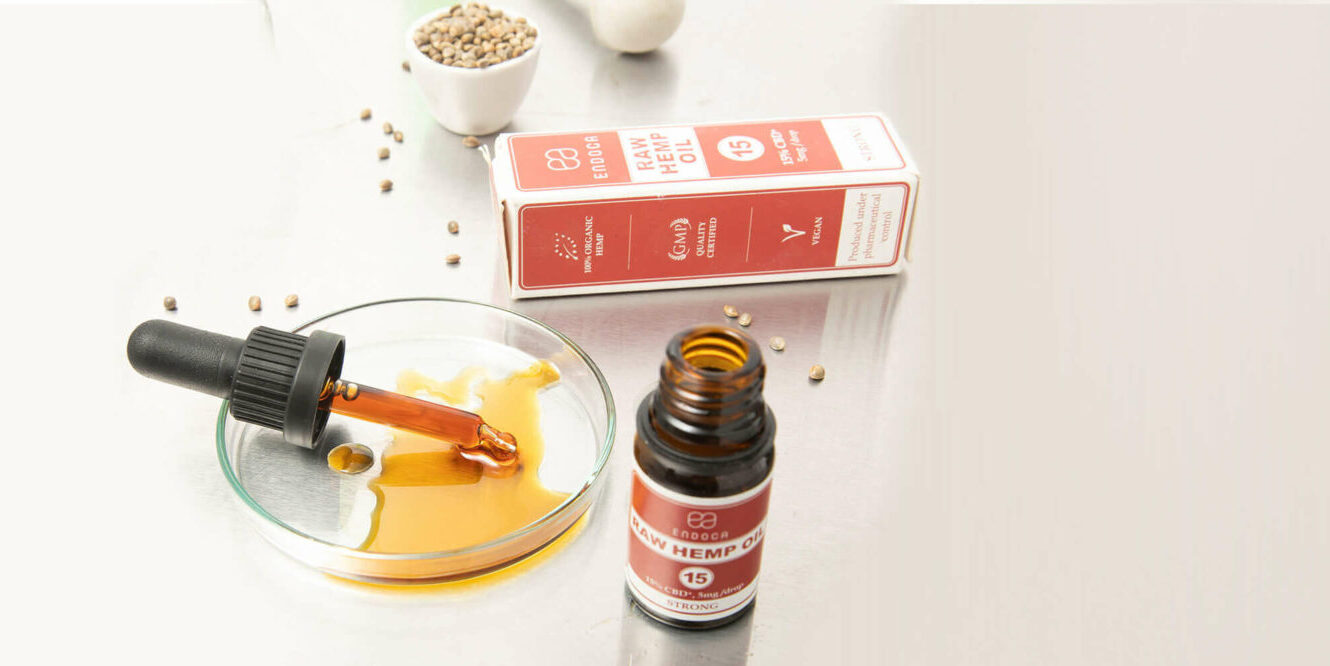
What Is CBD?
CBD is nature’s way to restore balance, calm, and overall well-being – naturally and without the high.
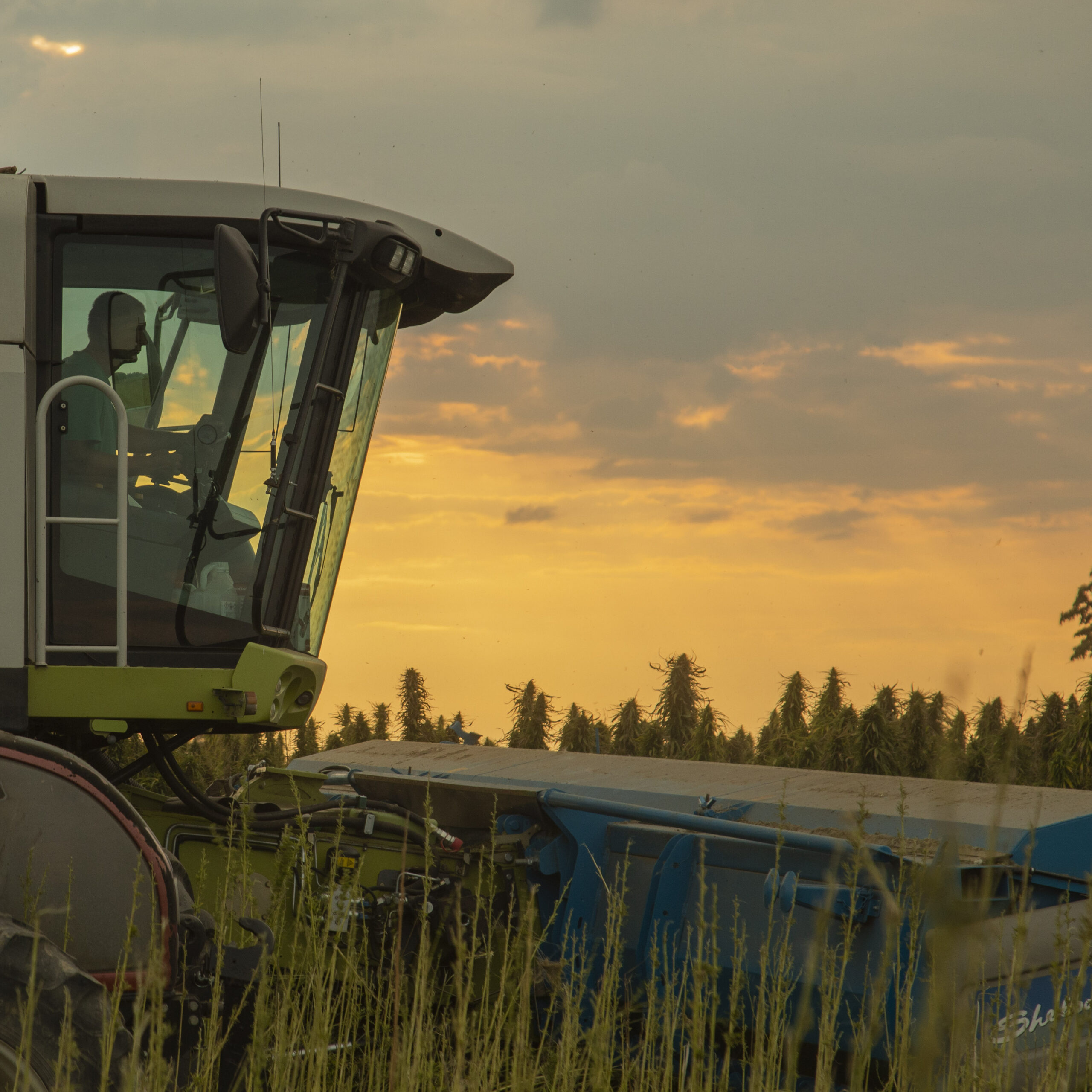
The Process
From seed to shelf, we grow organically, extract cleanly, and follow strict quality standards for purity.

Lab Testing
Every batch is third-party tested to ensure purity, safety, and the exact amount of CBD every time.
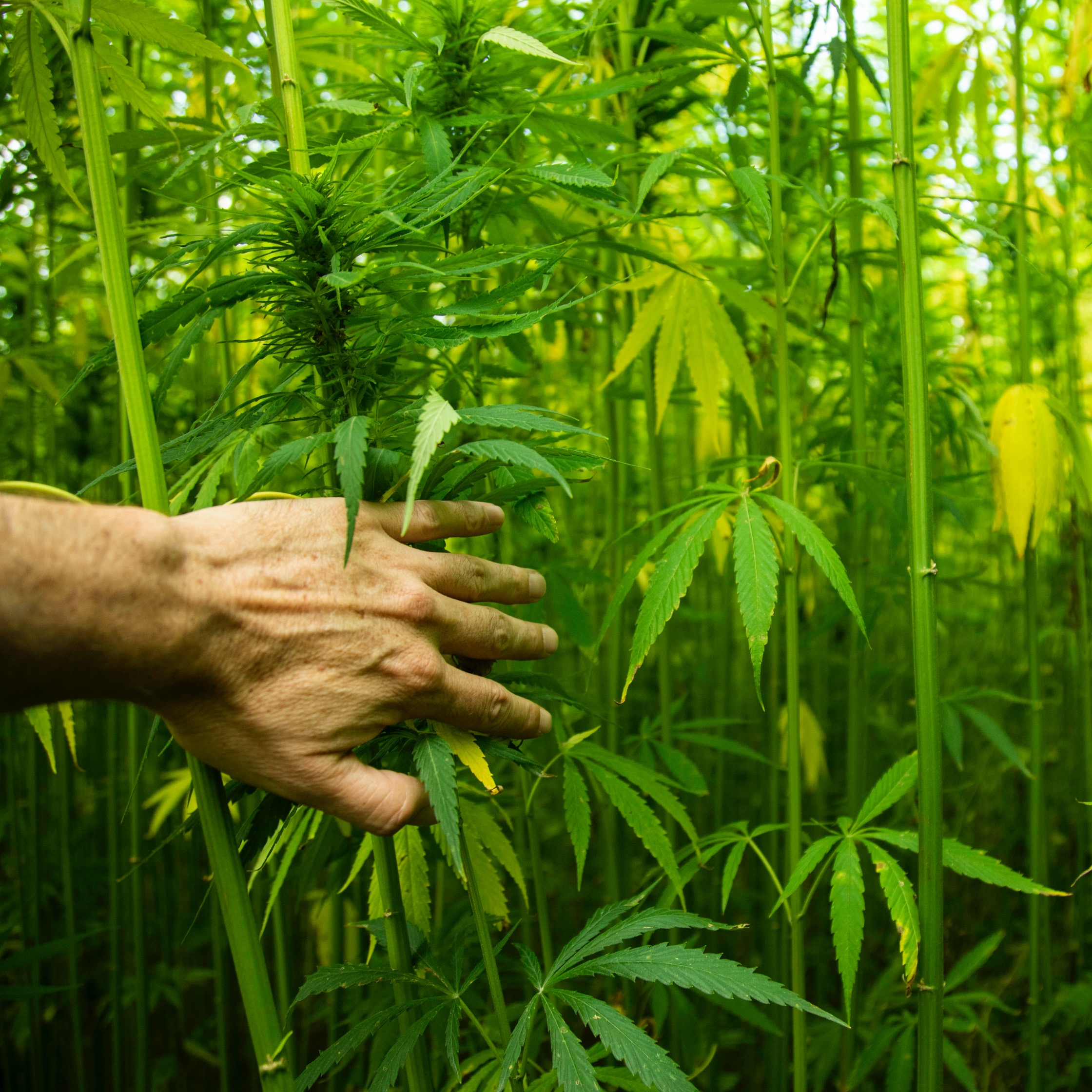
Our Values
Sustainability, transparency, and wellness guide every decision – for you and for the planet.
At a glance
CBN is not something the plant makes
This is the fact the category tends to skip.
Cannabis has no CBNA synthase. There is no biosynthetic route to CBN. It forms when THC sits in contact with oxygen, warmth and light and the terpene ring aromatises. Poorly stored or aged material has elevated CBN because its THC has broken down. Heating produces it too: one 2022 analysis found 17.2 percent of delta-9 THC degrading in a gas chromatograph inlet and generating CBN.
The practical consequence is that CBN content in a hemp extract is a marker of what has happened to the material rather than of intentional cultivation. Concentrated CBN products are made by deliberately degrading THC or by synthesis.
CBD is the opposite case. The plant builds CBDA through a dedicated enzyme, and CBD is what CBDA becomes on heating.
Pharmacology
CBN is a weak, low-efficacy partial agonist at CB1. A 2025 study in Neuropsychopharmacology measured a pEC50 of 5.4 with a maximum effect of 29 percent, against THC’s 6.4 and 72 percent. Older work using a different assay reported an EC50 around 0.12 micromolar, roughly thirty times more potent. Both measurements are legitimate and come from different systems, which is a useful reminder that a single binding figure quoted without its assay context means very little.
The more interesting finding in that 2025 paper concerns CBN’s metabolite. 11-hydroxy-CBN reaches brain concentrations equivalent to CBN itself and is a CB1 partial agonist with potency and efficacy comparable to THC. If CBN produces central effects, that metabolite is the likely route, and it is also why CBN can be weakly intoxicating at very high oral doses.
CBN’s most potent measured action is at TRPA1, a sensory ion channel, at 0.18 micromolar. At CB2 it is negligible.
The sleep question, reported accurately
CBN is marketed in connection with sleep almost exclusively. It is worth understanding where that association came from, because it did not come from research.
The reasoning ran: aged cannabis has a reputation for sedation, aged cannabis contains more CBN, therefore CBN is sedating. That is a confound rather than a finding. Aged cannabis differs from fresh material in many ways, including substantial terpene loss and reduced THC content.
A secondary source of confusion is 1970s literature describing nabilone as a potent antiemetic cannabinol. Nabilone is a synthetic THC analogue. It is not CBN.
Rat polysomnography does show CBN increasing total sleep time, apparently driven substantially by the 11-OH-CBN metabolite. That is genuine research in rats.
Consumer CBN products typically contain 1 to 5 mg. That is sixty to three hundred times less, and there is no evidence at those levels.
What people get wrong
Legal status and safety
No health claim for CBN, CBD or any cannabinoid is authorised under Regulation (EC) No 1924/2006. Article 10(3) additionally prevents general wellbeing language in the absence of an authorised claim. Regulation (EU) No 1169/2011 prohibits attributing disease-related properties to food.
This bears directly on CBN, because the entire consumer category is built around a sleep association. Naming a product range “Sleep”, using imagery of someone sleeping, or citing sleep studies on a product page are all treated as claims by enforcement authorities across member states. A CBN product sold lawfully in the EU cannot be positioned that way at all.
CBN falls within the Novel Food Catalogue entry covering cannabinoid-containing extracts and is not authorised. The same applies to CBD.
There is an additional consideration for CBN. Because concentrated CBN is generally produced by deliberately converting THC rather than by extracting naturally occurring material, questions about whether such products are extracts at all arise under both novel food and national narcotics rules. Sweden’s position on THC-containing extracts is particularly relevant here.
EFSA’s February 2026 provisional safe level of roughly 2 mg daily for a 70 kg adult applies to CBD isolate of at least 98 percent purity. No equivalent assessment exists for CBN.
How Endoca tests for this
CBN appears on a properly constructed batch certificate alongside CBD, CBDA, CBG, CBC, THC and THCA. We report our CBN figure whether or not it flatters the product, because in a full-spectrum extract it says something real about how the material was handled. Low CBN indicates fresh extraction and good storage.
That is a quality signal, and it points in precisely the opposite direction to the signal a CBN-marketed product is trying to send.
Frequently asked questions
The first controlled trial in people with insomnia did not find a significant effect on time spent awake at night at either 30 mg or 300 mg. Some secondary measures improved at 300 mg.
Weakly, and only at doses far above what is sold. Its metabolite is a THC-strength CB1 agonist, which is the mechanism of concern.
Usually a fraction of a percent, rising as the product ages.
It occurs naturally as a breakdown product. Concentrated CBN is produced deliberately.
Because no cannabinoid health claim is authorised in the EU, and general wellbeing language is also excluded.
References
Lavender I et al. J Sleep Res 2026;35:e70284.
Arnold JC et al. Neuropsychopharmacology 2025;50:586-595.
Corroon J. Cannabis Cannabinoid Res 2021;6:366-371.
De Petrocellis L et al. Br J Pharmacol 2011;163:1479-1494.
Garcia-Valverde MT et al. Front Chem 2022;10:1038729.
Husni AS et al. Med Chem Res 2014.
EFSA Journal 2026;24:9862.
Last reviewed 1 September 2026.
Educational information about published research and European regulation. Not a health claim.