
- Shop
- About Us
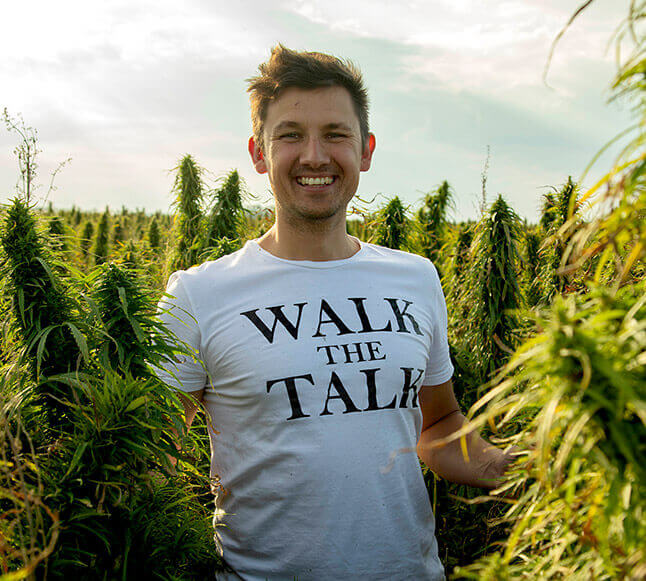
Our Story
From humble beginnings to a global mission – we grow, harvest, and craft hemp with care for people and planet.
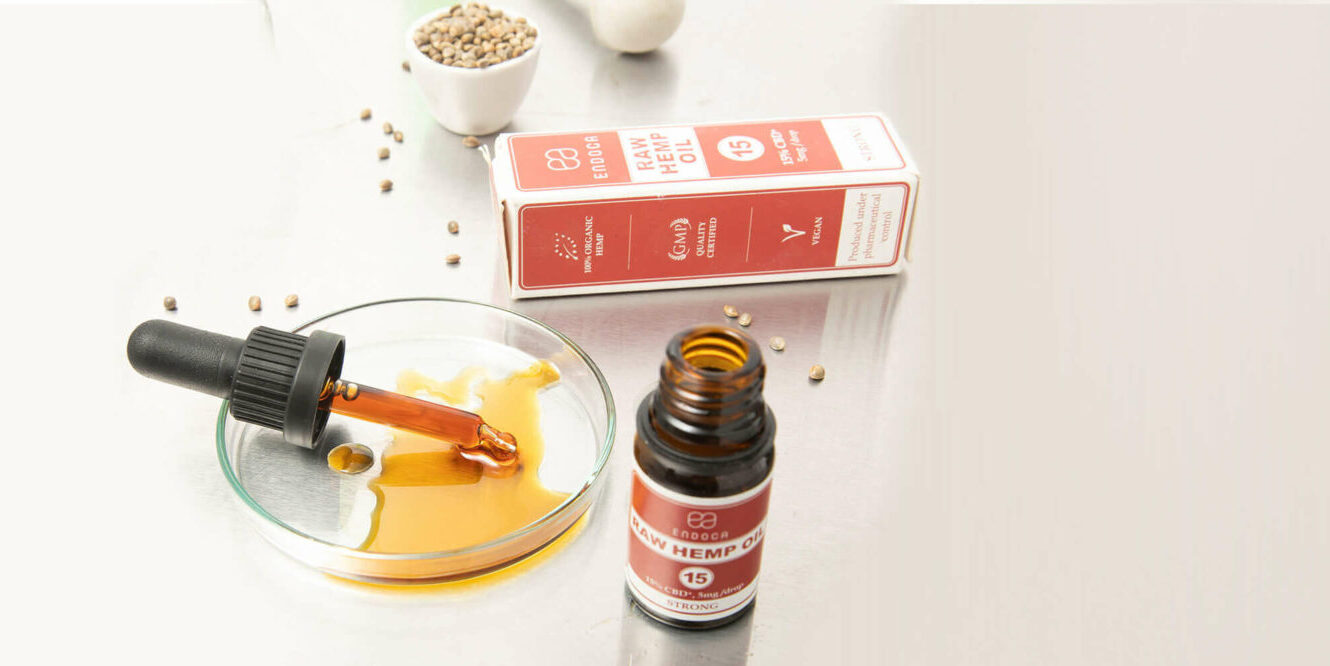
What Is CBD?
CBD is nature’s way to restore balance, calm, and overall well-being – naturally and without the high.
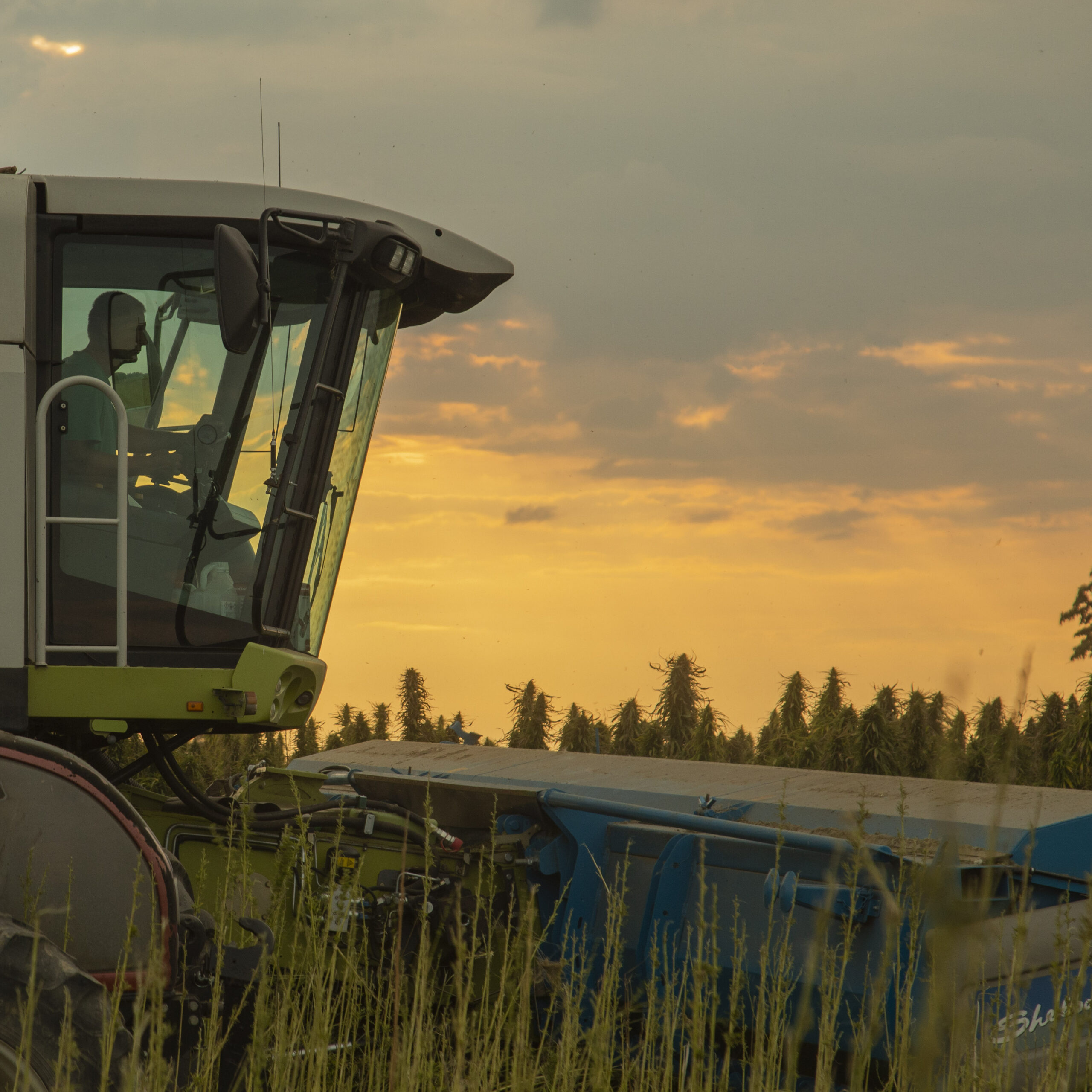
The Process
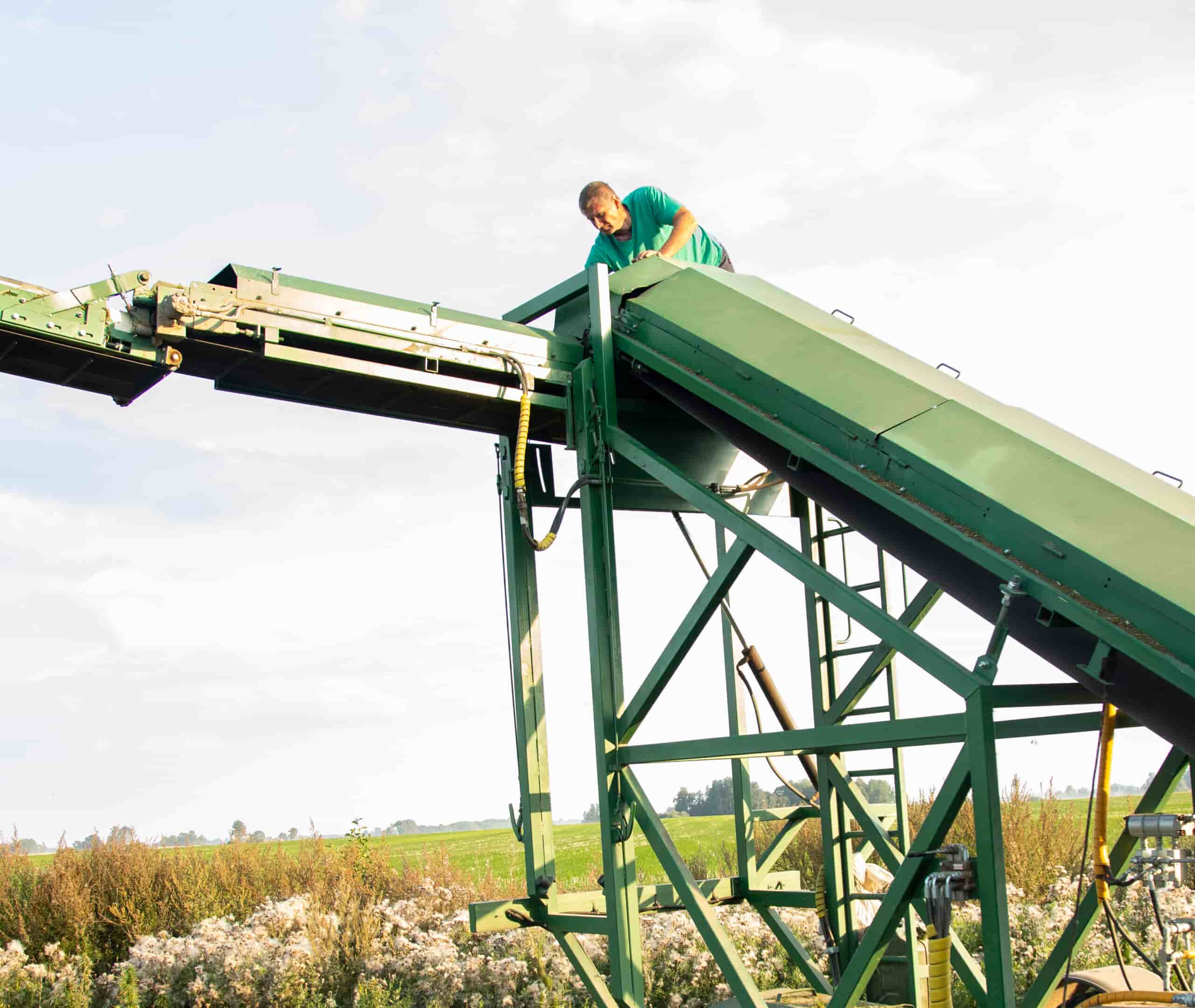
From seed to shelf, we grow organically, extract cleanly, and follow strict quality standards for purity.

Lab Testing
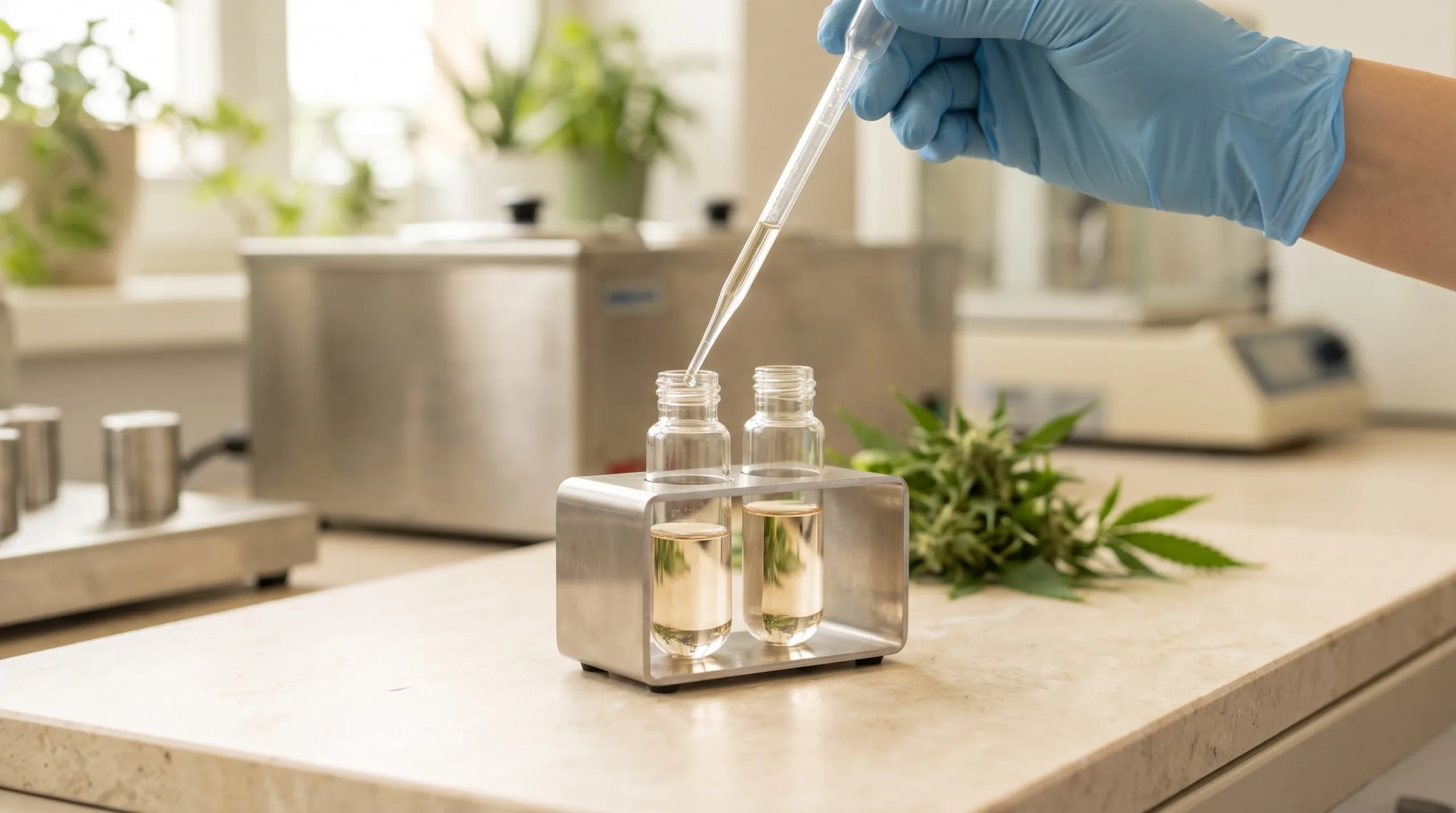
Every batch is third-party tested to ensure purity, safety, and the exact amount of CBD every time.
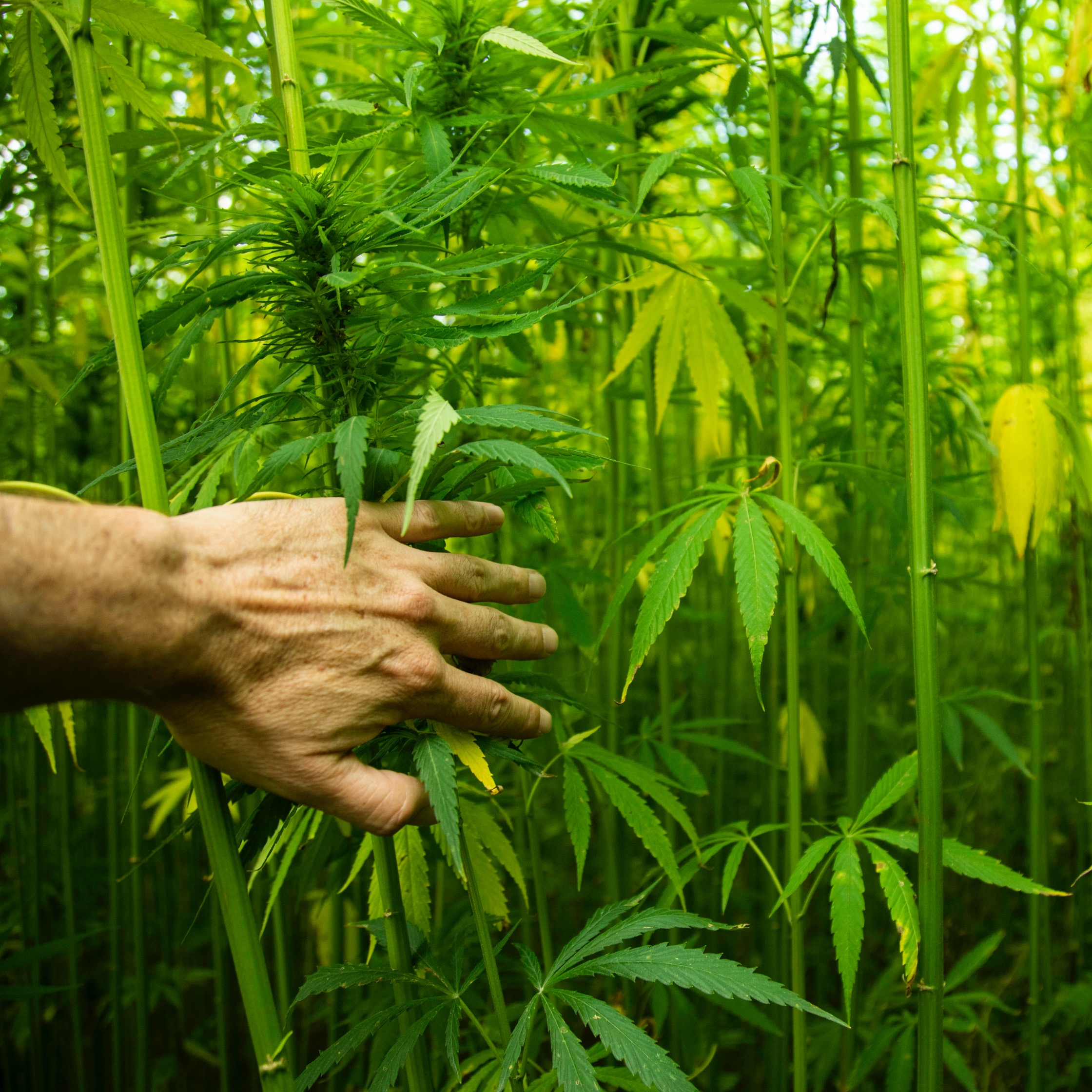
Our Values
Sustainability, transparency, and wellness guide every decision – for you and for the planet.
At a glance
The chemistry
CBD and THC are both C21H30O2. Identical atoms in identical numbers. The difference is arrangement: THC has a closed ring where CBD has an open one. Receptors are shape-sensitive, so that single structural difference changes everything about how each molecule behaves.
Neither exists in the living plant in the form you would buy. Cannabis produces acidic precursors, CBDA and THCA, from a shared parent called CBGA. Heat and time remove a carbon dioxide group from each. CBDA becomes CBD, THCA becomes THC. This is decarboxylation, and it is why raw cannabis material behaves differently from heated material.
The single difference that explains the rest
The human body has two principal cannabinoid receptors. CB1 is concentrated in the brain and nervous system. CB2 sits mainly in immune tissue.
THC is a partial agonist at CB1, binding at roughly 20 to 36 nanomolar. It attaches and switches the receptor on, though not to maximum. CB1 receptors sit at nerve terminals and suppress neurotransmitter release when activated. Activate enough of them across the cortex, hippocampus and cerebellum and you get the characteristic effects on time perception, memory and coordination.
That this is genuinely the mechanism was confirmed in a 2025 clinical trial in which a selective CB1 blocker prevented THC’s acute effects in healthy volunteers.
CBD behaves quite differently. It has poor affinity for CB1 and, more importantly, close to no efficacy there. It cannot switch the receptor on. Where it interacts with CB1 it does so at a separate site as a negative allosteric modulator, making the receptor less responsive to compounds that do activate it.
The European Medicines Agency’s product information for Epidyolex, the authorised CBD medicine, is consistent with this. Cannabidiol does not appear to act through cannabinoid receptors.
CBD’s better-characterised molecular targets are elsewhere. It blocks the ENT1 adenosine transporter below 250 nanomolar, one of its genuinely potent actions. It is a strong TRPA1 agonist at 0.09 micromolar. It has activity at TRPV1, 5-HT1A and GPR55. A 2015 systematic appraisal in Neurotherapeutics examined more than 65 reported CBD targets and concluded that most are engaged only at concentrations far above what a person achieves in practice.
What the published research shows, and does not
We can describe published research as research. We cannot present it as an indication of what a product will do for you, and we are not doing so here.
We report the negative findings because a comparison that only reports favourable studies is not a comparison.
What people get wrong
Legal status and safety
This section exists because most CBD websites do not have it, and its absence is usually how you can tell a page has not been written carefully.
Under Regulation (EC) No 1924/2006, a health claim may only be made if it appears on the Union list of authorised claims. No health claim for CBD, cannabidiol, hemp extract or any cannabinoid is authorised. Not one.
Article 10(3) goes further than most people realise. References to general, non-specific benefits are permitted only when accompanied by a specific authorised claim from that list. Since no CBD claim exists on the list, phrases such as “supports wellbeing”, “helps you relax”, “for balance” or “supports the endocannabinoid system” cannot lawfully appear on a CBD product in the EU either.
Regulation (EU) No 1169/2011, Article 7(3), separately prohibits attributing to any food the property of preventing, treating or curing a human disease.
Enforcement authorities across member states treat implied claims as claims. That includes product names, imagery, category names such as a “sleep range”, testimonials, influencer content, meta descriptions, and links to clinical studies about a compound’s effects.
So what remains? Factual, non-claim information: botanical origin, extraction method, measured cannabinoid content, purity, third-party laboratory analysis, allergen and ingredient declarations, and instructions for use. That is a narrow palette. It is also the honest one, and it is what this page and every other comparison page on our EU site is built from.
CBD is an unauthorised novel food in the European Union. Under Regulation (EU) 2015/2283, extracts of Cannabis sativa L. containing cannabinoids are novel foods requiring authorisation before sale. No CBD novel food has been authorised. Applications have been terminated, withdrawn or rejected in large numbers, including twelve in the first months of 2026 alone. Hemp seed, hemp seed oil and hemp seed protein are not novel and are unaffected.
EFSA published a provisional safe level in February 2026. It set 0.0275 mg per kilogram of body weight per day, roughly 2 mg daily for a 70 kg adult. It applies only to CBD isolate of at least 98 percent purity from a production process considered safe, and safety could not be established for anyone under 25, for pregnant or breastfeeding women, or for people taking medication. The level is provisional and data gaps on liver function and endocrine, nervous and reproductive effects remain.
The Kanavape judgment, correctly stated. In Case C-663/18, decided 19 November 2020, the Court of Justice held that CBD lawfully produced from the whole plant is not a narcotic drug within the meaning of the 1961 Single Convention, and that member states cannot prohibit its marketing on narcotics grounds alone without justification under Article 36 TFEU. What the judgment did not do is authorise CBD as a food. Novel food, food information and medicines rules apply independently. A member state may still lawfully prevent sale on the entirely separate basis that a product is an unauthorised novel food.
THC limits are three separate things and they get conflated constantly. The 0.3 percent figure is a cultivation eligibility criterion for hemp varieties under the CAP rules, raised from 0.2 percent with effect from January 2023. Commission Regulation (EU) 2022/1393 sets maximum THC levels only for hemp seed products, at 3.0 mg/kg for seeds and 7.5 mg/kg for hemp seed oil. There is no EU-wide THC maximum for CBD extracts, because they are unauthorised in the first place. Finished-product limits are set nationally and diverge sharply.
Member states differ. Germany’s BVL states that CBD food supplements are not marketable. Denmark treats CBD as a novel food requiring authorisation and publishes THC action limits. Spain’s position has channelled CBD into external-use products. Sweden combines novel food classification with a narcotics ruling covering THC-containing extracts. The Netherlands operates an informal, unpublished tolerance that confers no legal certainty. There is no single EU compliance position.
In the United Kingdom, the Food Standards Agency operates a public list of products linked to novel food applications, which is a tolerance rather than an authorisation. Its advisory daily limit is 10 mg of pure CBD for healthy adults, with a 70 microgram daily limit on delta-9 THC. No CBD novel food had been authorised in Great Britain as of September 2026.
How Endoca tests for this
The practical answer to “how much CBD and how much THC is in this” is a laboratory report, not a label.
A batch certificate should give measured content for CBD, CBDA, CBG, CBC, CBN, THC and THCA separately, with the batch code matching your product, and should come from a third-party laboratory. CBDA and THCA matter because raw and cold-processed extracts retain the acid forms, and a total figure calculated as THC plus 0.877 times THCA is a different and larger number than delta-9 THC alone.
Endoca grows its own hemp in Europe, runs its own supercritical CO2 extraction and publishes a certificate for every batch. Under EU rules that laboratory data is very close to the entirety of what we are permitted to tell you, which is one reason we publish it in full.
Frequently asked questions
CBD is not a narcotic drug, following the Kanavape judgment. It is, however, an unauthorised novel food, and national rules differ. That is a more complicated answer than most sites give, and it is the accurate one.
Because no health claim for CBD is authorised under Regulation 1924/2006, and Article 10(3) prevents even general wellbeing language. Any site telling you what CBD does for your health is not complying with EU food law.
No. It has negligible activation of the CB1 receptor.
It depends on the product and the member state. Check the certificate of analysis and note that acid forms are counted separately.
One CBD medicine, Epidyolex, is authorised for specific seizure indications. Food supplements are a different category and cannot make medicinal claims.
References
Devinsky O et al. N Engl J Med 2017;376:2011-2020.
Devinsky O et al. N Engl J Med 2018;378:1888-1897.
Moore RA, Straube S, Fisher E, Eccleston C. J Pain 2024;25:833-842.
Zamarripa CA et al. JAMA Netw Open 2023;6:e2254752.
Laprairie RB et al. Br J Pharmacol 2015;172:4790-4805.
Elmes MW et al. J Biol Chem 2015;290:8711-8721.
Ibeas Bih C et al. Neurotherapeutics 2015;12:699-730.
Han B et al. Psychiatry Res 2024;339:116049.
Court of Justice of the European Union, Case C-663/18, 19 November 2020.
EFSA. Provisional safe level for cannabidiol as a novel food. EFSA Journal 2026;24:9862.
Regulation (EC) No 1924/2006 and Commission Regulation (EU) No 432/2012.
Last reviewed 1 September 2026.
Educational information about published research and European regulation. Not a health claim.