
No products in the cart.

- Shop
- About Us

Our Story
From humble beginnings to a global mission – we grow, harvest, and craft hemp with care for people and planet.
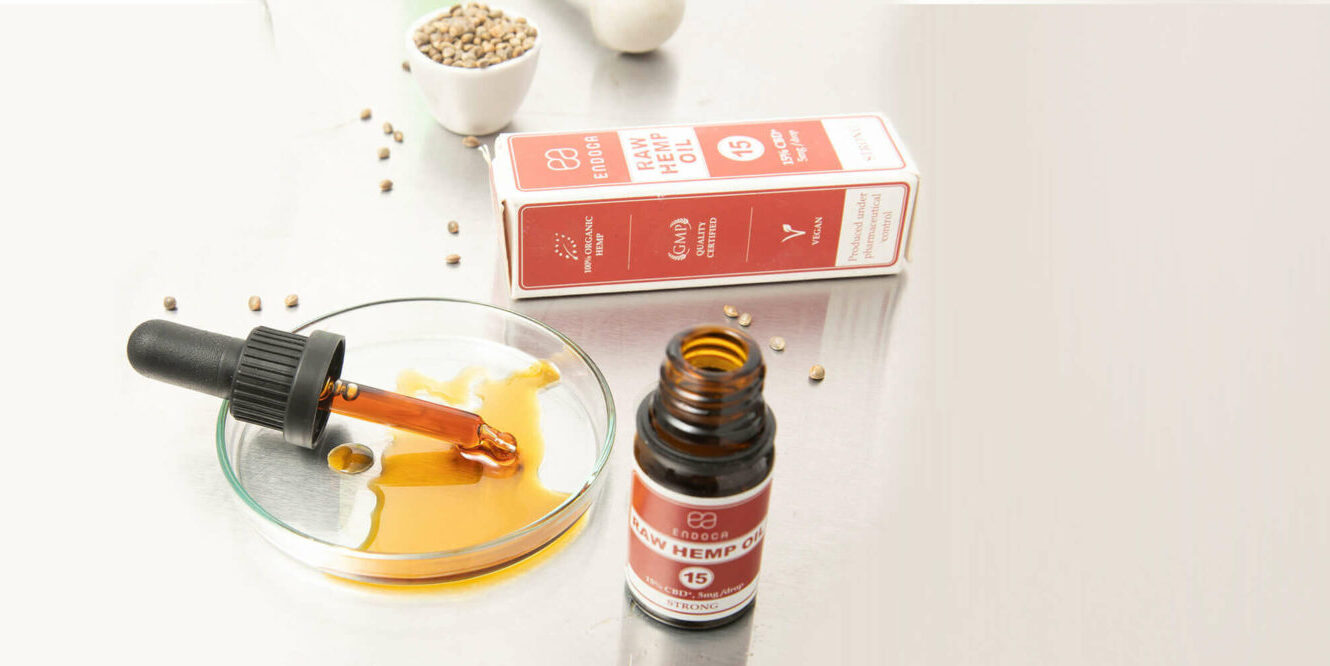
What Is CBD?
CBD is nature’s way to restore balance, calm, and overall well-being – naturally and without the high.
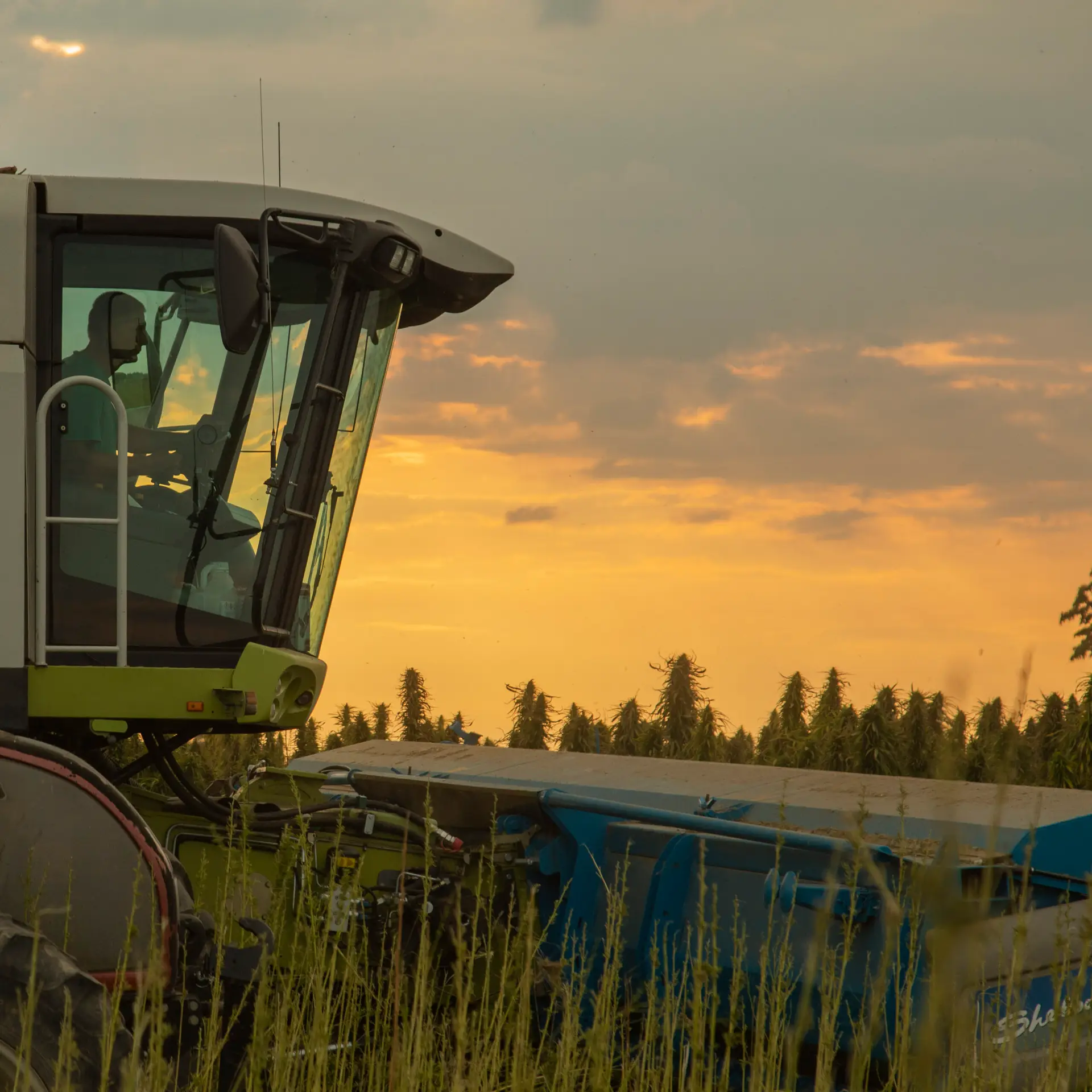
The Process
From seed to shelf, we grow organically, extract cleanly, and follow strict quality standards for purity.

Lab Testing
Every batch is third-party tested to ensure purity, safety, and the exact amount of CBD every time.
Our Values
Sustainability, transparency, and wellness guide every decision – for you and for the planet.
At a glance
What actually differs
Both are fixed oral doses, so this is not a comparison of routes. It is a comparison of what the dose sits in and what the label tells you. Endoca’s raw capsules declare CBD+CBDa per capsule at 10 mg, 50 mg and 200 mg, and the medium size holds 300 mg across a 30-capsule bottle. The gummies declare on a different basis: 1,200 mg of full spectrum hemp oil per jar on Chill and Restore, and 300 mg of full spectrum hemp extract per piece on Mountain High, which is extract weight rather than cannabinoid weight. No human study has compared the two formats.
The capsule fill does not protect you from the food effect, which is the part most capsule marketing implies. In 8 adults with refractory epilepsy, 99 percent pure CBD in capsules taken with a high-fat meal of 840 to 860 calories produced a peak concentration 14-fold higher and total exposure 4-fold higher than the same capsules taken fasted. The registration pharmacokinetics for purified CBD point the same way at 750 and 1,500 mg: 5-fold on peak concentration, 4-fold on exposure.
Where the difference actually shows up
It shows up in whether the number on the unit is right. LC-MS/MS analysis of 56 CBD gummy products from national brands found a mean of 21.38 mg of CBD per gummy across a range of 5.70 to 59.99 mg, with 70 percent of products more than 10 percent off their labeled dose and measurable variation between gummies from one bottle. In the same set, 39 percent contained delta-9-THC at 0.019 to 0.88 mg per piece and 16 percent held more than 0.4 mg. A capsule’s declared figure is not automatically better, but it is the format where a per-unit number is routinely published against a batch certificate.
Two practical differences follow. A gummy brings a sugar and gelling matrix and a flavoring with it, and a capsule brings none of that, which matters if you take a dose daily for months. And Endoca’s raw capsules are unheated, so the label reads CBD+CBDa, while the gummies are sold on CBD or on hemp extract weight. If swallowing capsules is the problem, that is a real reason to pick a gummy, and a better one than an absorption claim nobody has measured.
What human data exists for each format
CBD capsules
Gelatin capsules of hemp oil at 69 mg CBD per mL gave a peak plasma CBD of 28.0 ng/mL at 4 hours in 8 healthy males.
In 8 adults with refractory epilepsy, CBD capsules with a high-fat meal produced a 14-fold higher peak concentration and 4-fold higher exposure than fasting.
No trial has compared a CBD capsule with a CBD gummy, so claims that either absorbs better are unevidenced.
CBD gummies
No human pharmacokinetic study of a CBD gummy has been published, at any dose, in any population.
Of 56 CBD gummy products tested by LC-MS/MS, 70 percent were more than 10 percent away from their labeled CBD dose.
In the same 56 products, 39 percent contained delta-9-THC at 0.019 to 0.88 mg per gummy and 16 percent exceeded 0.4 mg.
Two fixed-dose formats, one measured in humans twice and one never measured at all. The gummy literature is analytical rather than pharmacokinetic, and it carries the strongest argument on this page: the thing worth checking is the batch certificate for the unit you are actually swallowing, not the format it comes in.
What people get wrong
01Capsules absorb better than gummies.
No human study has compared the two formats, so there is no result to cite in either direction. The absolute oral bioavailability of CBD has never been measured, which makes a percentage comparison impossible rather than merely unknown.
02The oil in a capsule means you can take it on an empty stomach.
In the only food-effect study run with CBD capsules, a high-fat meal still raised peak concentration 14-fold against fasting. The fill inside the capsule was not a substitute for the meal.
03THC free on the jar settles the question.
Endoca's Restore and Energy gummies are broad spectrum and sold as THC free, and the batch certificate is where that is confirmed. Across the wider market, 39 percent of 56 tested gummy products contained delta-9-THC.
Choosing between them
Choose capsules if you want the same amount every day with no sugar, no flavoring and a declared CBD+CBDa figure per unit, and if you can swallow them. Choose gummies if you cannot, or if a capsule is the thing you forget and a sweet is the thing you remember. Neither has a measured absorption advantage, so decide on the label, the batch certificate and whether you want trace THC in the product. A 200 mg capsule is not a sensible starting point for anyone new to any of this.
Legal status and safety
Legal status in the United States
Hemp-derived CBD became a non-controlled substance under the 2018 Farm Bill at or below 0.3 percent delta-9 THC by dry weight. From 11 December 2026, Public Law 119-37 switches the test to total THC, caps a finished product at 0.4 mg of total THC per container and excludes cannabinoids synthesized outside the plant. Per container is the phrase that matters for both formats here, because a 30-piece jar and a 30-capsule bottle are each one container. In the 56-product gummy analysis, 16 percent held more than 0.4 mg of delta-9-THC in a single piece. FDA has not concluded CBD may lawfully be sold in a dietary supplement.
Safety
Purified CBD at doses far above consumer amounts produced diarrhea, nausea, headache and somnolence as the commonest adverse events in its phase 1 trial, all mild or moderate. CBD is metabolized by CYP2C19 and CYP3A4 and can interact with prescribed medicines, which is a prescriber’s question rather than ours. Two format-specific points: a 200 mg capsule is a large single unit and a poor place to begin, and gummies are easy to eat without thinking, which matters when the half-life on repeated dosing is 56 to 61 hours.
How Endoca tests for this
The capsules and the gummies draw on extract from the same hemp, grown on our own land and processed with our own supercritical CO2 equipment, with batch reports published since 2010. Cannabinoid content is quantified by HPLC and confirmed by NMR, and batches are screened for more than 200 pesticides plus heavy metals and mycotoxins by third party laboratories at lab.endoca.com. A certificate confirms what the unit contains. It cannot tell you how much reaches your blood, because no method establishes that for CBD.
Frequently asked questions
Strength depends on the unit, not the format. Endoca’s capsules run 10 mg, 50 mg and 200 mg of CBD+CBDa per capsule, while the gummy jars declare 1,200 mg per jar or hemp extract weight per piece. No trial has compared absorption between the two, so strength means label strength here.
Some do. In 56 CBD gummy products tested by LC-MS/MS, 39 percent contained delta-9-THC at 0.019 to 0.88 mg per gummy, and 16 percent held more than 0.4 mg. Endoca’s Restore and Energy gummies are broad spectrum and sold as THC free, confirmed on the batch certificate.
Both are fixed units, so in principle they are equal. In practice the published analytical work favors the format with a per-unit cannabinoid figure on a batch certificate. In the 56-product gummy set, 70 percent of products sat more than 10 percent away from their labeled CBD dose.
Yes, and with fat if possible. The one food-effect study using CBD capsules found a 14-fold higher peak concentration and 4-fold greater exposure with a high-fat meal of 840 to 860 calories than with fasting. The same direction holds for purified CBD at 750 and 1,500 mg.
References
01
Johnson DA, Funnell MP, Heaney LM, Cable TG, Wheeler PC, Bailey SJ, Clifford T, James LJ. Cannabidiol Oil Ingested as Sublingual Drops or Within Gelatin Capsules Shows Similar Pharmacokinetic Profiles in Healthy Males. Cannabis Cannabinoid Res 2024;9:e1423-e1432.
02
Birnbaum AK, Karanam A, Marino SE, Barkley CM, Remmel RP, Roslawski M, Gramling-Aden M, Leppik IE. Food effect on pharmacokinetics of cannabidiol oral capsules in adult patients with refractory epilepsy. Epilepsia 2019;60:1586-1592.
03
Johnson ED, Kilgore MW, Stafford M, Randolph M, Glover M, Babalonis S. Cannabidiol Gummy Products: LC-MS/MS Assessment of Cannabinoid Concentrations. Cannabis Cannabinoid Res 2025;10:710-718.
04
Millar SA, Stone NL, Yates AS, O’Sullivan SE. A Systematic Review on the Pharmacokinetics of Cannabidiol in Humans. Front Pharmacol 2018;9:1365.
05
Taylor L, Gidal B, Blakey G, Tayo B, Morrison G. A Phase I, Randomized, Double-Blind, Placebo-Controlled, Single Ascending Dose, Multiple Dose, and Food Effect Trial of Highly Purified Cannabidiol in Healthy Subjects. CNS Drugs 2018;32:1053-1067.
06
FDA. EPIDIOLEX prescribing information, 2025.
07
Congressional Research Service. Changes to the Statutory Definition of Hemp and Issues for Congress. IF13136, updated 17 August 2026.
Last reviewed 1 October 2026.
These statements have not been evaluated by the Food and Drug Administration. This product is not intended to diagnose, treat, cure, or prevent any disease.