No products in the cart.

- Shop

- About Us

Our Story
From humble beginnings to a global mission – we grow, harvest, and craft hemp with care for people and planet.
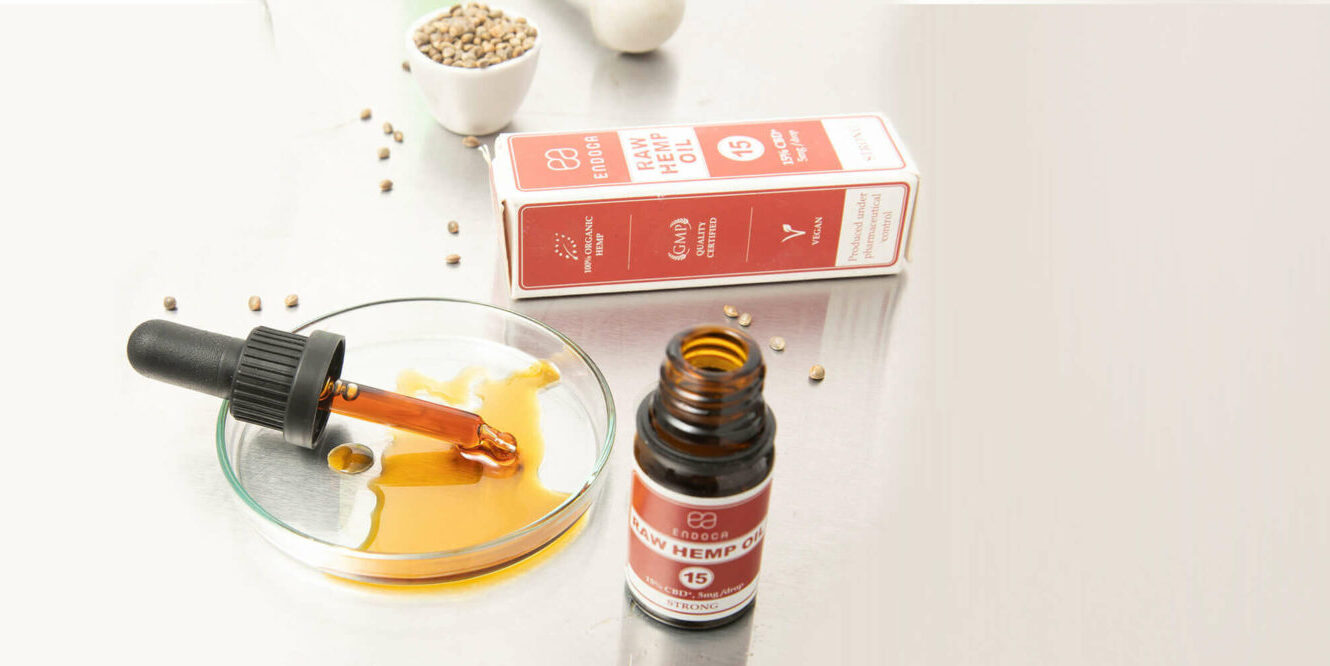
What Is CBD?
CBD is nature’s way to restore balance, calm, and overall well-being – naturally and without the high.
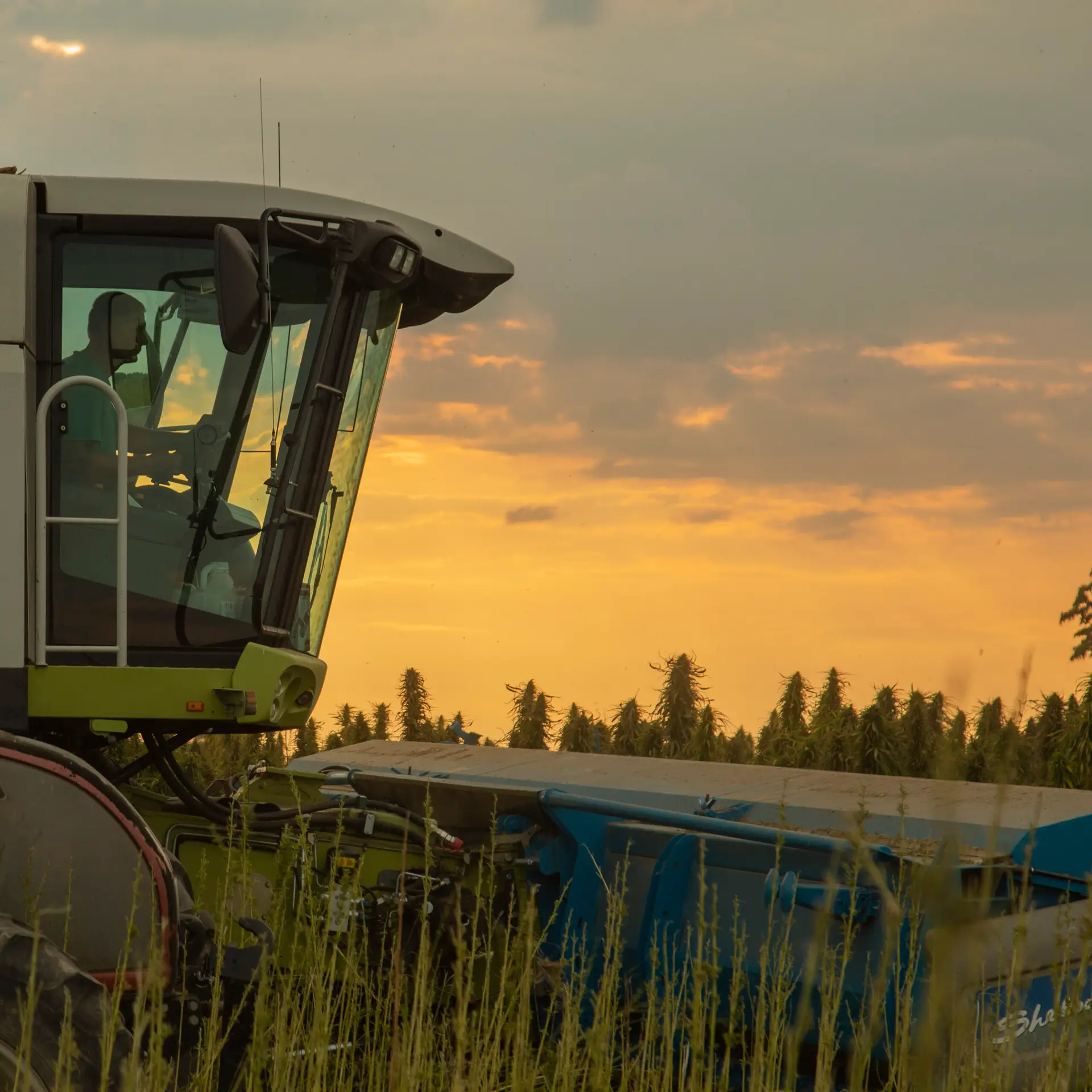
The Process
From seed to shelf, we grow organically, extract cleanly, and follow strict quality standards for purity.

Lab Testing
Every batch is third-party tested to ensure purity, safety, and the exact amount of CBD every time.
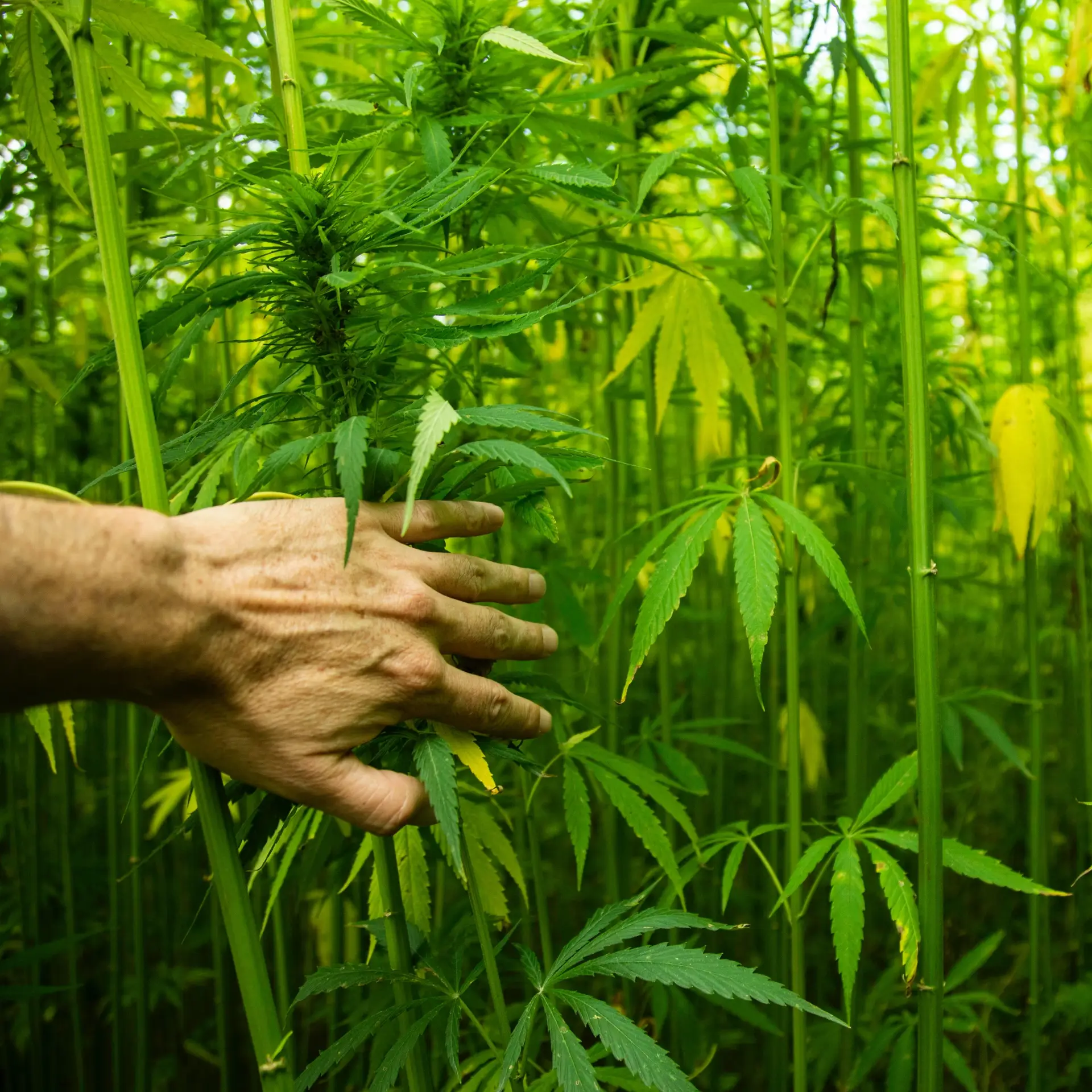
Our Values
Sustainability, transparency, and wellness guide every decision – for you and for the planet.
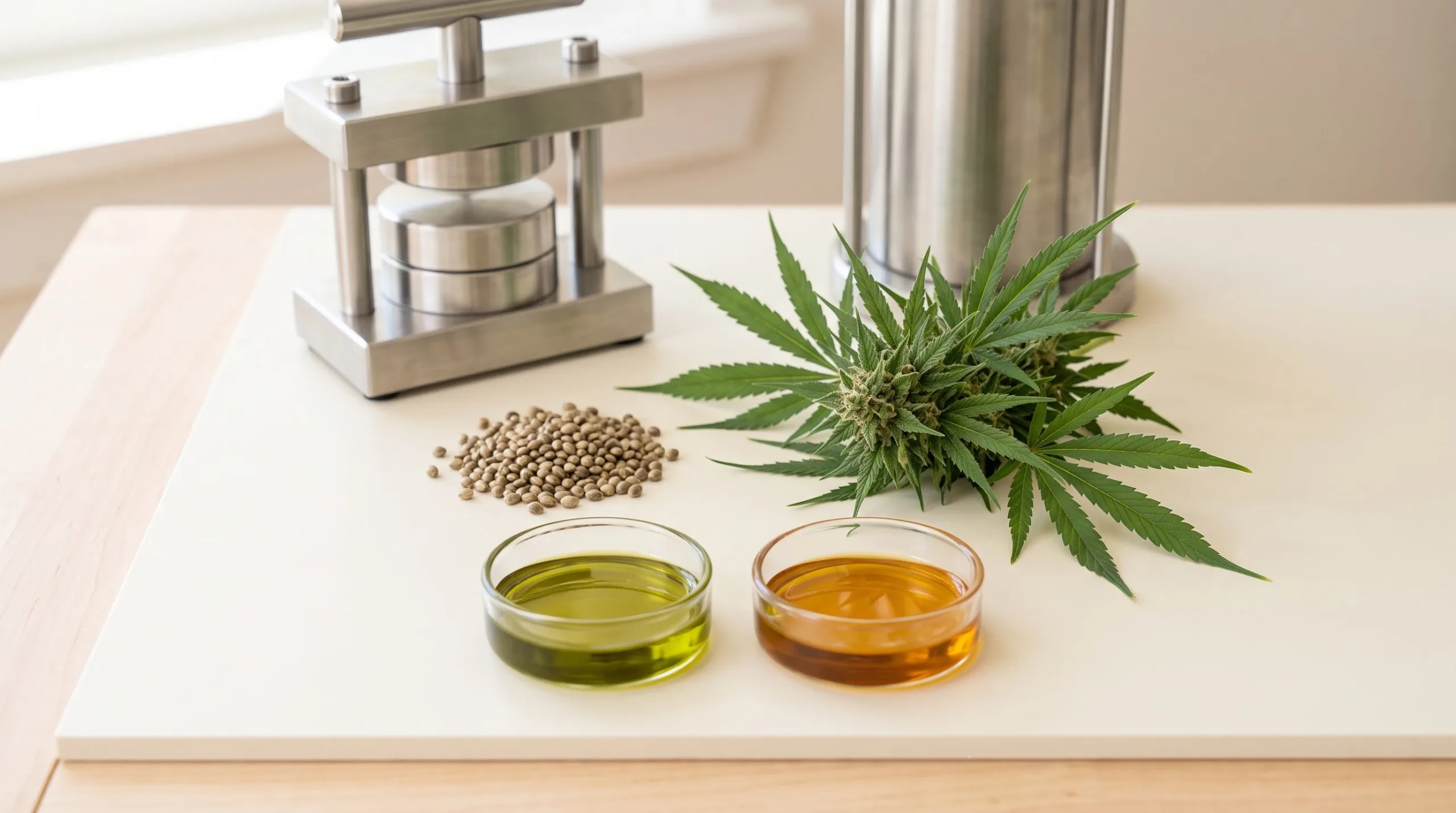
At a glance
Where the confusion comes from
The confusion is not accidental in every case.
“Hemp oil” is genuinely ambiguous. Some brands use it to mean hemp seed oil. Others use it as a softer synonym for CBD oil, sometimes because marketplace rules restrict the word CBD, sometimes because they would rather not commit to a number. A third group uses it because hemp seed oil is far cheaper than cannabinoid extract and the label ambiguity is commercially convenient.
You will also see “hemp extract,” which usually does mean a cannabinoid-containing extract, and “full-spectrum hemp extract,” which almost always does. But none of those phrases tells you how much CBD is in the bottle.
How to tell them apart in ten seconds
Look for a milligram figure for cannabinoid content, and look for a batch-specific certificate of analysis.
A real CBD product will say something like 1,500 mg CBD per 30 ml bottle, and will link to a third-party lab report matching the batch code printed on the label. A hemp seed oil product will give a volume and a fatty acid profile and nothing else, because there is nothing else to give.
Check the ingredients list too. Hemp seed oil often appears as a carrier in genuine CBD products, which is perfectly legitimate. The distinguishing question is whether cannabidiol or hemp extract also appears, with a quantity.
If a listing shows a large number like 1,000 mg but the ingredients name only hemp seed oil, that number is describing the oil, not any cannabinoid in it.
The claim you should be skeptical of
You will frequently see full spectrum described as more effective than isolate because of the entourage effect. That claim has not held up.
Two studies designed specifically to test whether cannabis terpenes modulate cannabinoid receptor activity found they do not. A 2024 scoping review concluded the literature provides limited evidence for the entourage effect as a stable and predictable phenomenon and advised against promoting it as scientifically proven.
There is a narrow version that is real. Cannabinoids do interact with each other pharmacokinetically. A 2023 trial found high-dose CBD raised THC blood levels by inhibiting the enzymes that clear it. That is a genuine full-spectrum-differs-from-isolate effect. It is not the one the marketing describes, and it points towards more intoxication rather than better results.
One practical thing worth more than the spectrum debate
A high-fat meal increases CBD’s peak blood concentration roughly fivefold and total exposure fourfold, according to the FDA’s Epidiolex prescribing information.
That single fact will affect how much CBD reaches your bloodstream more than any decision between full spectrum and isolate. Taking CBD on an empty stomach throws most of it away.
It is also worth knowing that no human study has ever established the absolute oral bioavailability of CBD. A 2018 systematic review of 24 human pharmacokinetic studies found exactly one absolute bioavailability figure in the whole literature, and it was for smoking, at 31 percent. Any product page quoting a specific oral bioavailability percentage is quoting something that was never measured.
What hemp seed oil actually is
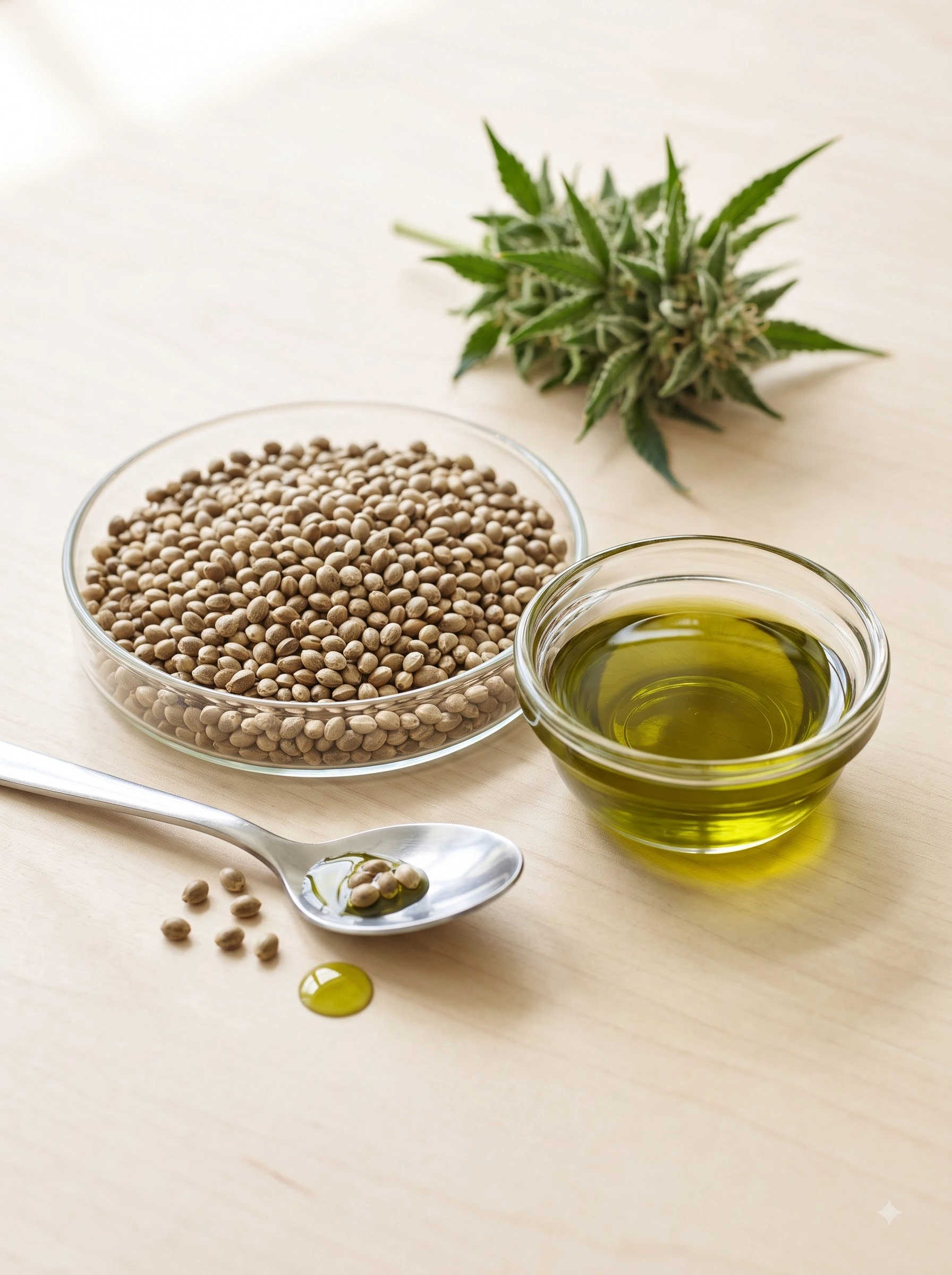
Hemp seed oil
Hemp seed oil is a culinary and cosmetic oil with a genuinely good fatty acid profile.
It is roughly three parts omega-6 to one part omega-3, which is a favorable ratio compared with most seed oils, and it contains gamma-linolenic acid and vitamin E.
Hemp seeds contain no meaningful cannabinoid content because the cannabinoid-producing glands, the trichomes, sit on the flowers and surrounding leaves rather than in the seed.
In the US, hemp seed derived ingredients were the subject of a favorable FDA determination in 2018.
CBD oil
CBD oil is a cannabinoid extract diluted into a carrier oil.
The extract comes from the flowering parts of the plant, where the trichomes are, and it is produced by pulling the cannabinoids and terpenes out with a solvent or with supercritical carbon dioxide.
Full spectrum keeps the whole cannabinoid and terpene profile, including trace THC below the legal threshold.
Broad spectrum removes the THC and keeps the rest.
Isolate is purified CBD, typically 98 percent or higher, with nothing else.
What ends up in the bottle depends on how far the extract is refined:
Each of those is a legitimate product. Which one suits you depends mostly on whether trace THC is a problem for you, for instance because of workplace drug testing.
Still weighing up the options? See CBD tincture vs CBD oil or full spectrum vs broad spectrum vs isolate. For more background, read our guide on how to read a CBD certificate of analysis. Endoca products related to this comparison: Endoca CBD oil.
Legal status and safety
Legal status in the United States
Hemp seed oil is uncontroversial. It is sold as a food ingredient without difficulty.
CBD oil is more complicated. Under the 2018 Farm Bill, hemp and its derivatives are excluded from the Controlled Substances Act provided the source material contains no more than 0.3 percent delta-9 THC by dry weight. Separately, FDA holds that CBD cannot lawfully be added to food or sold as a dietary supplement, because CBD was approved as a drug first. Both things are true at once, which is why the retail market exists in the space between them.
From 12 November 2026, Section 781 of Public Law 119-37 replaces the delta-9 test with a total THC test including THCA, and caps finished products at 0.4 mg total THC per container. Full-spectrum products are the most exposed category, because many exceed that figure. A one-month delay had passed the Senate but not the House as of 1 September 2026.
How Endoca tests for this
We use hemp seed oil as a carrier in some products and we say so in the ingredients. What distinguishes those products is the extract added to it, and every batch carries a third-party certificate of analysis giving measured CBD, CBDA, CBG, CBC, CBN, THC and THCA content against the batch code on the bottle.
That lab report is the only thing that settles the hemp oil versus CBD oil question for any product, ours included. If a brand will not show you one, the question is unanswerable.
Frequently asked questions
No, other than possible trace contamination from plant material during processing. Not enough to matter.
Not usually. The term is ambiguous and is sometimes used for both. Check for a milligram figure.
Because it is an extract from a low-yield part of the plant that requires extraction equipment and lab testing, rather than a pressed seed oil.
No. It contains essentially no CBD.
That usually does mean a cannabinoid-containing extract, but it still does not tell you how much. Look for the number.
Look for a CBD amount in milligrams on the label and a batch certificate of analysis that lists cannabinoids. Hemp seed oil pressed from seeds usually lists neither, because it contains little or no CBD.
Yes, as a food oil. Hemp seed oil is a source of omega-3 and omega-6 fatty acids and works in cooking and skincare. It is simply not a CBD product, and should not be priced or sold as one.
References
01
FDA. EPIDIOLEX prescribing information, 2025.
02
Millar SA, Stone NL, Yates AS, O’Sullivan SE. A Systematic Review on the Pharmacokinetics of Cannabidiol in Humans. Front Pharmacol 2018;9:1365.
03
Finlay DB et al. Terpenoids From Cannabis Do Not Mediate an Entourage Effect. Front Pharmacol 2020;11:359.
04
Santiago M et al. Absence of Entourage. Cannabis Cannabinoid Res 2019;4:165-176.
05
Simei JLQ et al. Does the “Entourage Effect” in Cannabinoids Exist? Cannabis Cannabinoid Res 2024;9:1202-1216.
06
Zamarripa CA et al. JAMA Netw Open 2023;6:e2254752.
07
Congressional Research Service. Legal Sidebar LSB11381, updated 22 December 2025.
Last reviewed 1 September 2026.
These statements have not been evaluated by the Food and Drug Administration. This product is not intended to diagnose, treat, cure, or prevent any disease.