



No products in the cart.

Quick answer: To choose a mushroom supplement, read the label for seven things: the species’ Latin name, whether it uses fruiting body or mycelium, the extraction method, a beta-glucan figure (not just “polysaccharides”), the amount of extract per serving, organic and third-party testing with a Certificate of Analysis, and any grain or filler. A good label answers all seven plainly.
Mushroom supplements look alike on the shelf. Two jars can show the same photo of a reishi cap and still hold very different things inside. If you are browsing arange of functional mushroom extracts for the first time, the label is the only tool you have, so it helps to know what a good one says.
This guide walks through the seven checks we would use ourselves. You only need a few minutes, the Supplement Facts panel, and a willingness to ask a brand a direct question when the label stays vague.
Why does the label matter so much for mushroom supplements?
The label matters because supplements are not approved by the FDA before they are sold. The brand is responsible for making sure the product is safe and the label is truthful, so the label is your main evidence of quality.
The NIH Office of Dietary Supplements puts it simply: supplement companies must have evidence that their products are safe and that label claims are not misleading, but supplements do not need FDA approval before they reach the shelf. That leaves a lot of room between a careful product and a careless one.
Mushrooms add their own wrinkle. The same species can be sold as a fruiting body, as mycelium grown on grain, or as a concentrated extract, and each has a different makeup.
What should the label tell you about the mushroom itself?
The first three checks are about identity: which species, which part of the fungus, and how it was processed. Get these right and most of the guesswork disappears.
1. Does the label give the species’ Latin name?
Yes, it should. A clear label names the exact species in Latin, such as Ganoderma lucidum for reishi or Trametes versicolor for turkey tail, because common names are loose and several species can share one.
This sounds fussy until you see the data. In a 2018 DNA study, researchers tested 20 manufactured products labeled as Ganoderma lucidum. They found that 93% were actually Ganoderma lingzhi, a close relative, and none contained G. lucidum in the strict sense. The authors called for better labeling.
That does not make those products useless. It shows that label names are not always precise, and a Latin name at least gives you something specific to check.
What to look for: – The genus and species in Latin, not only “reishi” or “lion’s mane”. – One species per line in a blend, with an amount for each where possible. – A brand willing to tell you how it confirms identity if you ask.
2. Is it made from the fruiting body or the mycelium?
Look for the words “fruiting body” or “mycelium” on the panel. The fruiting body is the mushroom you can see; mycelium is the root-like network. FDA labeling guidance says supplement labels must name the part of the plant an ingredient comes from, and good mushroom brands apply the same idea.
Neither part is automatically bad, and some research has used mycelial extracts. The problem is a specific method: growing mycelium on sterilized grain, then drying and grinding the grain and mycelium together. The grain cannot be fully separated, so it ends up in the capsule.
Nammex, a mushroom extract supplier (so it has a commercial stake in this), published test results on this point. It reported that mycelium-on-grain products averaged roughly 35 to 40% starch, with beta-glucan levels ranging from 0% to 15%. A label that says “mycelium” without saying what it was grown on leaves you guessing.
Chaga is a special case: it is usually harvested as a sclerotium, the hard black growth on birch trees, and a good label will say so.
3. How was it extracted?
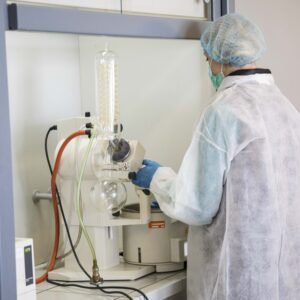
A clear label says how the mushroom was extracted, usually by hot water, alcohol, or both. Hot water pulls out the polysaccharides, including beta-glucans, while alcohol pulls out compounds such as reishi triterpenes.
Mushroom cell walls are made largely of chitin, which your body does not break down well. Extraction concentrates the water-soluble or alcohol-soluble parts, so plain ground powder and an extract are not the same thing.
A review of reishi in an NIH-hosted textbook explains that polysaccharides are usually obtained with hot water, while triterpenes need solvents such as ethanol. It also found wide swings in commercial products: across 11 lingzhi products, triterpene content ran from undetectable to 7.8%, and polysaccharides from 1.1 to 5.8%. Extraction method is one reason why.
A quick extraction guide: – Hot water extract: focused on polysaccharides and beta-glucans. – Alcohol extract: focused on triterpenes and other less water-soluble compounds. – Dual extract: combines both, often used for reishi and chaga. – No method stated, or “mushroom powder”: may be unextracted, ground material.
If you want a closer look at how each extract is made, our guide toseven mushroom extracts and the process behind each one goes species by species.
What should the label tell you about strength, testing and fillers?
The last four checks are about what is actually in each capsule and how you can verify it. This is where vague labels tend to show themselves.
4. Does it list beta-glucans, or only polysaccharides?
A beta-glucan figure tells you more than a polysaccharide figure. “Polysaccharides” is a broad category that includes starch, so a high polysaccharide number can come partly from grain fillers rather than from the mushroom.
Beta-glucans are the polysaccharides most often studied in mushrooms, mainly for how they interact with immune cells. Much of that work is in cells and animals, so it explains a possible mechanism rather than proving a benefit in people.
Testing method matters here. Some older polysaccharide tests measure any glucose chain, including starch (alpha-glucan). A method published by McCleary and Draga in the Journal of AOAC International in 2016 measures total glucan, subtracts alpha-glucan, and reports the beta-glucan that is left. Its developer states it handles high-starch samples, such as mushrooms grown on brown rice.
Questions to ask: – Is the beta-glucan percentage stated, and which test was used? – Is starch or alpha-glucan reported too? – If only “polysaccharides” are listed, can the brand share a breakdown?
5. How much extract is in each serving?
The panel should show a clear amount in milligrams per serving, and say whether that number is the extract or raw mushroom. “Proprietary blend” with one total weight tells you very little about each ingredient.
Human studies of mushroom extracts vary widely in dose, and a single right amount has not been established for most species. So you are not looking for a magic number. You are looking for honesty: a specific amount per capsule, a stated serving size, and a clear split in blends.
Watch for “equivalent to” claims, such as “500 mg extract, equivalent to 5,000 mg mushroom”. The number that went into the capsule is the 500 mg, so compare products on actual extract weight.
6. Is it organic and third-party tested, with a COA?
Look for certified organic sourcing and a batch Certificate of Analysis (COA) from an independent lab. Mushrooms readily absorb what is in their growing environment, so tests for heavy metals and microbes matter as much as tests for active compounds.
The NIH notes that independent groups such as USP and NSF test products and let those that pass display a quality seal. It also notes these seals do not guarantee a product is safe or effective. A COA is the next step: it shows results for the specific batch you are holding.
A useful COA lists the batch number, the testing lab, and results for heavy metals (lead, cadmium, mercury, arsenic), microbes, and ideally beta-glucan. Our guide onwhy independent lab testing matters covers the reasoning, and the walkthrough onreading a batch lab report line by line uses CBD as the example, but the same skills apply to mushroom COAs.
7. Are there fillers, grain or added extras?
Check the “Other ingredients” line and the main panel for rice, oats, “myceliated grain”, “biomass” or “full spectrum” with no explanation. These words can mean a large part of the capsule is grain rather than mushroom.
Glance at the capsule too: cellulose is vegan, gelatin is not. Small amounts of flow agents are common, but they should be listed.
Gummies, coffees and drink mixes often add sweeteners and flavors, and the mushroom dose can be small. If you are weighing formats, our comparison ofmushroom coffee and mushroom capsules looks at what each one really delivers.
How do you read a mushroom label in under a minute?
Scan the panel in the order of the table below. If a label answers each row clearly, it is a strong sign; if three or more rows are vague, ask the brand before buying.
| Label check | Good sign | Red flag |
| Species name | Latin name, e.g. Trametes versicolor | Common name only |
| Part used | “Fruiting body” or “sclerotium” stated | “Mycelium” or “biomass” with no substrate named |
| Extraction | Hot water, alcohol or dual extract named | “Powder” with no method |
| Active compounds | Beta-glucan % with test method | “Polysaccharides” only |
| Dose | mg of extract per serving, split in blends | “Proprietary blend” total only |
| Testing | Organic, batch COA, heavy metals reported | No COA available |
| Other ingredients | Short list, vegan capsule | Rice, oats or “myceliated grain” |
Who should talk to a doctor before taking a mushroom supplement?
Talk to your doctor first if you are pregnant or breastfeeding, take prescription medicine, have a scheduled surgery, or manage a long-term health condition. Mushrooms are foods, but concentrated extracts can still interact with medicines.
A few known concerns, by species:
- Reishi: LiverTox, the NIH liver injury database, lists rare cases of liver injury linked to reishi products, mostly reported from Asia, with recovery after stopping.
- Chaga: it is high in oxalates, and published case reports have linked chaga powder use to oxalate kidney injury. People with kidney problems should be especially careful.
- Blood thinners and diabetes medicines: some species, cordyceps among them, may affect clotting or blood sugar.
- Any species: people on immunosuppressant drugs should check first, since mushroom extracts are studied for effects on immune function.
Side effects are usually mild, such as an upset stomach. Stop and seek advice if anything feels unusual, and tell your clinicians what you take.
How do Endoca’s mushroom extracts measure up on these checks?
Endoca’s functional mushroom extracts are certified organic, made by hot water extraction, concentrated and dried into a powder, and filled into vegan cellulose capsules. Each batch has a COA you can look up atlab.endoca.com.
The labels give specific amounts per capsule. For example, theTurkey Tail extract made from fruiting bodies contains 310 mg per capsule of Trametes versicolor. The chaga extract is made from the sclerotium, and theorganic immune blend lists maitake, reishi, shiitake, turkey tail and chaga at 300 mg per daily serving.
We do not print a beta-glucan percentage on every product page. Where a figure is not on the label, the batch COA is the place to check, and you are welcome to ask us directly. That is the same standard we would suggest you hold any brand to, including us.
Frequently asked questions
Is fruiting body better than mycelium?
Not always, but fruiting body products are easier to judge. The concern is mycelium grown on grain and ground together with it, which can leave a lot of starch in the capsule. If a mycelium product names its growing method and reports beta-glucans and starch separately, it can still be a reasonable choice. Without those details, fruiting body is the safer bet.
What beta-glucan percentage should a mushroom supplement have?
There is no official target, and levels differ by species. What matters most is that the figure comes from a beta-glucan specific test, such as the Megazyme method, rather than a general polysaccharide test that can count starch. Ask the brand which test it used, and compare products tested the same way.
Do I need a dual extract?
It depends on the mushroom and what you want from it. Hot water extracts focus on polysaccharides such as beta-glucans. Alcohol extraction adds compounds like reishi triterpenes. For turkey tail, shiitake and maitake, hot water extraction is the traditional method. For reishi and chaga, some people prefer a dual extract.
How can I tell if a mushroom supplement contains grain?
Read the full ingredient list. Words such as “myceliated brown rice”, “myceliated oats”, “biomass” or “grown on organic grain” suggest grain is part of the product. A COA that reports starch or alpha-glucan will confirm it. Fruiting body extracts should list little or no starch.
Are mushroom supplements regulated by the FDA?
Yes, as dietary supplements, but they are not approved before sale. Brands must follow manufacturing rules and keep label claims truthful, and the FDA can act after a product is on the market. That is why third-party testing and a batch Certificate of Analysis are so useful for you as a buyer.

Comments are closed