
No products in the cart.

- Shop
- About Us

Our Story
From humble beginnings to a global mission – we grow, harvest, and craft hemp with care for people and planet.
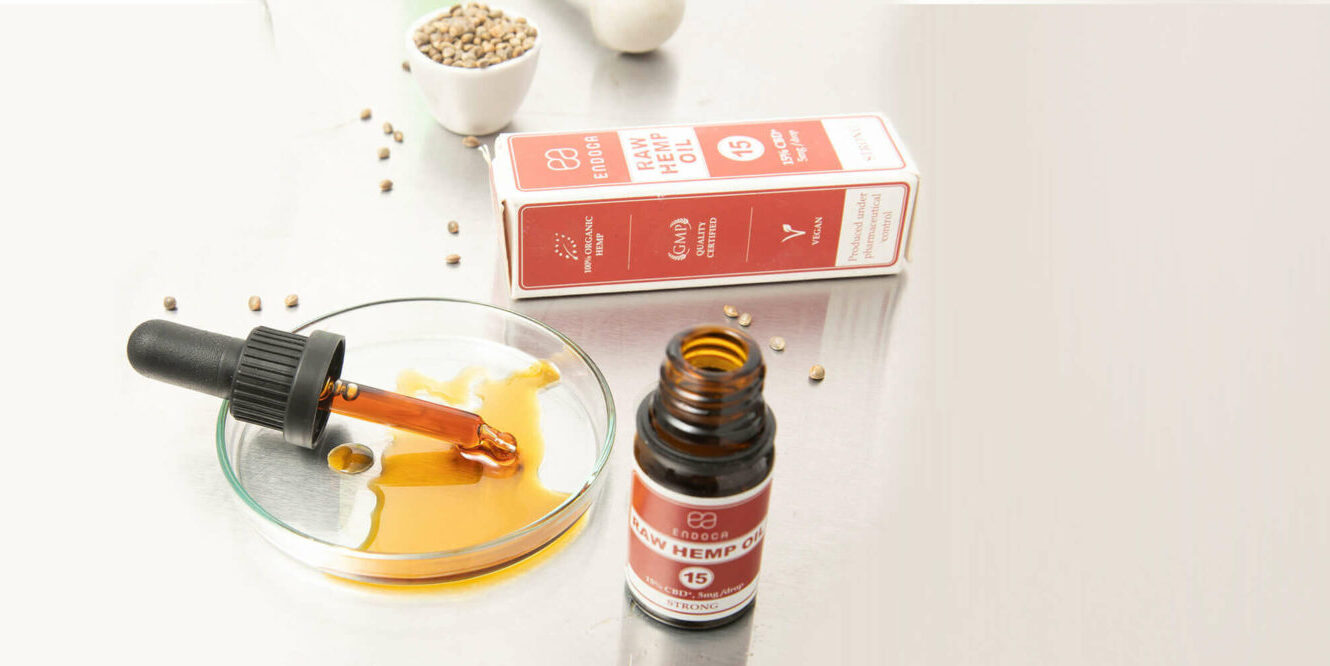
What Is CBD?
CBD is nature’s way to restore balance, calm, and overall well-being – naturally and without the high.
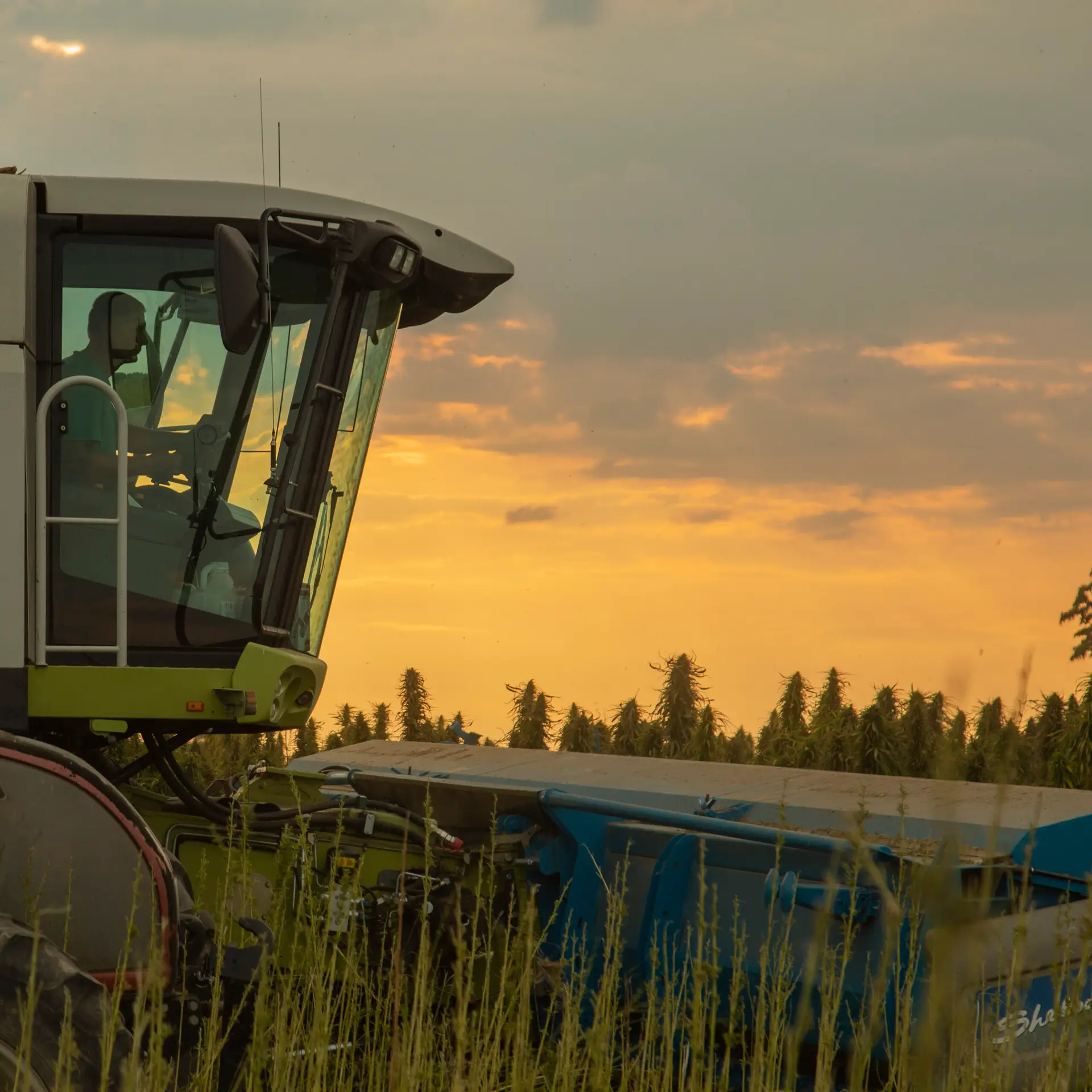
The Process
From seed to shelf, we grow organically, extract cleanly, and follow strict quality standards for purity.
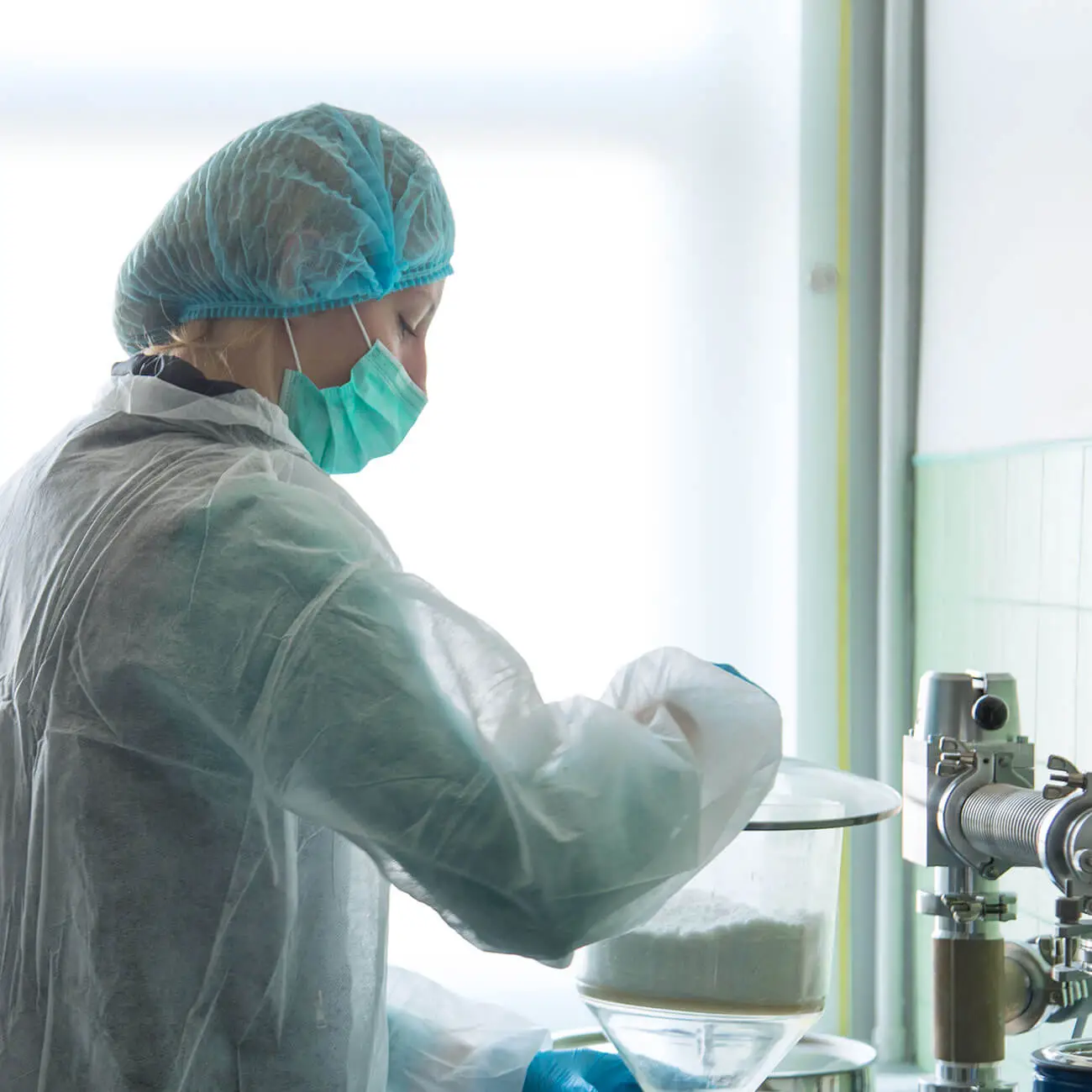
Lab Testing
Every batch is third-party tested to ensure purity, safety, and the exact amount of CBD every time.
Our Values
Sustainability, transparency, and wellness guide every decision – for you and for the planet.
At a glance
What these two actually are
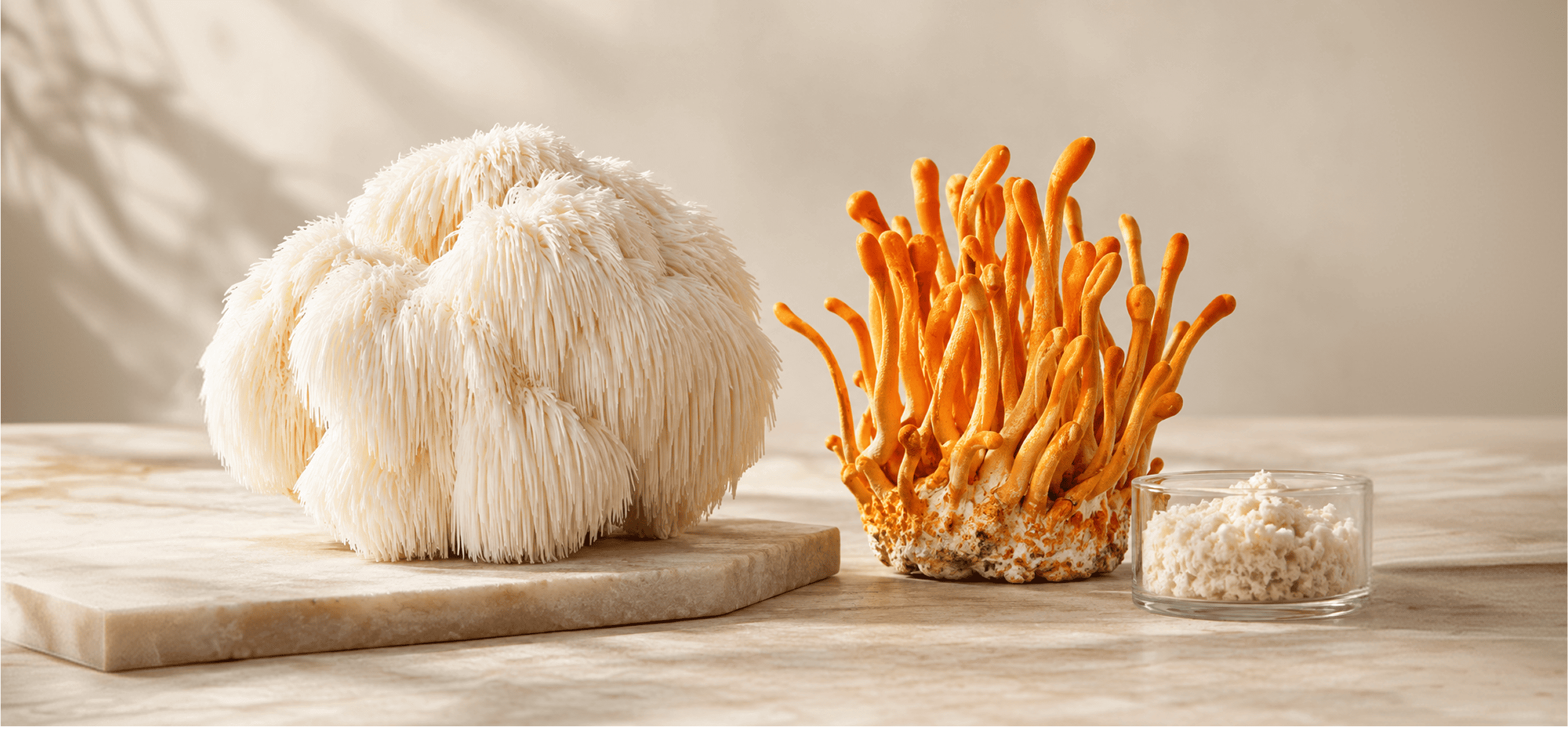
Lion’s mane is a mushroom you could buy at a market. Hericium erinaceus fruits on hardwood, is grown commercially on sawdust, and has been eaten as a vegetable for centuries. Cordyceps is a genus of fungi that parasitize insects, and the famous member of it has never been farmed as a fruiting body. The 2007 phylogenetic revision of Cordyceps moved the caterpillar fungus into Ophiocordyceps, so a label reading Cordyceps sinensis is using a name superseded almost twenty years ago.
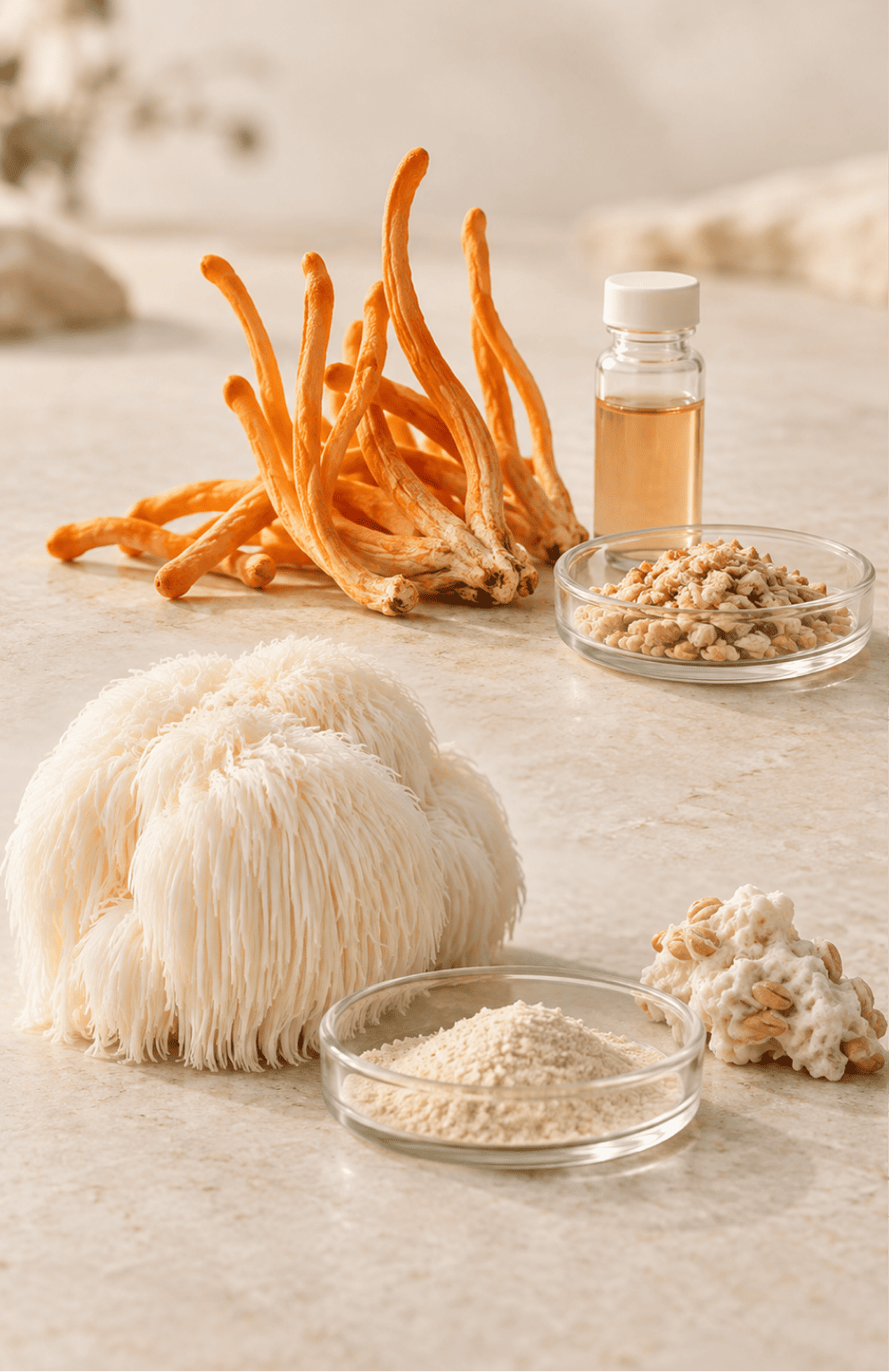
What is in a cordyceps capsule is therefore one of two things. Either a cultivated Cordyceps militaris fruiting body, which is a real mushroom and does contain cordycepin, or Cs-4, a liquid fermentation of Paecilomyces hepiali Chen grown as mycelium and dried. Both human exercise trials used Cs-4. Neither tested a militaris fruiting body, which is what most of the current market sells.
Our own label is part of this problem. The Endoca Cordyceps Mushroom Extract ingredient statement reads organic cordyceps mushroom extract and stops there. It names neither a species nor a part used, so nobody reading it can tell which of the two materials above they are holding.
Beta-glucans, and why the number on the label may not mean what you think
A polysaccharide figure can be mostly cereal. Mycelium and fermented biomass are grown on or in a starch-rich substrate, and McCleary and Draga found that in mycelial products the bulk of the grain starch remains intact and is by far the major glucan in the finished product. Crude polysaccharide assays count it. The beta-glucan method does not: it hydrolyzes total glucan with acid, measures alpha-glucan separately, and reports the remainder.
That makes alpha-glucan the diagnostic number, not a nuisance. A genuine fruiting body carries very little of it: in a 39-species screen, turkey tail read 0.41 g alpha-glucan per 100 g dry matter against 60.79 g beta-glucan, and maitake 5.04 g against 25.99 g. A product reporting a high polysaccharide figure and no alpha-glucan figure is withholding the one number that would settle the question.
Solvent choice then splits these two species. Cordyceps is the easier case, because beta-glucans and the nucleosides adenosine and cordycepin are all water soluble, so a hot water extract is defensible on its own. Lion’s mane is not: hot water carries its beta-glucans and leaves the hericenones behind, which is why the extraction method belongs beside the figure.
What the human evidence shows
Lion's mane
Thirty adults with mild cognitive impairment on 3 g a day for 16 weeks scored above placebo on a cognitive scale at weeks 8, 12 and 16.
In 18 healthy adults aged 18 to 35, a standardized fruiting body extract produced no significant effect on composite global cognition or mood.
A single 1.8 g dose in 41 healthy adults sped Stroop task performance at 60 minutes, but nothing else reached significance.
Cordyceps
In 20 healthy adults aged 50 to 75, Cs-4 at 333 mg three times daily for 12 weeks raised the metabolic threshold 10.5 percent, from 0.83 to 0.93 L per minute.
In 22 trained male cyclists, 3 g a day of Cs-4 for five weeks left peak oxygen uptake, ventilatory threshold and a work-based time trial unchanged.
No trial has tested a Cordyceps militaris fruiting body alone, so cordycepin has no human dose response data at all.
Two trials of the same Cs-4 material pointed opposite ways, and the difference was the people, not the fungus: untrained adults in their sixties against trained cyclists. Neither used the species most capsules now contain. Lion’s mane fares a little better, with one positive 16 week trial and one null acute trial.
What people get wrong
01Cordyceps supplements are the wild caterpillar fungus.
Almost never. Wild Ophiocordyceps sinensis is hand-harvested and has never been farmed as a fruiting body. Capsules hold cultivated Cordyceps militaris or Cs-4, a fermented biomass of Paecilomyces hepiali Chen.
02Cordyceps is proven to raise aerobic capacity.
Not in trained people. Five weeks of Cs-4 left peak oxygen uptake and a time trial unchanged in 22 cyclists. The positive result was a metabolic threshold shift in 20 untrained adults over 50, a different measure.
03Cordycepin content tells you a cordyceps product is good.
It tells you the species. Cordycepin is a Cordyceps militaris marker and can be quantified in fruiting bodies to within a few hundred milligrams per kilogram. No human trial has tied any cordycepin dose to any outcome.
Choosing between them
These are not substitutes, so choose by the question you want answered. With lion’s mane, the question is fruiting body or mycelium, because hericenones sit in one and erinacines in the other, and a hot water extract carries neither family. With cordyceps, the question is which organism: cultivated Cordyceps militaris, or the Cs-4 ferment that both published exercise trials actually used. Then ask both for an alpha-glucan figure alongside the beta-glucan figure, because that pair is what separates mushroom from substrate. If a seller will not answer either question, the label is the answer.
Legal status and safety
Legal status in the United States
Both are sold as dietary supplements under the Dietary Supplement Health and Education Act of 1994, which allows truthful, substantiated structure and function statements carried with the disclaimer below, and allows no claim to treat, prevent or cure a disease. One labeling rule bears directly on this page. Under 21 CFR 101.4(h), a botanical dietary ingredient must declare the part of the plant it comes from. Applied honestly to a fungus, that writes the fruiting body against mycelium question into the ingredient statement, and it is why a label naming neither species nor part is not good enough, ours included.
Safety
The cordyceps risk is in the wild material rather than the cultivated kind. High arsenic residues in wild Ophiocordyceps sinensis are a recognized problem, and a 2019 speciation study found most of the arsenic present was in an unidentified form which may convert to free inorganic arsenic. Cultivated militaris and fermented Cs-4 avoid that exposure route, which is a genuine argument for them. Lion’s mane was tolerated without adverse laboratory findings across 16 weeks at 3 g a day. None of this material has human safety data in pregnancy, breastfeeding or childhood.
How Endoca tests for this
Our mushroom range is tested for identity and for the contaminants that matter, heavy metals, pesticides and microbes, and heavy metal testing is the relevant screen for any cordyceps material. What our certificates do not yet carry is a beta-glucan figure reported separately from alpha-glucan, and our cordyceps ingredient statement names neither species nor part. Both are fixable and neither is fixed. Hemp batch certificates have come from our own farm, our own land and our own extraction since 2010.
Frequently asked questions
Usually not. Wild Ophiocordyceps sinensis grows on caterpillars on the Tibetan plateau and is collected by hand, never farmed as a fruiting body. Commercial capsules contain cultivated Cordyceps militaris or Cs-4, a fermented mycelial biomass of Paecilomyces hepiali Chen, which is a different organism.
Lion’s mane, marginally, and only because it has more trials rather than better ones. It has a positive 16 week trial in 30 adults and a null acute trial in 18. Cordyceps has two Cs-4 exercise trials that disagree, one positive in older adults and one negative in cyclists.
Because the trade kept the old name. The 2007 phylogenetic revision of the genus moved the caterpillar fungus to Ophiocordyceps sinensis. Cs-4 research published before and after that date often still says Cordyceps sinensis, even though the strain itself is Paecilomyces hepiali Chen.
Four things: the species, the part used, a beta-glucan figure and an alpha-glucan figure beside it. That last pair matters because fermented biomass carries substrate starch, and McCleary and Draga found starch is usually the major glucan in a mycelial product.
References
01
Sung GH, Hywel-Jones NL, Sung JM, Luangsa-Ard JJ, Shrestha B, Spatafora JW. Phylogenetic classification of Cordyceps and the clavicipitaceous fungi. Stud Mycol. 2007;57:5-59.
02
Chen S, Li Z, Krochmal R, Abrazado M, Kim W, Cooper CB. Effect of Cs-4 (Cordyceps sinensis) on exercise performance in healthy older subjects: a double-blind, placebo-controlled trial. J Altern Complement Med. 2010;16(5):585-590.
03
Parcell AC, Smith JM, Schulthies SS, Myrer JW, Fellingham G. Cordyceps sinensis (CordyMax Cs-4) supplementation does not improve endurance exercise performance. Int J Sport Nutr Exerc Metab. 2004;14(2):236-242.
04
Yao L, Xu Q, Xu Y, et al. Paecilomyces hepiali Chen (Cs-4) polysaccharides ameliorate chronic liver fibrosis in vivo and in vitro. J Ethnopharmacol. 2026;359:121066.
05
Singpoonga N, Rittiron R, Seang-On B, Chaiprasart P, Bantadjan Y. Determination of adenosine and cordycepin concentrations in Cordyceps militaris fruiting bodies using near-infrared spectroscopy. ACS Omega. 2020;5(42):27235-27244.
06
Li Y, Liu Y, Han X, Jin H, Ma S. Arsenic species in Cordyceps sinensis and its potential health risks. Front Pharmacol. 2019;10:1471.
07
Mori K, Inatomi S, Ouchi K, Azumi Y, Tuchida T. Improving effects of the mushroom Yamabushitake (Hericium erinaceus) on mild cognitive impairment: a double-blind placebo-controlled clinical trial. Phytother Res. 2009;23(3):367-372.
08
Surendran G, Saye J, Binti Mohd Jalil S, et al. Acute effects of a standardized extract of Hericium erinaceus (lion’s mane mushroom) on cognition and mood in healthy younger adults: a double-blind randomized placebo-controlled study. Front Nutr. 2025;12:1405796.
09
Docherty S, Doughty FL, Smith EF. The acute and chronic effects of lion’s mane mushroom supplementation on cognitive function, stress and mood in young adults: a double-blind, parallel groups, pilot study. Nutrients. 2023;15(22):4842.
10
McCleary BV, Draga A. Measurement of beta-glucan in mushrooms and mycelial products. J AOAC Int. 2016;99(2):364-373.
11
Sari M, Prange A, Lelley JI, Hambitzer R. Screening of beta-glucan contents in commercially cultivated and wild growing mushrooms. Food Chem. 2017;216:45-51.
Last reviewed 1 October 2026.
These statements have not been evaluated by the Food and Drug Administration. This product is not intended to diagnose, treat, cure, or prevent any disease.