No products in the cart.

- Shop
- About Us

Our Story
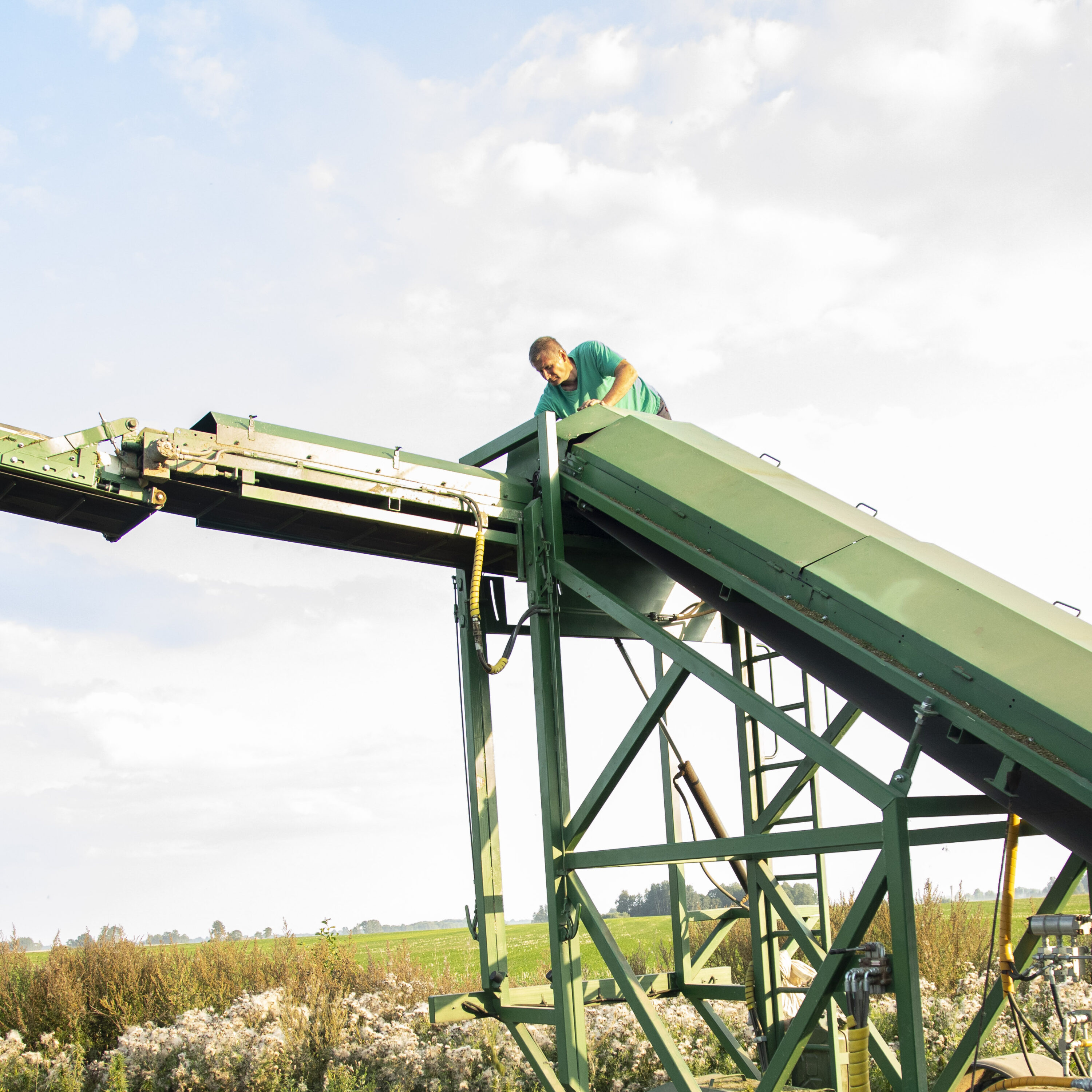
From humble beginnings to a global mission – we grow, harvest, and craft hemp with care for people and planet.
What Is CBD?
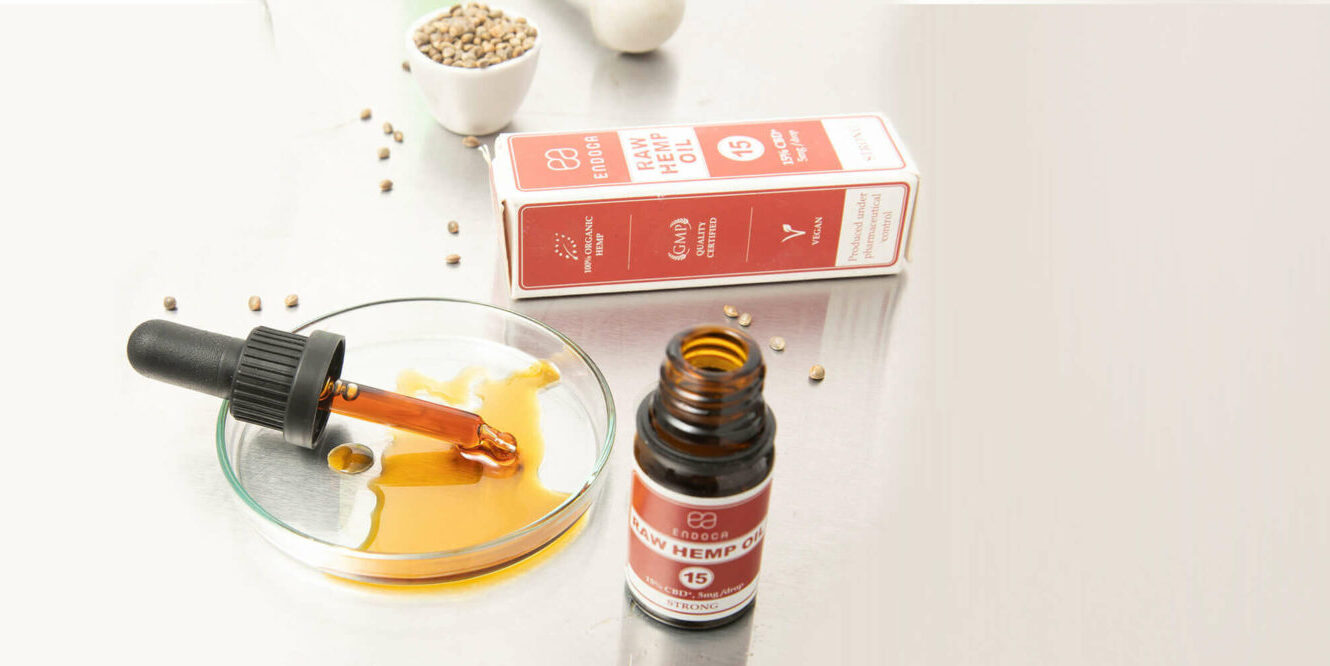
CBD is nature’s way to restore balance, calm, and overall well-being – naturally and without the high.
The Process
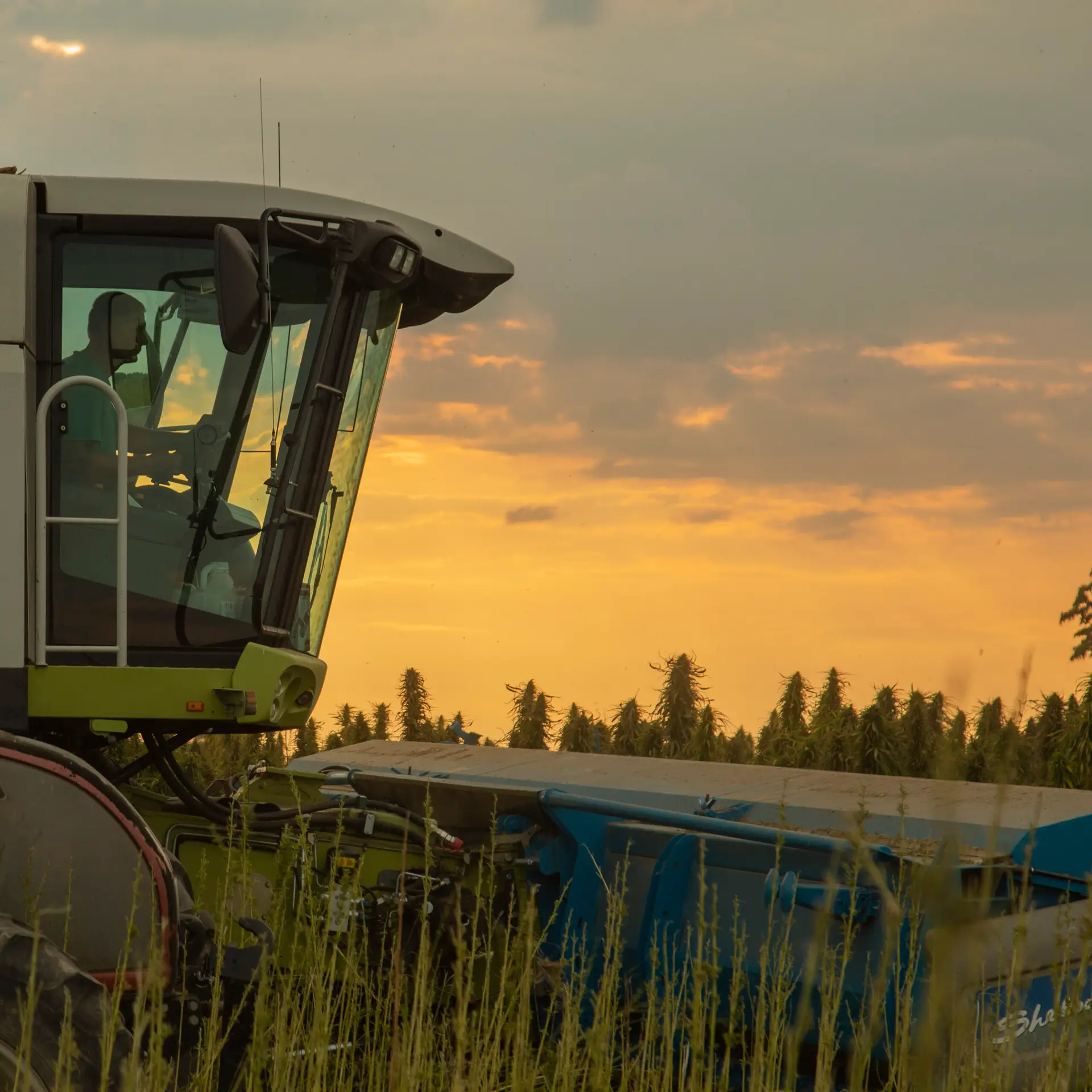
From seed to shelf, we grow organically, extract cleanly, and follow strict quality standards for purity.
Lab Testing
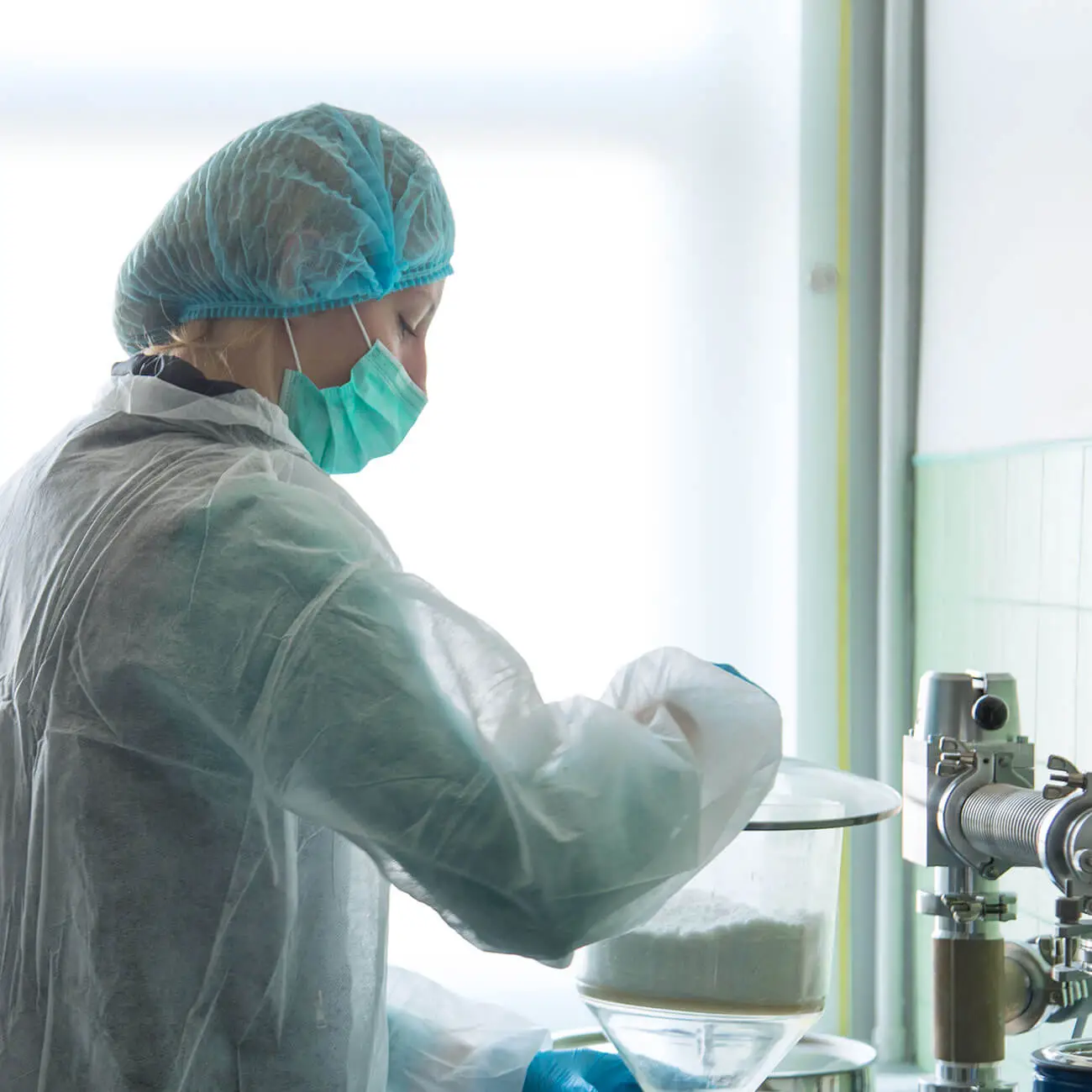
Every batch is third-party tested to ensure purity, safety, and the exact amount of CBD every time.
Our Values
Sustainability, transparency, and wellness guide every decision – for you and for the planet.
At a glance
What these two actually are
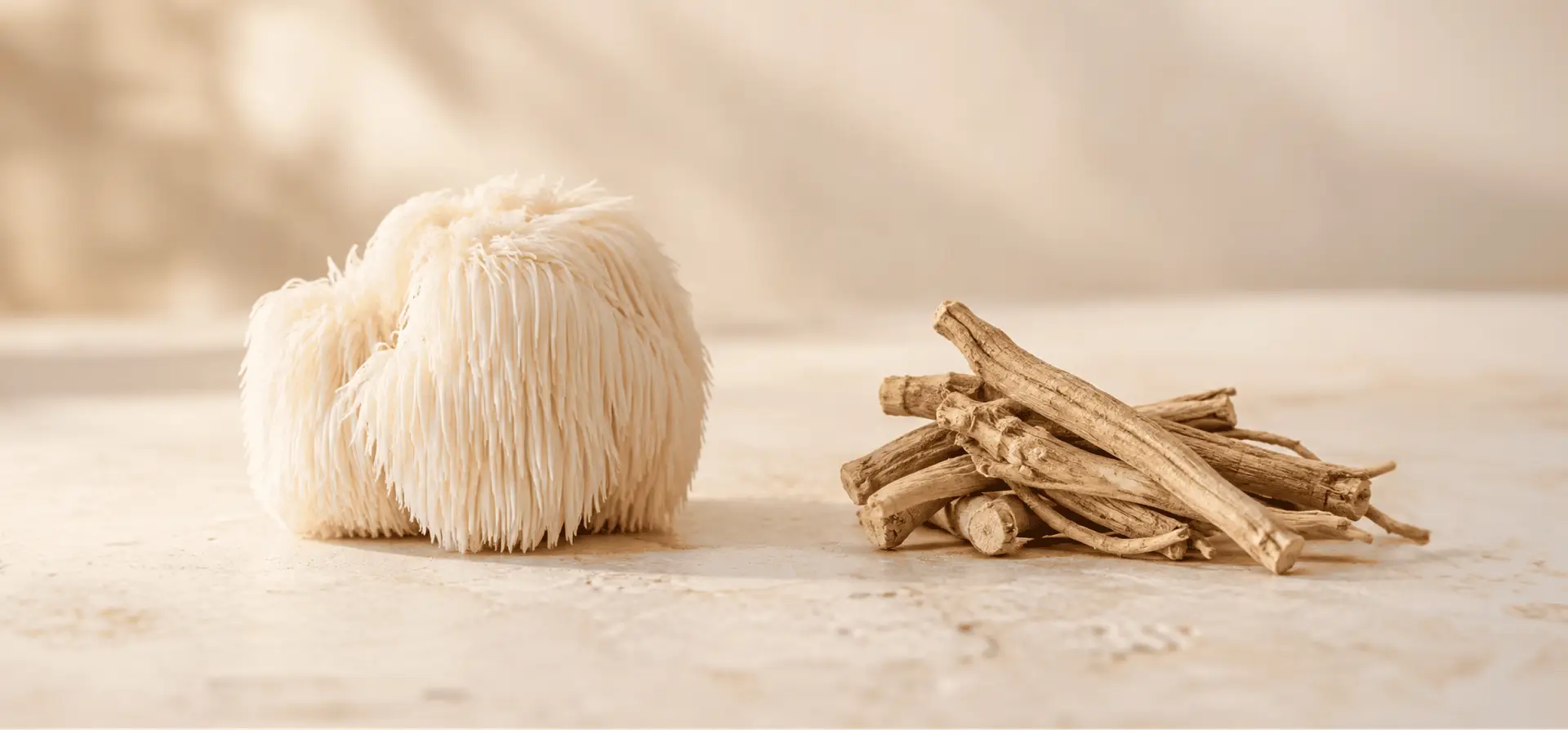
A fungus and a root, from different kingdoms. Lion’s mane is a white, shaggy fruiting fungus growing on hardwood; its chemistry sits in a chitinous cell wall, and the named compound classes are hericenones from the fruiting body and erinacines from the mycelium. Ashwagandha is a cultivated nightshade shrub, and the part sold is the root, whose markers are steroidal lactones called withanolides. Comparing them on one axis is a category error, so this page compares what each has actually been measured for.
For lion’s mane the quality question is the usual one: fruiting body or mycelium grown on grain. Grain carries starch, starch is an alpha-glucan, and alpha-glucan sits inside any total polysaccharide figure. The Endoca Lion’s Mane Mushroom Gummies state a water-based extract standardized to 50 percent polysaccharides, which is a polysaccharide figure, not a beta-glucan figure.
For ashwagandha the quality question is different: how much withanolide is present at all. When nine marketed Withania somnifera formulations were assayed by chromatography, total withanolide content showed wide variability between them, which is why a withanolide percentage matters more than a milligram figure.
Beta-glucans, and why the number on the label may not mean what you think
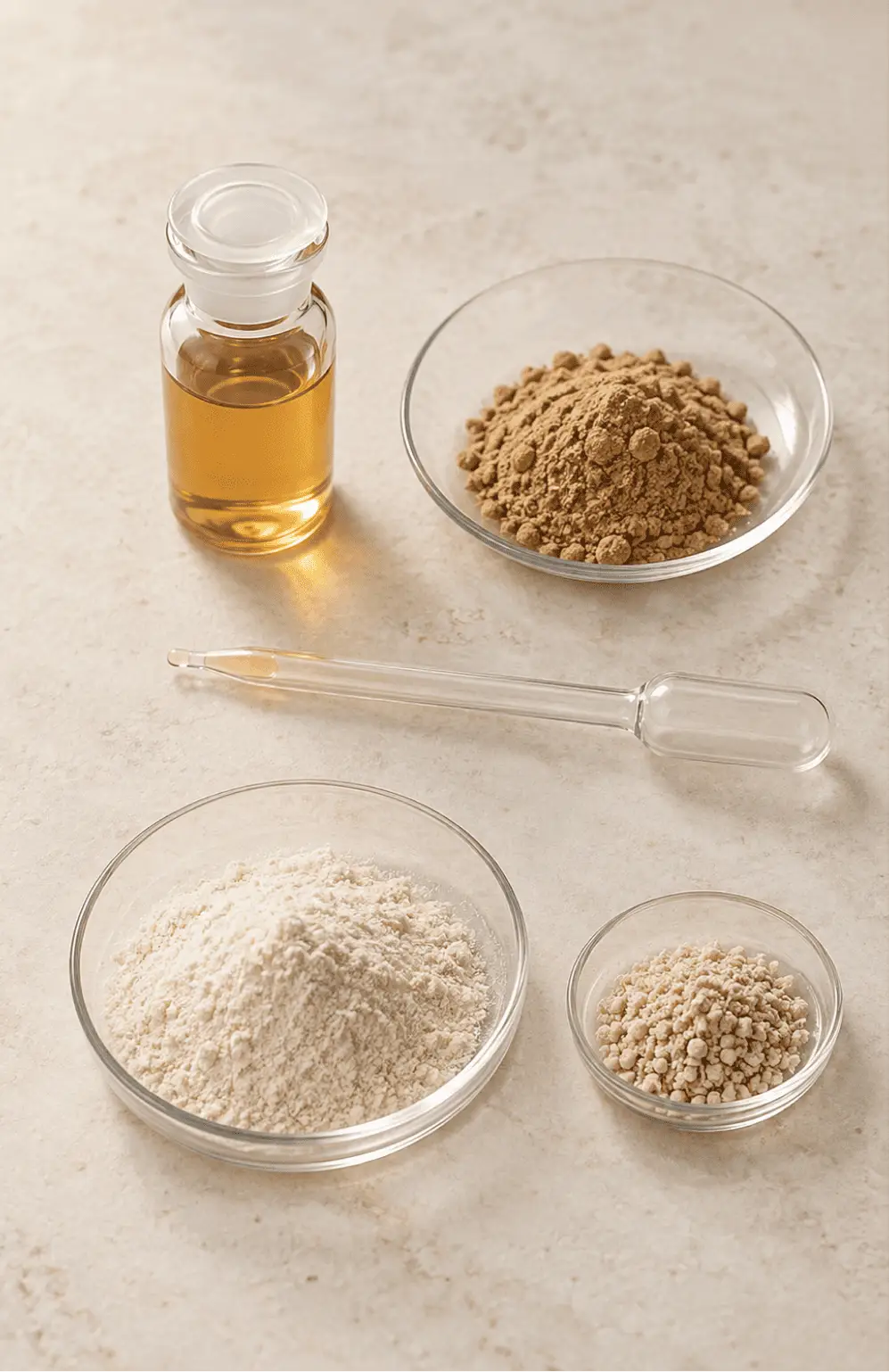
Beta-glucan only exists as a label concept for the fungus. It is never weighed directly: total glucan is hydrolyzed with sulfuric acid and read as glucose, alpha-glucan is measured separately after glucoamylase digests starch and glycogen, and beta-glucan is the difference. A mycelium-on-grain product therefore posts a high total glucan with little fungal glucan behind it. Two accepted methods also disagree: the enzymatic route reads released glucose, the Congo red assay responds to the intact triple helix, and reviews state that figures compare only within one method.
Ashwagandha has no equivalent number, because it has no fungal cell wall. Its analogue is withanolide content, and the same trap appears in a different shape: solvent decides yield. In method work on Withania somnifera roots, aqueous alcohol mixtures gave the highest total withanolide content, so a water-only preparation is not comparable to a hydroalcoholic extract at the same stated weight.
Neither label number transfers between them. A beta-glucan percentage says nothing about ashwagandha, and a withanolide percentage nothing about lion’s mane, which is the clearest evidence that these two are not competing products.
What the human evidence shows
Lion's mane
In 30 Japanese adults aged 50 to 80 with mild cognitive impairment, 16 weeks of lion's mane tablets raised cognitive scale scores at weeks 8, 12 and 16.
Scores in that trial fell significantly 4 weeks after the tablets stopped, and no trial has run longer than 16 weeks.
In 41 healthy adults a single 1.8 gram dose sped Stroop performance at 60 minutes, but the 28 day stress reduction reached only p equals 0.051.
Ashwagandha
Across 5 randomized trials in 254 adults, Hamilton Anxiety Scale scores fell by a mean difference of 5.96 points, with heterogeneity of 98 percent.
Across 5 trials in 400 adults, overall sleep improved with a standardized mean difference of 0.59, strongest at 600 mg daily or more for 8 weeks or more.
That sleep review found no significant effect on quality of life and stated that data on serious adverse effects are limited.
Ashwagandha has the larger trial count and the weaker reliability: heterogeneity of 98 percent in the anxiety meta-analysis means the trials disagreed almost completely. Lion’s mane has fewer trials, one positive and durable only while taken, and nothing past 16 weeks.
What people get wrong
01Lion's mane and ashwagandha do the same job.
They were tested for different things: lion's mane trials for cognitive scales and reaction speed, ashwagandha trials for anxiety scales and sleep parameters. No trial has compared the two directly.
02Ashwagandha is safe because it is a traditional herb.
A scoping review to December 2025 collected 25 published cases of ashwagandha-associated liver injury. Twenty recovered, one needed a transplant and three died, all with pre-existing cirrhosis.
03Lion's mane has proven benefits for memory.
One trial in 30 people with mild cognitive impairment found higher scale scores over 16 weeks, which fell again 4 weeks after stopping. No trial has measured dementia incidence.
Choosing between them
Start with who should not take ashwagandha at all, because that list is long: anyone pregnant or breastfeeding, anyone under 18, anyone with liver disease, thyroid disorder or heart problems, and anyone on central nervous system depressants. If any of those apply, the comparison ends there and lion’s mane is the only one of the pair left. For lion’s mane, read the label for fruiting body or mycelium, and treat a polysaccharide percentage as inflated unless beta-glucan is stated separately. Raise either one with a clinician if you take prescription medication.
Still weighing up the options? See CBD vs ashwagandha, Reishi vs ashwagandha or Lion’s mane vs reishi. Endoca products related to this comparison: Lion’s Mane Extract and lion’s mane gummies.
Legal status and safety
Legal status in the United States
Both are sold as dietary supplements under the Dietary Supplement Health and Education Act, which permits structure and function statements and bars any claim to diagnose, treat, cure or prevent disease. Neither has been approved by the Food and Drug Administration for any indication.
Ashwagandha’s position elsewhere is very different. Denmark prohibited it in supplements in 2023 after a 2020 risk assessment concluded no safe intake level could be set, Sweden has not prohibited it but its food agency has required companies to demonstrate that ashwagandha products are safe, and the United Kingdom ran a call for evidence closing on 2 September 2024. No comparable restriction applies here, and that divergence is worth stating rather than hiding.
Safety
Ashwagandha has a documented liver safety signal, and it is the most important thing on this page. The first published case series described 5 patients, 3 collected in Iceland and 2 from the US Drug-Induced Liver Injury Network. All developed jaundice after a latency of 2 to 12 weeks, the injury was cholestatic or mixed, itching and raised bilirubin persisted for 5 to 20 weeks, and chemical analysis confirmed ashwagandha in the available supplements.
A scoping review to December 2025 found 13 publications covering 25 patients: 44 percent cholestatic, 32 percent hepatocellular, 80 percent recovered, 1 transplant and 3 deaths, all 3 with pre-existing cirrhosis. Thyrotoxicosis has also been reported, and ashwagandha is contraindicated in pregnancy. Germany’s BfR advises against it for children, pregnancy, breastfeeding and acute or pre-existing liver disease; France’s ANSES names thyroid disorder and central nervous system depressants. Lion’s mane showed no adverse laboratory findings in its 16 week trial.
How Endoca tests for this
Endoca sells lion’s mane and not ashwagandha, so there is no second batch record to compare. The Lion’s Mane Mushroom Gummies deliver 100 mg of organic Hericium erinaceus extract per serving over 15 servings, and the Lion’s Mane Mushroom Extract capsules carry 350 mg each. Every batch is third-party tested, with the certificate of analysis published through the lab portal. The gummy label states polysaccharides, not beta-glucan. Endoca has worked from its own farm, own land and own extraction since 2010.
Frequently asked questions
They are not alternatives. Lion’s mane is a fungus trialed for cognitive scales and reaction speed; ashwagandha is a nightshade root trialed for anxiety and sleep. No study has compared them. The practical difference is that ashwagandha carries a liver injury signal.
Denmark prohibited it in supplements in 2023, after a 2020 national risk assessment found no intake level of the root or root extract below which consumption would be without risk of harm. Sweden has not prohibited it, but its food agency has required companies to demonstrate that ashwagandha products are safe.
No. It is contraindicated in pregnancy. France’s food safety agency advises against use by anyone pregnant or breastfeeding, Germany’s risk institute gives the same advice, and some reports have suggested a potential to cause spontaneous abortion. Lion’s mane is untested in pregnancy too.
Thin. One double-blind trial randomized 30 adults with mild cognitive impairment into groups of 15, and scores rose at weeks 8, 12 and 16, then fell 4 weeks after stopping. A systematic review found five randomized trials, none longer than 16 weeks.
Many people combine them, and no interaction is known. Ashwagandha has rare reports of liver injury and is not advised in pregnancy, so check with a doctor if either applies.
Lion’s mane is the one studied for cognition, in small trials. Ashwagandha has been studied mainly for stress and sleep, not focus.
References
01
Mori K, Inatomi S, Ouchi K, et al. Improving effects of the mushroom Yamabushitake (Hericium erinaceus) on mild cognitive impairment: a double-blind placebo-controlled clinical trial. Phytother Res. 2009;23(3):367-372.
02
Docherty S, Doughty FL, Smith EF. The acute and chronic effects of lion’s mane mushroom supplementation on cognitive function, stress and mood in young adults: a double-blind, parallel groups, pilot study. Nutrients. 2023;15(22):4842.
03
Menon A, Jalal A, Arshad Z, et al. Benefits, side effects, and uses of Hericium erinaceus as a supplement: a systematic review. Front Nutr. 2025;12:1641246.
04
Bjornsson HK, Bjornsson ES, Avula B, et al. Ashwagandha-induced liver injury: a case series from Iceland and the US Drug-Induced Liver Injury Network. Liver Int. 2020;40(4):825-829.
05
McIntyre D, Nguyen P, Kim Y, et al. Ashwagandha (Withania somnifera)-associated liver injury: a scoping review of clinical characteristics and safety considerations. Cureus. 2026;18(5):e109764.
06
Fatima K, Malik J, Muskan F, et al. Safety and efficacy of Withania somnifera for anxiety and insomnia: systematic review and meta-analysis. Hum Psychopharmacol. 2024;39(6):e2911.
07
Cheah KL, Norhayati MN, Husniati Yaacob L, Abdul Rahman R. Effect of Ashwagandha (Withania somnifera) extract on sleep: a systematic review and meta-analysis. PLoS One. 2021;16(9):e0257843.
08
Kumar S, Singh R, Gajbhiye N, Dhanani T. Extraction optimization for phenolic- and withanolide-rich fractions from Withania somnifera roots. J AOAC Int. 2018;101(6):1773-1780.
09
McCleary BV, Draga A. Measurement of beta-glucan in mushrooms and mycelial products. J AOAC Int. 2016;99(2):364-373.
10
Bundesinstitut fuer Risikobewertung. Ashwagandha: food supplements with potential health risks. BfR Communication 39/2024, 10 September 2024.
11
National Institutes of Health, Office of Dietary Supplements. Ashwagandha: is it helpful for stress, anxiety, or sleep? Health professional fact sheet.
12
DTU National Food Institute, Technical University of Denmark. Risk assessment of ashwagandha (Withania somnifera) in food supplements, 2020; and Danish Veterinary and Food Administration measure prohibiting ashwagandha in food supplements, 2023.
13
French Agency for Food, Environmental and Occupational Health and Safety (ANSES). Opinion on the risks associated with the consumption of food supplements containing ashwagandha (Withania somnifera).
14
Vetter J. The mushroom glucans: molecules of high biological and medicinal importance. Foods. 2023;12(5):1009.
Last reviewed 1 October 2026.
These statements have not been evaluated by the Food and Drug Administration. This product is not intended to diagnose, treat, cure, or prevent any disease.