No products in the cart.

- Shop
- About Us
Our Story
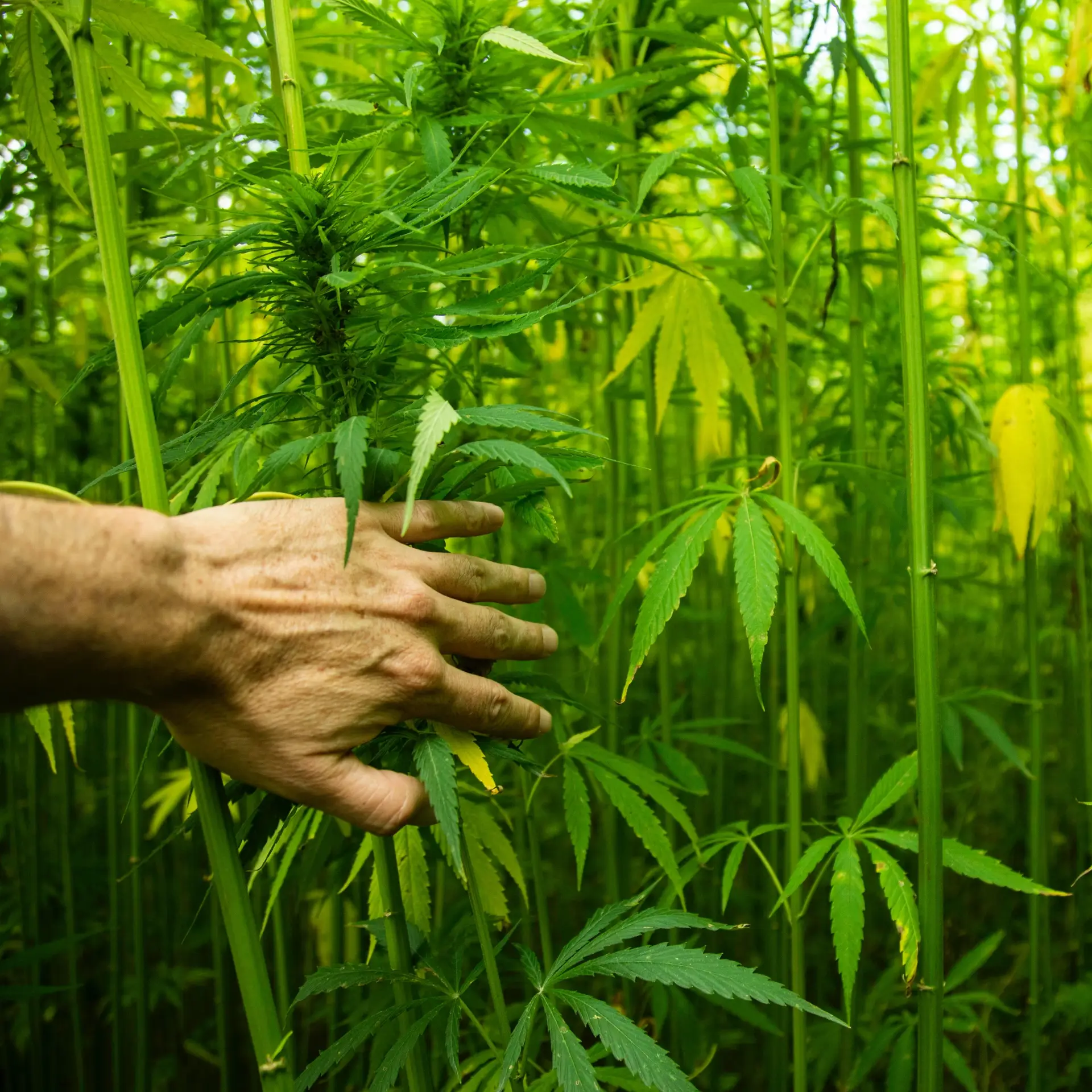
From humble beginnings to a global mission – we grow, harvest, and craft hemp with care for people and planet.
What Is CBD?
CBD is nature’s way to restore balance, calm, and overall well-being – naturally and without the high.
The Process
From seed to shelf, we grow organically, extract cleanly, and follow strict quality standards for purity.

Lab Testing
Every batch is third-party tested to ensure purity, safety, and the exact amount of CBD every time.
Our Values
Sustainability, transparency, and wellness guide every decision – for you and for the planet.
At a glance
The chemistry, briefly
CBD and THC are both C21H30O2. Same atoms, same count. What differs is arrangement. THC has a closed ring in its structure. CBD has an open one. That single structural difference changes how each molecule sits inside a receptor, and receptors are shape-sensitive in the way a lock is shape-sensitive.
Neither compound exists in a living cannabis plant in the form you buy. The plant makes acidic precursors, CBDA and THCA, from a shared parent molecule called CBGA. Heat and time strip a carbon dioxide group off each one. CBDA becomes CBD. THCA becomes THC. This is why raw cannabis does not get you high and why “decarboxylation” appears on every extraction spec sheet.
The one difference that explains the rest
Your body has two main cannabinoid receptors. CB1 sits mostly in the brain and nervous system. CB2 sits mostly in immune tissue.
THC is a partial agonist at CB1, with a binding affinity around 20 to 36 nanomolar depending on the assay. In plain terms, it attaches to CB1 and turns it on, though not to the maximum. CB1 receptors sit on the ends of neurons and dampen the release of neurotransmitters when activated. Turn enough of them on across the cortex, hippocampus and cerebellum and you get the familiar package: altered time perception, memory disruption, appetite, coordination changes.
That this is really the mechanism is not guesswork. In a 2025 clinical trial, a drug that blocks CB1 blocked the acute effects of THC in healthy volunteers. Take away the receptor, take away the high.
CBD does something quite different. It has poor affinity for CB1 and, more importantly, close to zero efficacy there. It cannot switch the receptor on. Where it does interact with CB1, it does so at a separate site as a negative allosteric modulator, which means it makes the receptor less responsive to things that do activate it.
The FDA’s own prescribing information for Epidiolex, the purified CBD medicine, puts it plainly: cannabidiol does not appear to exert its anticonvulsant effects through interaction with cannabinoid receptors.
That last point is worth sitting with, because a great deal of CBD marketing says the opposite. CBD’s real targets appear to be elsewhere. It blocks the ENT1 adenosine transporter at under 250 nanomolar, which is one of its genuinely potent actions. It is a strong TRPA1 agonist. It has activity at TRPV1, 5-HT1A and GPR55. A 2015 systematic appraisal in Neurotherapeutics reviewed more than 65 reported CBD targets and concluded most are only engaged at concentrations far above what a person actually achieves.
What the research actually found
CBD
In the Dravet syndrome trial published in the New England Journal of Medicine in 2017, convulsive seizures fell from 12.4 to 5.9 per month on CBD at 20 mg per kilogram per day, against 14.9 to 14.1 on placebo.
The Lennox-Gastaut trial the following year found drop seizures down 41.9 percent on the higher dose against 17.2 percent on placebo.
A 2024 review in The Journal of Pain examined 16 randomized trials using verified pharmaceutical-grade CBD at doses from 6 to 1,600 mg. Fifteen of the 16 showed no benefit over placebo.
A 2024 meta-analysis of eight trials and 316 participants found a significant effect, though the confidence interval nearly crossed zero and the doses were typically 300 to 800 mg given acutely.
Sleep has no adequate CBD-alone trial base at all.
THC
Chemotherapy-induced nausea and vomiting, and appetite stimulation, both supported well enough that synthetic THC medicines were approved decades ago.
Spasticity in multiple sclerosis, via the THC and CBD combination product nabiximols.
This is where most comparison articles stop being useful, because they list “benefits” without distinguishing between a mouse study and a randomized trial. The distinction matters enormously.
Still weighing up the options? See THCa vs CBD, Delta-8 vs CBD or full spectrum vs broad spectrum vs isolate. For more background, read our guide on whether CBD shows up on a drug test. Endoca products related to this comparison: THC-free CBD products.
What people get wrong
01CBD cancels out THC.
This is the single most repeated claim in the category and it is not settled. Two proposed mechanisms pull in opposite directions. CB1 negative allosteric modulation would reduce THC's effects. But CBD also inhibits CYP2C19, CYP3A4 and CYP2C9, the enzymes that clear THC from your body, which would increase them.
The human trials are genuinely mixed. A 2013 study found less THC-induced paranoia with 600 mg of CBD given three and a half hours beforehand. But a 2016 study found oral CBD did not reduce any effect of smoked cannabis at any dose. A 2023 study using a CBD-dominant ratio found no attenuation. A 2020 on-road driving study found CBD did not protect against impairment.
And a 2023 randomized trial in JAMA Network Open found the opposite of the popular claim. Brownies with 20 mg THC plus 640 mg CBD produced higher THC blood levels, more anxiety, more sedation, more memory difficulty and worse psychomotor impairment than THC alone. The authors said directly that this contradicts common claims that CBD attenuates the adverse effects of THC.
So: do not assume adding CBD to a THC product makes it milder. Depending on dose, route and timing, it may do the reverse.
02CBD works through your cannabinoid receptors.
Largely no, as the Epidiolex label states.
03CBD raises your anandamide by blocking FAAH.
This one is a species error that spread widely. CBD weakly inhibits rat FAAH. It does not inhibit human FAAH. A 2015 paper in the Journal of Biological Chemistry addressed this directly, and the species difference is attributed to differences in the enzyme's active site. Anandamide does rise after CBD in humans, but through competition at fatty acid binding proteins instead.
04CBD won't show on a drug test.
Standard drug tests look for THC metabolites, not CBD. But full-spectrum products contain trace THC by design, and enough of them, taken often enough, can accumulate. If testing is a concern, broad-spectrum or isolate is the sensible choice, and the certificate of analysis is the only thing that tells you what is actually in the bottle.
Legal status and safety
Legal status in the United States
As of September 2026, the 2018 Farm Bill definition governs. Hemp means cannabis with no more than 0.3 percent delta-9 THC by dry weight, and hemp derivatives are excluded from the Controlled Substances Act. THC above that threshold remains Schedule I federally, whatever individual states permit.
This is about to change, and anyone buying or selling should know it. Section 781 of Public Law 119-37, signed in November 2025, rewrites the definition. From 12 November 2026 the test becomes total THC including THCA rather than delta-9 alone, cannabinoids synthesized outside the plant are excluded, and finished products face a cap of 0.4 mg total THC per container. A one-month delay to 11 December 2026 had passed the Senate but not the House as of 1 September 2026. FDA has not yet published the cannabinoid lists the new rules depend on, more than six months past its statutory deadline.
The practical read: full-spectrum products are the category most exposed, because many exceed 0.4 mg total THC per container. Check the date on any legal guidance you read about hemp, including this page.
Separately, FDA holds that CBD cannot lawfully be a dietary supplement ingredient or added to food, because CBD was approved as a drug first. That position has not changed.
Safety
CBD is not risk-free. Transaminase elevations, a marker of liver stress, appeared in around 9 percent of patients in the epilepsy trials. CBD inhibits several cytochrome P450 enzymes, which is the same reason grapefruit carries a warning on some prescriptions. If you take any prescription medication, this is a conversation for your prescriber rather than a website.
One practical note with good evidence behind it: a high-fat meal increases CBD’s peak blood level roughly fivefold and total exposure fourfold, according to the Epidiolex label. Taking CBD on an empty stomach wastes most of it.
How Endoca tests for this
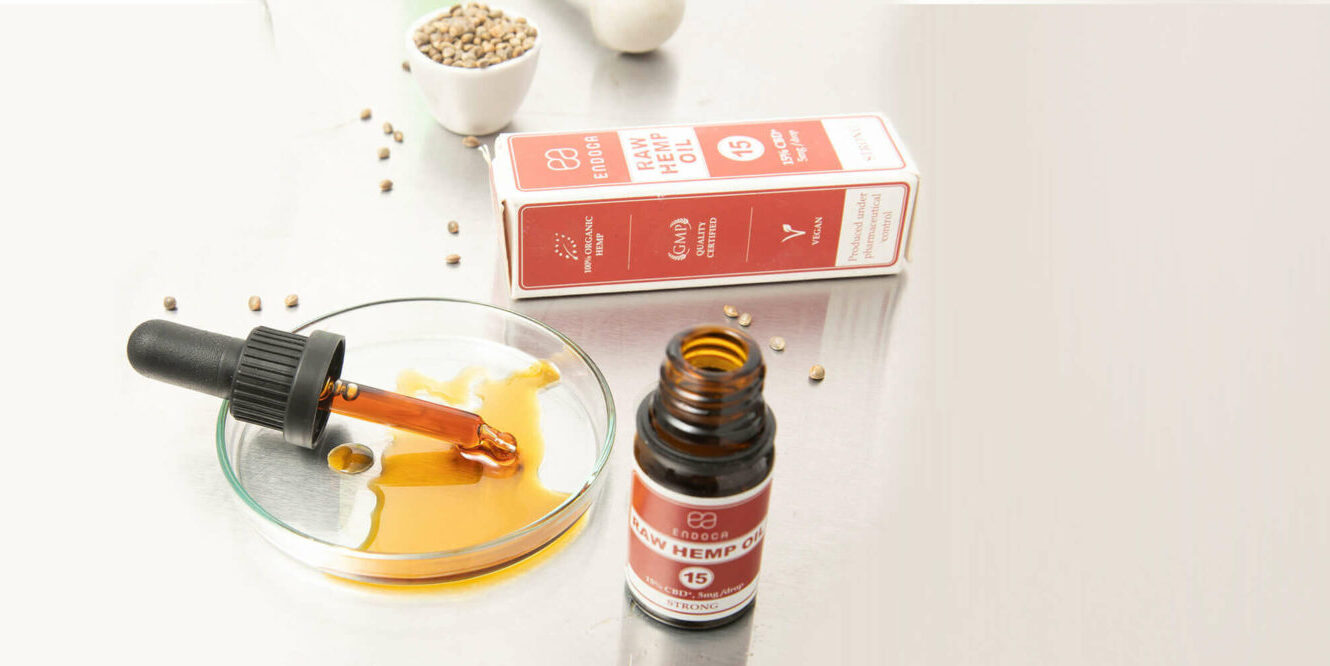
We grow our own hemp, run our own supercritical CO2 extraction and publish a certificate of analysis for every batch. That matters here for one specific reason: the difference between CBD and THC in a finished product is a number, and the only way to know that number is a third-party lab report tied to the batch code on your bottle. A brand that cannot show you that number cannot tell you which of these two compounds you are actually buying.
Frequently asked questions
No. It has negligible activation of the CB1 receptor, which is the receptor responsible for cannabis intoxication.
No. They have different molecular targets, not the same targets at different strengths.
The honest answer is that CBD has a modest meta-analytic signal at doses of 300 to 800 mg given acutely, and THC’s relationship with anxiety is dose-dependent and can go either way. Neither is a treatment, and we cannot recommend either for a diagnosed condition.
Full-spectrum products contain both by definition. Be aware that CBD may raise rather than lower THC exposure.
It can. Trace THC accumulates with regular use.
CBD and THC share the same molecular formula, C21H30O2, and the same atoms. The difference is arrangement: THC has a closed ring where CBD has an open one, and that small change decides whether the molecule activates the CB1 receptor that produces a high.
Full-spectrum CBD oil carries trace THC from the hemp plant, within the legal limit for the market it is sold in. Broad-spectrum and isolate products are processed to remove it. The batch certificate of analysis is the place to check the actual figure.
References
01
Devinsky O et al. Trial of Cannabidiol for Drug-Resistant Seizures in the Dravet Syndrome. N Engl J Med 2017;376:2011-2020.
02
Devinsky O et al. Effect of Cannabidiol on Drop Seizures in the Lennox-Gastaut Syndrome. N Engl J Med 2018;378:1888-1897.
03
Moore RA, Straube S, Fisher E, Eccleston C. Cannabidiol (CBD) for Pain. J Pain 2024;25:833-842.
04
Zamarripa CA et al. Assessment of Orally Administered Delta-9-THC When Coadministered With Cannabidiol. JAMA Netw Open 2023;6:e2254752.
05
Laprairie RB et al. Cannabidiol is a negative allosteric modulator of the cannabinoid CB1 receptor. Br J Pharmacol 2015;172:4790-4805.
06
Elmes MW et al. Fatty Acid Binding Proteins Are Intracellular Carriers for Delta-9-THC and CBD. J Biol Chem 2015;290:8711-8721.
07
Ibeas Bih C et al. Molecular Targets of Cannabidiol in Neurological Disorders. Neurotherapeutics 2015;12:699-730.
08
Han B et al. Cannabidiol for anxiety: a systematic review and meta-analysis. Psychiatry Res 2024;339:116049.
09
Freeman AM et al. How does cannabidiol influence the effects of delta-9-THC? Neurosci Biobehav Rev 2019;107:696-712.
10
FDA. EPIDIOLEX prescribing information, 2025.
11
Congressional Research Service. Legal Sidebar LSB11381, updated 22 December 2025.
Last reviewed 1 September 2026.
These statements have not been evaluated by the Food and Drug Administration. This product is not intended to diagnose, treat, cure, or prevent any disease.