




No products in the cart.
For most people CBD doesn’t feel like much. That’s the honest starting point. It won’t get you high. In 2018 a World Health Organization expert committee reviewed pure CBD and found no psychoactive properties and no potential for abuse. What people report beyond that is mild, hard to pin down and different from one person to the next.
Some describe a subtle change. Plenty notice nothing at all. This guide covers why, what side effects the FDA lists, and how to give a product a fair try. If you’re comparing labels as you go, our THC-free CBD items state the total mg in each pack.
Quick Answer
- CBD isn’t intoxicating. THC is the cannabis compound behind the high.
- Many first-time users feel little or nothing, and that’s common.
- Reports vary widely, so nobody can tell you in advance how you’ll feel.
- Drowsiness and stomach upset are among the side effects the FDA lists.
- CBD can interact with some medicines, so talk to your doctor or pharmacist first.
Does CBD Get You High?
No. CBD doesn’t produce the high people link with marijuana. The FDA describes THC as the component that produces that effect, and the WHO’s 2018 critical review found that CBD shows no effects in humans that point to abuse or dependence.
There’s one catch, and it’s about the label rather than the molecule. Full spectrum extracts can carry small amounts of THC alongside CBD. THC-free products and isolate are made to remove it, and the batch certificate shows whether that worked.
The rules on that trace THC are changing. The Congressional Research Service reported on October 28, 2026 that most changes to the federal hemp definition now take effect from December 11, 2026.
From that date the definition counts total THC (THCA included). If total THC across a finished product’s whole container tops 0.4 mg, that product is no longer covered. State rules differ, so check yours, and our page on CBD laws by state is a place to start.
For the chemistry behind the difference, see how CBD and THC compare.
Why Many People Notice Very Little at First
Because there’s often very little to notice. CBD isn’t like coffee, where you feel a lift within the hour, or a drink, where the effect is obvious. Whatever people do describe tends to be quiet enough that it’s easy to miss on a busy day.
Expectations play a part too. If you’ve read that CBD feels like a wave of something, a normal Tuesday can seem like failure. It isn’t.
And the first few tries often aren’t consistent. You take it with breakfast one day and on an empty stomach the next, from a gummy one week and an oil the week after. That’s four different situations from one compound, which makes any change harder to spot.
What People Commonly Report, and Why It Varies
People who do notice something tend to use soft words: settled, unhurried, a little heavier in the evening. Others feel nothing they’d put a name to. Responses vary, and we won’t tell you which group you’ll be in.
Several things shape the report:
- The amount on the label, which differs hugely between products
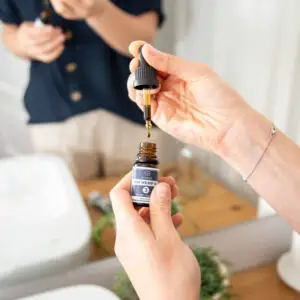
- The format, from drops under the tongue to a capsule swallowed with water
- Whether you took it with food
- Other medicines or alcohol in your system
- What you expected to feel before you started
That last one matters more than most guides admit. A first-time user who is watching closely for a change will often find one, whatever is in the bottle.
How Format Changes the Experience
Format changes what you notice first, which is usually taste and texture, not a feeling.
| Format | How you take it | What you notice first | Weak point |
|---|---|---|---|
| Oil drops | Held under the tongue, then swallowed | An earthy, grassy taste | You count drops, so it’s easy to vary the amount by mistake |
| Capsules | Swallowed with water | Nothing; no taste at all | Fixed amount per capsule |
| Gummies | Chewed | Fruit flavor and sugar | Easy to treat as a snack and lose count |
| Isolate crystals | Mixed at home into an oil or food | No hemp taste | You need a milligram scale |
| Topicals | Rubbed into the skin | The scent of the other ingredients | Not swallowed, so not comparable with the rest |
If a hemp taste puts you off, isolate takes it out. The crystals in our isolate range are 99% CBD, and the label states no detectable THC.
Side Effects and Medicine Interactions
CBD has side effects, and you should know them before you start. The FDA lists these on its consumer page:
- Sleepiness or drowsiness
- Diarrhea or decreased appetite
- Irritability and agitation
- Liver injury, which the FDA says CBD can cause
The FDA also warns that CBD can change how other drugs you take work, and that using it with alcohol or other drugs that slow brain activity raises the risk of drowsiness. Don’t drive or operate machinery until you know how it affects you.
The WHO’s 2018 review called CBD “generally well tolerated with a good safety profile”. It added that some reported side effects may come from interactions with medicines people were already taking, because CBD can block certain liver enzymes that break drugs down.
So if you take any prescription medicine, ask your pharmacist before your first dose, not after. The same goes if you’re pregnant or breastfeeding.
How to Judge a Fair Trial Without Guessing
Keep everything the same except the thing you’re testing. Here’s a worked example with two hypothetical labels.
Bottle A is 10 ml and states 1,000 mg of CBD, so each ml holds 100 mg. Bottle B is a pot of 60 capsules stating 1,500 mg, so each capsule holds 25 mg. Those are very different amounts per serving, and the front of the pack won’t tell you that until you divide.
Do the division before you compare how two products feel. How much to take is something to settle with your doctor, using the label.
- Pick one product and read the mg per unit from the label.
- Match its batch number to the certificate of analysis. Our guide to checking a third-party lab test shows which lines matter.
- Take it at the same meal for 14 days.
- Write one line a day, including “noticed nothing”.
- Change one thing at a time, never two.
What We Can’t Tell You About How CBD Will Feel
We can’t predict your experience, and nobody else can either. “Feel” is hard to measure: most studies track blood levels or side effects, not the everyday sensations people search for.
The WHO safety picture has limits of its own. Much of it comes from trials of a prescription CBD medicine at amounts set by body weight, far higher than a typical shop label holds. One of those trials enrolled 120 children and young adults who were also taking other medicines. Sleepiness was reported by 36% of those on CBD against 10% on placebo.
That tells you side effects are real at high amounts. It can’t tell you what a few milligrams will do for you.
Frequently Asked Questions
What Does It Feel Like When CBD Is Working?
There’s no reliable sign. Some people describe feeling a little more settled; many notice nothing. The FDA hasn’t evaluated CBD for any effect on mood or rest, so take any change as personal, not something to count on.
Can CBD Make You Feel Tired?
It can. The FDA lists sleepiness among CBD’s side effects, and alcohol makes it more likely. Try your first serving on a day you don’t need to drive.
Is It Normal to Feel Nothing From CBD?
Yes. It’s one of the most common reports. Feeling nothing doesn’t mean a product is faulty, so check the mg per unit and the batch certificate before you decide anything.
Does CBD Feel Like THC?
No. THC produces the high; CBD doesn’t. A full spectrum product with trace THC can still differ from an isolate, which is why the certificate matters.
Can You Take CBD With Alcohol?
The FDA advises caution here. Both can cause drowsiness, and together the risk rises. Ask your doctor first if you drink, and don’t drive.
Start with the label. Before your first serving, divide the total mg by the number of units, match the batch number to its certificate, and write today’s date on the box.
These statements have not been evaluated by the Food and Drug Administration. This product is not intended to diagnose, treat, cure, or prevent any disease. Hemp rules are changing on December 11, 2026, and state rules differ. This article is general information, not medical or legal advice. Talk to your doctor before using CBD if you take any medication, are pregnant or breastfeeding.


Comments are closed