





No products in the cart.
Quick answer: Neither is better for everyone. Chaga tea is the traditional form and pulls out water-soluble compounds, but strength varies with every brew. Capsules of a hot water extract give you a fixed, measured amount each day and travel easily. Choose tea if you enjoy the ritual, capsules if you want consistency. Either way, keep the oxalate warning in mind.
Chaga has been brewed as a dark, earthy drink in northern forests for centuries, and it now sits next toother functional mushroom extracts in capsule form too. So which should you pick? The honest answer depends less on the mushroom and more on what you want from your daily routine.
A quick note before we start. Endoca sells chaga capsules and gummies, not chaga tea. We will still tell you how to make good tea, because plenty of people prefer it, and we would rather you choose the format that suits you than buy something that does not.
What is chaga, and why is it usually brewed?
Chaga is a fungus that grows mainly on birch trees, forming a hard, black, cracked mass called a conk or sclerotium. It is too woody to eat, so people have always made it into a drink.
That woody texture is the key point. A 2025 study in the International Journal of Molecular Sciences describes the conk as roughly 10% fungal mycelium, with the rest decayed wood. You cannot chew your way through that, so water (and sometimes alcohol) has always done the work of getting compounds out.
Memorial Sloan Kettering notes that chaga is usually taken as tea because of its bitter taste. It also notes something many brands leave out: chaga’s safety and efficacy have not been evaluated in clinical studies in people. Most of the interesting findings come from cells and animals.
How is chaga tea made?
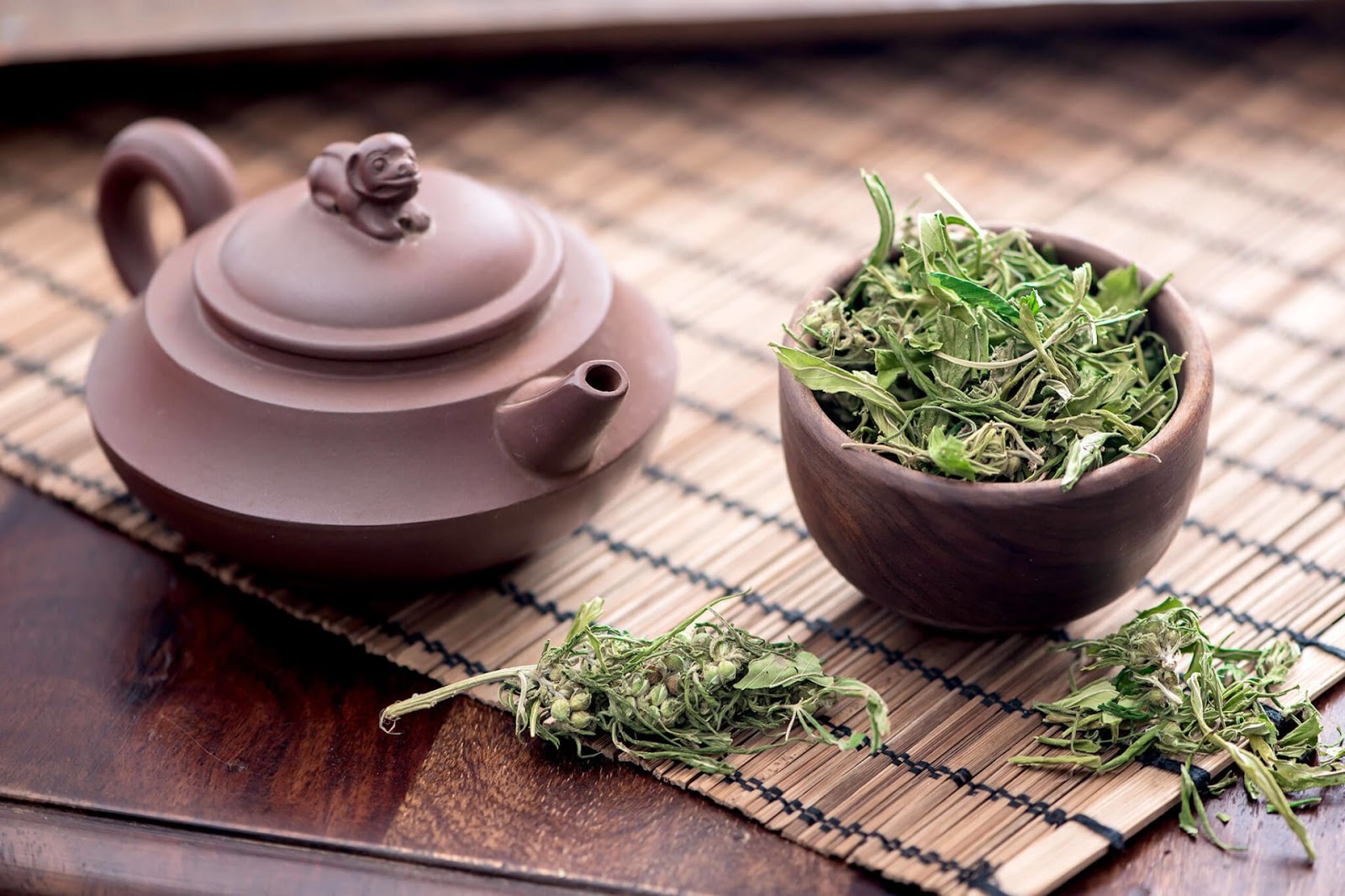
Chaga tea is made by steeping or simmering chunks or powder in hot water, then straining it. There are two broad approaches.
Traditional long brew
A 2022 study in Molecules describes the traditional method as steeping or boiling small pieces or powder for a few hours, or even a few days. The resulting liquid is drunk straight away or stored. This gives a strong, dark brew, but its strength depends on how long and how hot you go.
Quick brew
The more common modern method is a quick brew: powder, often in a tea bag, steeped in water at about 80 to 100 °C (176 to 212 °F) for several minutes. In the same study, loose powder steeped at 100 °C for six minutes gave more phenolic compounds and carbohydrates than the same powder in a tea bag, and showed the strongest anti-inflammatory activity in a cell model. That is a lab finding, not a human result, but it does suggest loose powder and a full boil extract more.
A simple way to brew it at home
- Use about 1 to 2 teaspoons of chaga powder, or a few small chunks, per mug.
- Bring water to a boil, then add the chaga.
- Steep powder for 5 to 10 minutes, or simmer chunks gently for 30 minutes or longer.
- Strain through a fine filter or cloth.
- Drink it plain, or add a little honey or milk to soften the bitterness.
- Keep it to one cup a day unless your doctor says otherwise, for the oxalate reasons below.
What does hot water extract from chaga, and what does it leave behind?
Hot water pulls out the water-soluble parts of chaga, mainly polysaccharides (including beta-glucans) and many phenolic compounds. It is less good at pulling out the fat-soluble triterpenes, which dissolve better in alcohol.
This is why the solvent matters. A 2009 study in the Journal of Bioscience and Bioengineering compared hot water extracts made at 50, 70 and 80 °C with an ethanol extract. Each extract behaved differently in lab tests, and the authors linked this to different chemical makeup, including polysaccharide, protein and phenolic content. In other words, water and alcohol give you two different chaga products.
So a cup of chaga tea is closest to a hot water extract. It is not the whole mushroom, and it is not a dual (water plus alcohol) extract either. Neither is better in every way, but it helps to know which you are getting.
Which gives a more consistent dose, tea or capsules?
Capsules win on consistency. Each capsule contains a set weight of extract, while each cup of tea varies with the amount of chaga, the water temperature, the brewing time and whether you used a bag.
With tea, you also do not know how much of the chaga actually ended up in your mug. The 2022 study above showed that even the choice between loose powder and a tea bag changed what came out. Two people following the “same” recipe can end up with quite different drinks.
With a capsule, the extraction has already been done and the result dried into a powder. You know the milligrams per capsule, and the batch can be tested. That does not make capsules more “potent” by default. It makes them more predictable.
| Chaga tea | Chaga extract capsules | |
| Form | Brewed drink from chunks or powder | Dried hot water extract in a capsule |
| What you get | Water-soluble compounds, amount varies | Water-soluble compounds, fixed amount |
| Dose consistency | Low, changes with each brew | High, same mg per capsule |
| Prep time | 5 minutes to several hours | Seconds |
| Taste | Earthy and slightly bitter | None |
| Travel | Needs hot water and a strainer | Fits in a pocket |
| Lab testing per batch | Rare for loose chaga | Look for a COA |
| Oxalate | Present, amount per cup unknown | Present, ask for testing |
What about oxalates in chaga?
Chaga is very high in oxalate, whichever way you take it, and this is the most important safety point in this post. Oxalate binds calcium and, in large amounts over time, can damage the kidneys.
The evidence comes from case reports, not trials, but it is serious. In 2014, doctors in Japan described a 72-year-old woman who took 4 to 5 teaspoons of chaga powder a day for six months and developed oxalate kidney damage that needed dialysis. A 2020 report from Korea described a 49-year-old man who took chaga powder for five years and developed end-stage kidney disease. The leftover powder was tested and contained 14.2 g of oxalate per 100 g.
Both cases involved powder taken daily for months, in large amounts. We have not found a study that measures how much oxalate ends up in a cup of tea or in a hot water extract, so we will not guess. The sensible view is that both tea and capsules contain some oxalate, and moderate daily amounts matter more than the format.
Who should talk to a doctor before taking chaga
- Anyone with kidney disease, kidney stones or a history of high oxalate
- People taking blood thinners such as warfarin, as chaga may raise bleeding risk
- People taking diabetes medicines, as chaga may lower blood sugar further
- Anyone pregnant or breastfeeding
- Anyone with surgery coming up
Memorial Sloan Kettering also lists a kidney case in a person taking 10 to 15 g of chaga a day together with vitamin C, so ask your doctor before combining chaga with high-dose vitamin C supplements.
Does wild harvesting matter?
Yes. Chaga is not farmed in the usual sense, so where it comes from matters for quality and for the forests it grows in.
The 2025 study notes that all true chaga conk is harvested wild, and that no one has yet cultivated the conk itself. It grows slowly, spreading through a host tree over decades. That means demand puts pressure on wild birch forests, and quality varies with where and how it was picked.
The same study also tested chaga supplements made from mycelium grown on grain. These products were starch-rich and lacked the triterpenes found in real conk, which looked chemically quite different. So whether you buy loose chaga for tea or capsules, it is worth asking two questions: is this the conk (sclerotium), and where did it come from?
How do Endoca’s chaga products fit in?
Endoca’sChaga Mushroom Extract is made from the sclerotium, the conk, and provides 370 mg of high-concentration extract per capsule. Like all our functional mushroom extracts, it is organic and made by hot water extraction, then concentrated and dried into a powder in vegan cellulose capsules. The product page describes it as naturally rich in beta-glucans; we do not state a percentage, so check the label or the batch COA atlab.endoca.com if that matters to you.
If you prefer something chewable, we also makechaga mushroom gummies, and chaga is one of five mushrooms in ourOrganic Mushroom Immune Complex. Our guide toreading a batch lab report shows what to look for on any COA, ours included.
We do not sell chaga tea. If you love the ritual of a warm drink, brew good tea from tested chaga and enjoy it. If you would rather skip the kettle, a capsule does the extraction for you.
So which should you choose?
Pick tea if you enjoy the taste and ritual and do not mind some variation. Pick capsules if you want the same amount every day with no prep.
A few more points can help you decide:
- Choose tea if a warm drink is part of your morning and you can source chaga conk you trust.
- Choose capsules if you travel, dislike the taste, or want to track exactly what you take.
- Choose either with care if you have kidney concerns, and speak to your doctor first.
Some people do both, with tea at the weekend and capsules on busy days. If you go that way, count both toward your daily total. For a wider look at drinks versus capsules, see our post onmushroom coffee vs mushroom supplements.
Frequently asked questions
Is chaga tea or chaga capsules more effective?
There is no human research comparing the two, so no one can honestly say one is more effective. Both deliver water-soluble compounds such as polysaccharides. Capsules of a hot water extract give a fixed, measured amount each time. Tea varies with brewing time, temperature and how much chaga you use. Choose the one you will take consistently.
How long should you steep chaga tea?
For a quick brew, steep chaga powder in water just off the boil for 5 to 10 minutes, then strain. For chunks, simmer gently for 30 minutes or longer. One lab study found loose powder steeped at 100 °C for six minutes released more compounds than the same powder in a tea bag. Longer traditional brews can run for hours.
Is it safe to drink chaga tea every day?
For many healthy adults, a moderate daily cup is a common traditional practice, but chaga is very high in oxalate. Case reports describe serious kidney damage from large daily amounts of chaga powder taken for months. Keep amounts moderate, and speak to your doctor first if you have kidney issues or take blood thinners or diabetes medicines.
Do chaga capsules contain oxalates too?
Very likely, yes. Oxalate is part of the chaga conk itself, and published studies have not measured how much passes into a hot water extract or a cup of tea. Treat capsules and tea with the same caution. If you have kidney concerns, talk to your doctor before taking chaga in any form, and ask the brand whether it tests for oxalate.
Is wild-harvested chaga better than cultivated chaga?
True chaga conk is only harvested wild, as the conk has not yet been cultivated. Products labeled as cultivated chaga are usually mycelium grown on grain, which testing shows is starch-rich and chemically different from real conk. Look for products that state they use the sclerotium (conk), and ask where it was sourced.



Comments are closed