


No products in the cart.

For over a decade, commercial cannabinoid development focused almost exclusively on decarboxylated cannabidiol (CBD)—the neutral compound produced when raw hemp is exposed to heat. However, recent human pharmacokinetic trials and molecular pharmacology studies published in 2025 and 2026 demonstrate that hemp’s native acidic precursor, cannabidiolic acid (CBDa), is far more than just an inactive botanical intermediate.
Emerging clinical data reveals that raw CBDa possesses superior oral bioavailability, faster absorption rates, and targeted enzymatic mechanisms that are fundamentally altered or lost during conventional thermal processing. This guide provides an evidence-based breakdown of raw CBDa versus heated CBD, exploring how distinct molecular structures influence physiological absorption, and why gentle, low-temperature extraction is critical for preserving raw plant integrity.
What is Raw CBDa vs. Heated CBD?
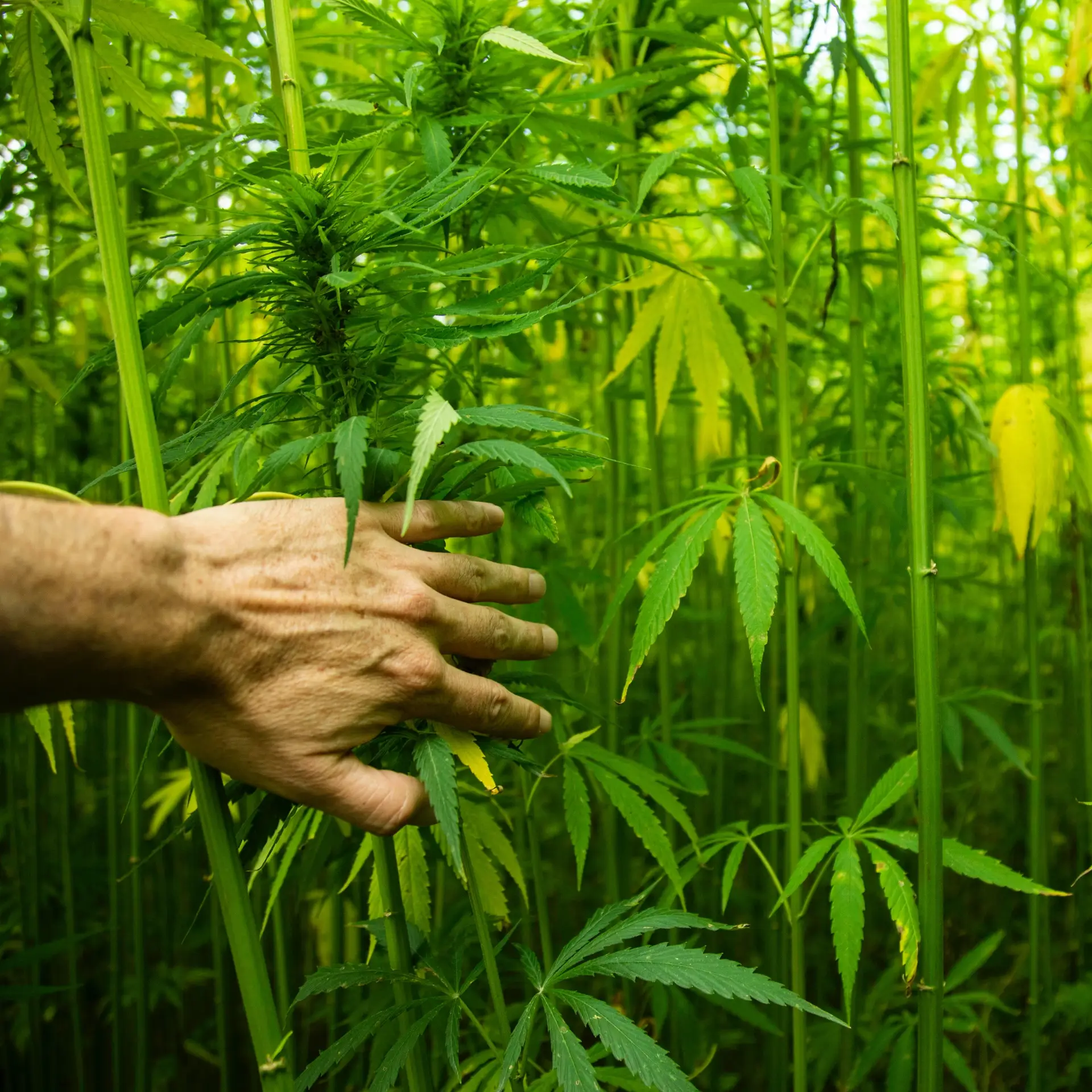
Raw cannabidiolic acid (CBDa) is the naturally occurring, unheated biosynthetic precursor to CBD. Within the living Cannabis sativa L. plant, cannabinoids are synthesized as carboxylic acids. An enzymatic cascade converts cannabigerolic acid (CBGA) into CBDa (C₂₂H₃₀O₄). Raw hemp does not synthesize significant quantities of neutral CBD; rather, CBD is an artifact of post-harvest thermal processing.
Heated CBD (C₂₁H₃₀O₂) is created through a process called decarboxylation. Decarboxylation is a thermal, non-enzymatic reaction where the carboxylic acid functional group (-COOH) attached to the CBDa molecule is cleaved off by heat, releasing carbon dioxide (CO₂) and converting the acidic molecule into a neutral CBD molecule.
According to kinetic studies published in Industrial & Engineering Chemistry Research, the thermal conversion of CBDa to CBD accelerates sharply at temperatures between 110°C and 145°C. Prolonged heating or excessive processing temperatures not only convert the cannabinoid but also induce thermal oxidation, generate minor oxidative artifacts like cannabielsoin (CBE), and degrade heat-sensitive volatile terpenes such as myrcene and limonene.
Why Does CBDa Offer Higher Bioavailability?
CBDa exhibits significantly higher absorption rates and peak plasma exposure than neutral CBD, effectively overcoming the historically poor oral bioavailability associated with traditional CBD nutraceuticals.
Because traditional CBD is highly lipophilic, it typically experiences erratic intestinal uptake and extensive first-pass hepatic metabolism via the liver’s cytochrome P450 enzymes. By retaining its carboxyl group, raw CBDa utilizes different transport mechanisms that allow more of the compound to enter the bloodstream.
Recent pharmacokinetic findings from 2025 and 2026 highlight this stark contrast:
- Higher Peak Plasma Concentration:In a 2025 randomized, placebo-controlled human laboratory study published in Cannabis and Cannabinoid Research, the maximum plasma concentration (Cmax) of CBDa was 19- to 25-fold higher than that of CBD across all administered doses.
- Faster Uptake:The same human trials revealed that CBDa reached peak plasma concentration up to 2 times faster than neutral CBD.
- Greater Total Exposure:Animal pharmacokinetic research published in the Journal of Veterinary Pharmacology and Therapeutics (2025/2026) demonstrated that oral CBDa produced an Area Under the Curve (AUC) up to 36 times larger than equimolar doses of CBD.
How Do CBDa and CBD Interact with the Body?
The presence of the carboxyl group (-COOH) in CBDa provides distinct spatial conformations and electrostatic binding properties that target physiological pathways differently from neutral CBD.
Selective COX-2 Enzyme Inhibition
CBDa acts as a selective inhibitor of the cyclooxygenase-2 (COX-2) enzyme, a pathway widely recognized for driving pro-inflammatory prostaglandin synthesis. Research published in the Journal of Toxicological Sciences reveals that CBDa possesses a structural salicylic acid core—similar to the active pharmacophore in traditional non-steroidal anti-inflammatory compounds.
This core grants CBDa an IC₅₀ of approximately 2 µM, exhibiting a 9-fold greater selectivity for COX-2 over COX-1. When the plant extract undergoes thermal decarboxylation to form neutral CBD, this selective COX-2 inhibition is lost, as the crucial carboxylic acid group has been removed.
Serotonin 5-HT1A Receptor Sensitization
While both CBD and CBDa interact with the body’s serotonergic system, they do so at vastly different potencies. Investigations published in the British Journal of Pharmacology demonstrate that CBDa acts as a potent sensitizer and indirect agonist at 5-HT1A receptors at nanomolar concentrations (0.1–100 nM). This displays an order of magnitude higher functional potency than neutral CBD, which typically requires micromolar concentrations to achieve similar receptor activation.
How Does Extraction Impact Cannabinoid Purity?
Because the chemical bond binding the carboxyl moiety to the CBDa molecule is highly thermolabile, standard industrial extraction methods effectively destroy raw cannabinoids. High-heat solvent recovery, decarboxylation ovens (typically set between 120°C–160°C), and high-temperature wiped-film distillation convert virtually all native CBDa into CBD while stripping the extract of delicate botanical compounds.
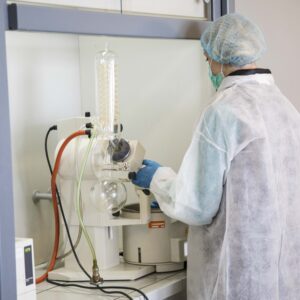
Preserving CBDa requires gentle, cold supercritical CO₂ extraction. By operating carbon dioxide at supercritical pressures (150 to 300 bar) while maintaining low temperatures (typically under 40°C), manufacturers can extract cannabinoid acids without triggering thermal decarboxylation.
As noted in the Journal of CO₂ Utilization, supercritical CO₂ acts as a clean, tunable solvent that captures both raw CBDa and volatile monoterpenes without leaving behind residual petrochemical solvents like butane or hexane.
The Endoca Approach to Raw Hemp Preservation
To experience the distinct pharmacokinetic benefits of raw cannabinoids, consumers must seek out vertically integrated manufacturers capable of preventing thermal degradation throughout the supply chain. As a pioneer in organic cannabinoid wellness, Endoca developed its manufacturing standards specifically around maintaining the authentic biochemical complexity of raw hemp.
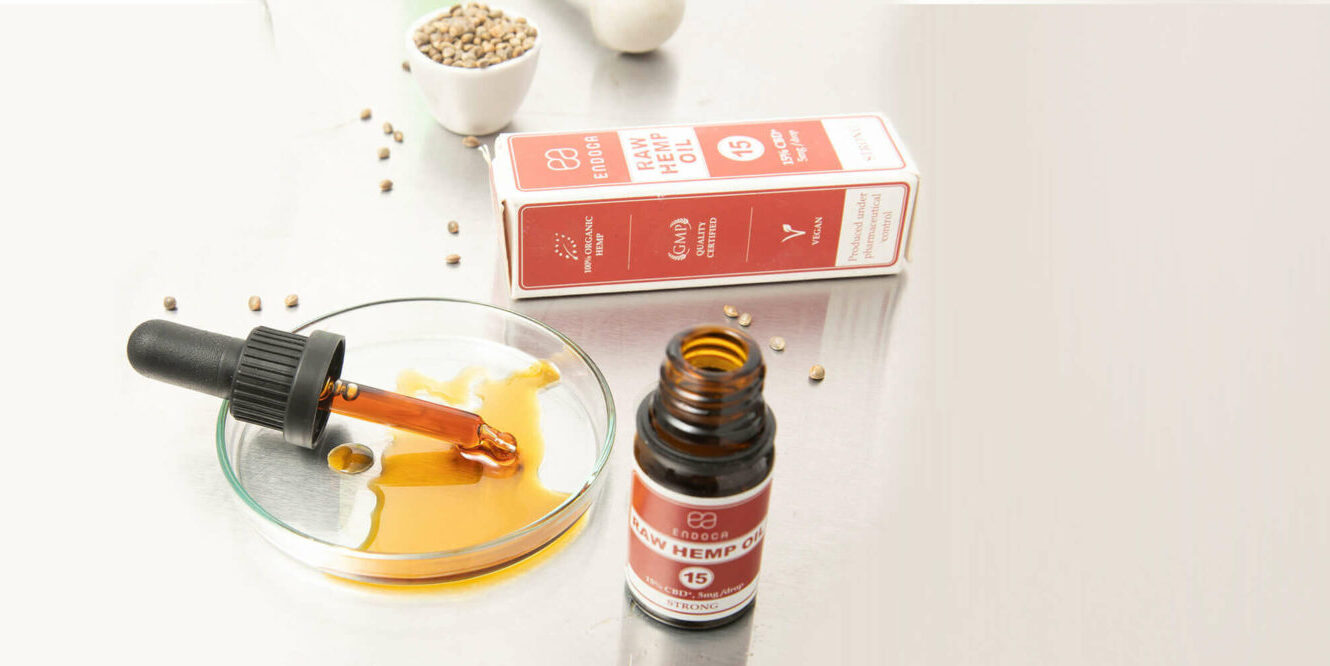
Detailed in The Endoca Process, the brand employs advanced low-temperature supercritical CO₂ extraction to produce true RAW CBD oil formulas. By carefully controlling thermal exposure, Endoca’s RAW extracts retain the natural ratio of CBDa alongside CBD, as well as the plant’s intact monoterpenes, esters, and flavonoids.
Rather than positioning one cannabinoid state as universally superior, Endoca’s pharmaceutical-grade, seed-to-shelf operation produces both RAW (unheated, CBDa-dominant) and gently heated (decarboxylated CBD) options. This allows individuals to tailor their wellness routines to specific biological mechanisms, all verified by strict third-party High-Performance Liquid Chromatography (HPLC) testing to guarantee zero solvent contaminants and accurate cannabinoid ratios.
Raw CBDa vs Heated CBD: Summary Comparison
| Evaluation Parameter | Raw Cannabinoids (CBDa) | Decarboxylated Cannabinoids (Heated CBD) |
| Origin State | Native form synthesized directly by the living plant | Post-harvest processing derivative (formed by heat) |
| Chemical Structure | C₂₂H₃₀O₄ (Contains salicylic carboxylic acid group) | C₂₁H₃₀O₂ (Neutral derivative, -COOH removed) |
| Human Absorption (Cmax) | 19x to 25x higher oral plasma exposure | Standard baseline bioavailability (~6–19%) |
| Uptake Rate (Tmax) | Rapid (up to 2x faster time to peak concentration) | Slower, conventional lipophilic uptake |
| Target Enzymes | Selective COX-2 inhibitor (9:1 COX-2/COX-1 selectivity) | Weak / Non-selective direct COX inhibition |
| 5-HT1A Interaction | High-potency direct sensitizer (nanomolar range) | Modest indirect serotonergic agonist (micromolar range) |
| Extraction Requirement | Low-temperature supercritical CO₂ (<40°C) | Standard heat extraction, baking, or distillation ovens |
| Terpene Profile | Fully preserved volatile monoterpenes and sesquiterpenes | Frequently lost or degraded by heat processing |
Frequently Asked Questions
Can you take raw CBDa and heated CBD together?
Yes. Many high-quality, full-spectrum extracts naturally contain a ratio of both CBDa and CBD. Taking them together provides a “best of both worlds” approach, allowing the body to leverage the rapid absorption and COX-2 targeting of CBDa alongside the established properties of neutral CBD.
Does raw CBDa have psychoactive effects?
Like neutral CBD, raw CBDa is entirely non-intoxicating. It does not bind to the CB1 receptors in the brain in a way that produces the psychoactive “high” associated with THC.
Why do most CBD products only contain heated CBD?
Most commercial extraction processes prioritize yield and efficiency over botanical preservation. Standard methods like ethanol extraction or high-heat distillation subject the hemp biomass to intense temperatures, which automatically decarboxylates the native CBDa into neutral CBD. Preserving CBDa requires specialized, slow, cold-extraction equipment.

Comments are closed